
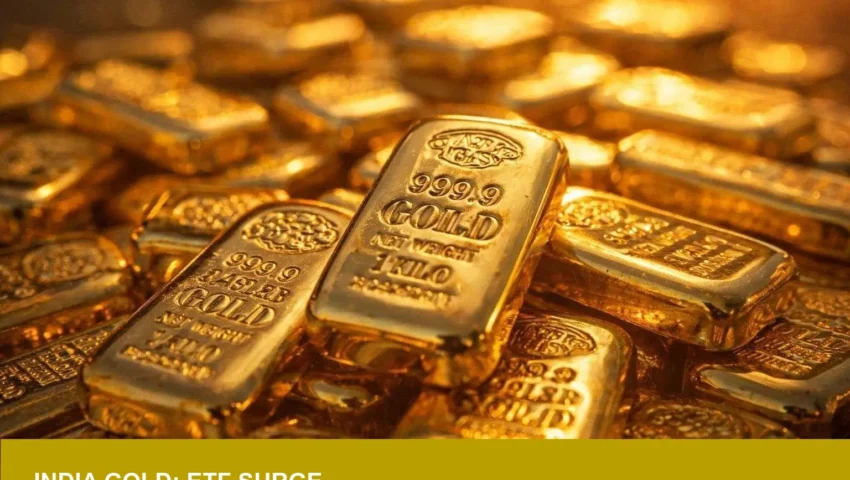
Who: World Gold Council update. What: India’s physical demand remains firm while record ETFs drew ₹116 billion ($1.29bn) in December. Financial impact: domestic premiums and jewellery margins are shifting as international gold nears $4,600/oz.
- Fast Facts:
- International price: ≈ $4,601.8/oz (Jan. 16, 2026)
- Domestic benchmark: ≈ ₹139,799 per 10g (early Jan. 2026)
- ETF inflows (Dec): ₹116 billion (~95 tonnes held end-2025)
- RBI holdings: 880.2 tonnes (record valuation)
- Date: World Gold Council update, Jan. 16–17, 2026
The Market in One Breath
India’s gold market is registering an unusual duality: bullion prices have climbed to fresh highs while investment channels — notably exchange-traded funds and digital-rupee purchases — are absorbing demand that might otherwise have gone into traditional jewellery. The World Gold Council’s mid-January briefing shows net ETF subscriptions in December surged to a record ₹116 billion, even as local futures eased after a brief run-up.
The Context
The early-2026 rally has imparted a warm, almost molten glow to headline prices — international quotes breached $4,600 an ounce—pressuring retail ticket sizes and nudging buyers toward lighter silhouettes and lower-purity alloys. Retailers report that recycled metal, surrendered in exchange programmes, now supplies more than 40% of new jewellery purchases, reflecting a market that favors traceable, recycled metal over fresh sourcing. That tactile reality — the trade-in’s cold weight transformed into a slimmer, higher-priced purchase — underpins a broader sustainability narrative that gained traction across 2025.
Investment flows are reshaping how gold circulates. Indian ETFs now function as a vault-light alternative for investors seeking exposure without the logistics and retail margins of physical bars or jewellery. Digital-gold platforms, routed through UPI, saw transaction values climb from ₹8 billion in January 2025 to ₹21 billion in December, reinforcing a preference for granular, instantly settled exposure rather than full-piece ownership.
Meanwhile, structural pressures from 2025 — consumer appetite for sculptural, design-led pieces, and the steady rise of lab-grown alternatives in the broader jewellery spend — mean physical gold must compete not just on price but on form and provenance. The market’s shift toward lower-purity labours a different tactile promise: lighter profiles, lower making charges, and a subdued vitreous luster compared with high-purity hallmarks.
The Impact for Retailers and Investors
For U.S. retailers and bullion investors, India’s dynamic matters in three practical ways. First, volatility at the front end of the bullion curve can widen import-cost margins; a move of several percent in international prices translates into meaningful rupee-denominated shifts in landed cost and local premiums. Second, the surge into ETFs and digital platforms signals persistent demand that may cushion price dips but reduces transactional flow through traditional retail channels — expect lower volumes but higher average selling prices when demand consolidates. Third, the recycling trend and lower-purity adoption tighten supply for certain finished goods and create opportunities for traceability-labelled inventory and buyback programmes.
Operationally, U.S. buyers should reassess hedging cadence and inventory tilt: shorter-term tee-up for hedges around festival windows and weddings in India, and an emphasis on convertible stock that can be re-melted or certified for recycled content will protect margins. For investors, record ETF inflows are a risk signal and an allocation cue — they represent conviction in gold as a liquidity play rather than pure ornamentation, and that changes how price corrections may unfold.
Why It Matters Now
Price moves have already changed consumer behaviour: lighter weights, lower carat choices (a discernible move toward 18k and 14k), and a heavier reliance on recycled metal. If geopolitical tensions or a surprise in U.S. inflation readings trigger a directional shift, markets could move abruptly — a scenario WGC analysts flagged. For U.S. market participants, the takeaway is clear and tactile: the market’s heft is now shared across digital platforms, ETFs, and recycled metal streams. Strategy should favor agility — lighter inventory profiles, verified recycled content, and hedging that reflects shorter windows of demand.
In short, India’s gold market is not cooling so much as changing texture. The rally’s valuation gains lift official holdings and ETFs alike, but they also alter how and where gold is held, sold and experienced — from the palmed warmth of a pendant to the frictionless click of a digital purchase.
Image Referance: https://ts2.tech/en/indias-gold-market-wont-cool-record-prices-bite-but-etf-inflows-surge/