
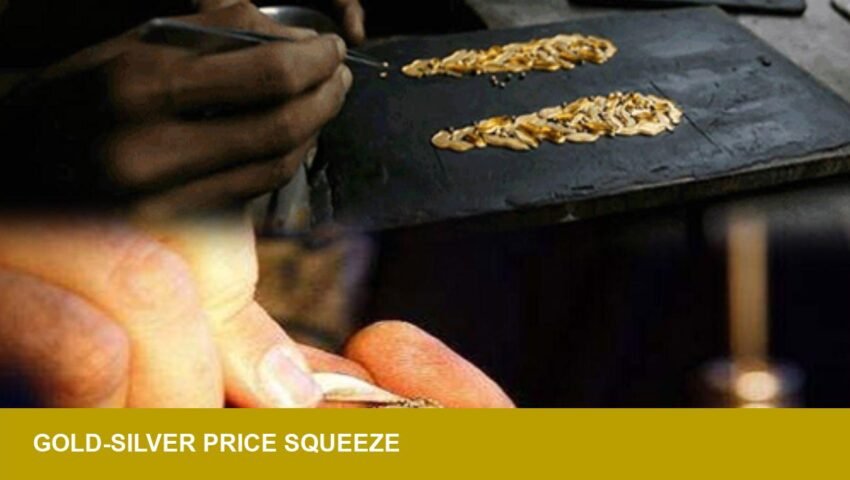
Thousands of Bengali and Bihari jewellery artisans have left Surat after rising gold and silver prices precipitated a sharp collapse in handmade jewellery orders, prompting calls for relief in the Union Budget. The movement represents a sudden depletion of labour and artisanal capacity in one of India’s core jewellery manufacturing hubs, creating a supply risk for buyers that rely on hand-finished components.
- Metals: gold and silver (price surge cited)
- Workers: thousands of Bengali and Bihari artisans displaced
- Effect: collapse in handmade jewellery orders
- Policy: calls for relief in the Union Budget
- Region: Surat, India — major jewellery manufacturing centre
Context: Metal-price pressure and artisanal supply
The episode in Surat sits within broader metal-price volatility that compresses margins on hand-crafted pieces. When bullion becomes markedly more expensive, labour-intensive SKUs such as hand-engraved filigree, hand-set pavé and open-backed gemstone settings lose competitiveness versus mechanised or plated alternatives. For manufacturers who work in satin-finished gold or execute delicate knife-edge shanks and hand-polished surfaces, material cost is a direct input to viability; sustained price pressure often forces order cancellations or conversion to lower metal content.
Those dynamics have a secondary effect on labour: artisans dependent on steady, low-volume bespoke orders—many from states such as West Bengal and Bihar—are exposed to abrupt demand contractions. The reported exodus underscores fragility in labour-led production nodes when commodity costs spike, and it has prompted suppliers and trade bodies to ask for fiscal relief at the central government level.
Impact: What US buyers, retailers and wholesalers should consider
For US retailers and wholesalers that source hand-finished components from Surat, the immediate implication is a potential shortfall in artisanal capacity and longer lead times for hand-made inventory. Even without hard price figures, the chain reaction is straightforward: fewer artisans = fewer hand-set stones, less hand-finishing and a higher reliance on factory-made alternatives.
Operational responses to assess now include:
- Supplier diversification: locate alternative artisan hubs or scale relationships with manufacturers offering consistent metal hedging and contractual price clauses.
- Product triage: classify SKUs by margin sensitivity—prioritise high-margin pieces that justify higher metal costs and consider design adjustments (thinner shanks, open-back settings, selective use of vermeil) for more price-sensitive items.
- Inventory and sourcing policy: increase visibility on hand-finished production capacity and upfront lead-time buffers; consider short-term volume contracts to stabilise artisan demand if ethically and commercially feasible.
- Marketing and storytelling: for quiet-luxury buyers, emphasise craftsmanship provenance, material disclosures and traceability rather than discounting, while being transparent about lead times tied to hand production.
The Surat exodus is less a one-off labour story than a signal: when raw-material inflation bites, the economics of handmade jewellery change rapidly. For market participants focused on margin preservation and supply resilience, that shift merits immediate procurement and merchandising review rather than reactive price cuts.
Image Referance: https://theblunttimes.in/soaring-gold-silver-prices-trigger-mass-exodus-of-jewellery-artisans-from-surat/56883/