
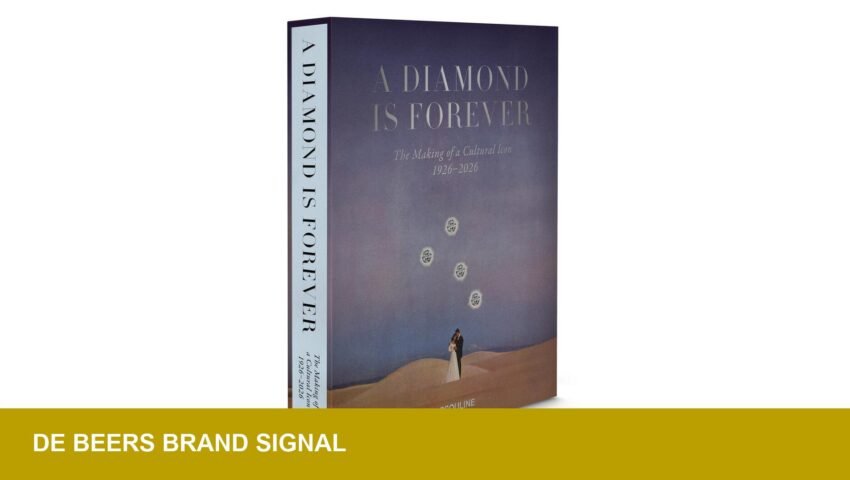
De Beers has released a book titled “A Diamond Is Forever” that traces the history of the iconic advertising tagline and sets out the company’s strategy to redefine the role of diamonds in society. The publication is positioned as more than a corporate history: it is a deliberate branding exercise intended to shape perception of natural diamonds and therefore carries implications for category value, retail positioning and investor sentiment.
- Title: “A Diamond Is Forever” — published by De Beers
- Subject: history of the tagline and De Beers’ strategic positioning
- Scope: brand narrative aimed at reframing diamonds’ social role
- Primary audience: retailers, wholesalers, brand partners and investors
Where this fits in current trends
Luxury jewellery has moved from transactional specifications to narrative currency. The release of a company‑authored history underscores how heritage storytelling is being used to defend and shape perceived value. For firms and buyers who assess product on provenance and craftsmanship, the book is a reminder that brand narratives remain a primary lever to support price premia on natural stones.
That does not rest on ornament alone but on sensory and craft cues that retailers use in merchandising: emphasising vitreous luster, classical cuts and evidence of provenance in point‑of‑sale materials helps translate a narrative into willingness to pay. In an era of quieter, restrained design language, a disciplined narrative can sustain preference for catalogue staples such as solitaires or refined cluster pieces without resorting to overt display.
Why this matters for the US market
For US retailers and wholesalers the book functions as a signaling asset. A brand‑level reaffirmation of category purpose can support merchandising decisions — from assortment weighting to storytelling at the till — by providing a defensible proposition for natural diamonds vis‑à‑vis competing offers. Buyers should view the publication as a marketing input that can be integrated into product copy, staff training and customer consultations.
Investors and category managers should note the non‑price route to demand maintenance: bolstering consumer perception through narrative reduces reliance on short‑term promotions and can protect margins. Tactically, retailers can incorporate the book’s content into quiet‑luxury merchandising: curated displays that call out provenance, the tactile heft of a well‑cut stone and the craftsmanship of settings — for example satin‑finished gold and open‑backed settings that reveal tone and clarity — rather than high‑volume discounting.
De Beers’ publication is not a sales brochure; it is a strategic communications device. For stakeholders in the United States, it is a reminder that category resilience increasingly depends on controlled storytelling as much as on gemology or supply dynamics.
Image Referance: https://nationaljeweler.com/articles/14631-de-beers-to-release-a-diamond-is-forever-book