
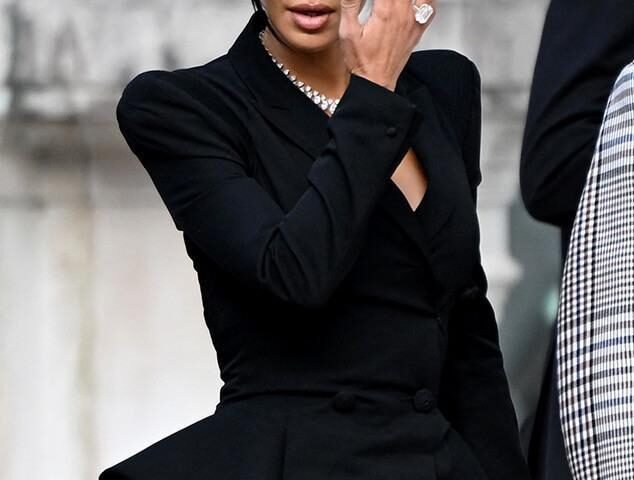
Kim Kardashian appeared at the Paris robbery trial wearing an estimated $1.5 million necklace and a collection of pieces reported to total roughly $8 million—among them a diamond‑studded ear cuff valued at about $8,100—drawing renewed attention to the risks of loaning high‑value jewellery to clients and to public security and insurance exposures.
- Estimated total value worn: ~ $8,000,000
- Necklace: estimated $1,500,000
- Ear cuff: diamond‑studded, estimated $8,100
- Context: testimony at the Paris robbery trial linked to the 2016 incident
Context: Where this fits in 2025–26 trends
The incident sits at the intersection of two persistent trade concerns. First, lenders, insurers and houses that loan inventory face greater scrutiny over custody chains and contract terms when pieces are exposed in high‑profile, adversarial settings. Second, the jewellery market’s movement toward quiet luxury—discreet, craft‑forward design and careful provenance—contrasts with the public display of multi‑million‑dollar items, prompting brands to reassess how they manage press visibility and third‑party use.
For the trade, the episode spotlights operational details: proof of title and provenance, the robustness of loan agreements, stipulated security on site, and the adequacy of insurance limits and sub‑limits for transit and courtroom display. Even a single diamond‑studded ear cuff, noted for its vitreous luster, underscores how relatively small SKUs can be singled out in litigation or press moments.
Impact: Why this matters in the US market
US retailers and wholesalers that loan pieces to celebrities or for editorial use should expect pressure to tighten loan policies and clarify liability. Practical responses may include stricter collateral requirements, higher insurance minimums, mandatory security escorts, and more detailed condition reports returned with each loan. Buyers and store managers should also reassess merchandising: keeping truly irreplaceable pieces in secured vaults and offering press‑friendly alternatives with comparable aesthetic weight but lower insurance exposure.
For investors and insurers, the case is a reminder that reputational and contract risk can translate into measurable costs—claims, replacement exposure, and brand damage from a publicised loss. Brand and retail marketing teams will need to reconcile quiet‑luxury positioning with occasional high‑visibility moments, framing provenance and security as part of the product story rather than relying solely on public spectacle.
In short, a celebrity courtroom appearance is not just a cultural moment: for the jewellery trade it is an operational stress test of underwriting, loan practice and the public‑facing value of high‑ticket inventory.
Image Referance: https://www.msn.com/en-us/tv/celebrity/kim-kardashian-wore-15-million-necklace-for-paris-robbery-trial/ar-AA1EIiS7?apiversion=v2&domshim=1&noservercache=1&noservertelemetry=1&batchservertelemetry=1&renderwebcomponents=1&wcseo=1