
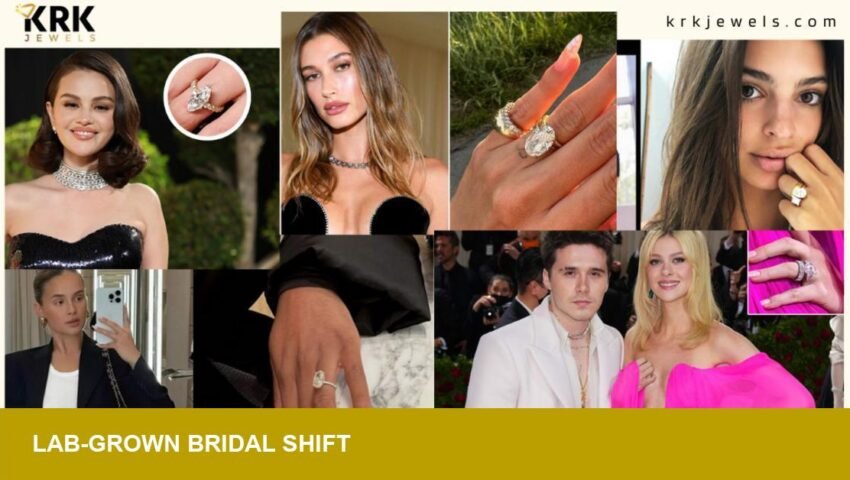
Celebrities are increasingly selecting lab-grown diamonds for engagement rings, a visible shift that is reframing bridal demand and creating strategic pressure on natural‑diamond assortments and retail pricing. The move—seen across classic solitaires and modern toi et moi pairings—has immediate merchandising and margin implications for jewelers serving the US bridal segment.
- Gemstone: lab‑grown diamonds (consumer-facing parity with natural stones)
- Styles noted: solitaire, toi et moi, micro‑pavé accents
- Market focus: celebrity influence on US bridal demand and retailer assortment
- Retail implication: inventory rebalancing and messaging shift toward laboratory origin
Context: where this sits in current jewellery trends
The adoption of lab‑grown stones by public figures accelerates an existing market conversation about value, provenance and aesthetics. For trade buyers and designers, lab‑grown diamonds offer consistent optical and material qualities—vitreous luster, predictable facet response and cut parity—that make them suitable for the restrained silhouettes popular with quiet‑luxury consumers. Seen in solitaire mounts and refined toi et moi constructions, these stones pair well with satin‑finished gold and low‑profile settings such as knife‑edge shanks and open‑backed bezels, maintaining a refined surface and substantial heft without overt ornamentation.
At the same time, the visual parity between lab‑grown and natural stones places renewed emphasis on craftsmanship and finish. Retailers can no longer rely solely on the lore of origin; instead, finish—precise pavé spacing, crisp bezel edges and proportionate cut—becomes the differentiator for higher margin pieces.
Impact: what US retailers, wholesalers and investors should expect
For US retailers the immediate decisions are inventory and messaging. Assortments tailored to bridal should account for dual demand streams—natural and lab‑grown—with clear merchandising that distinguishes origin, cut and certificate. Buying teams may choose to allocate display space to quietly merchandised lab‑grown options alongside natural diamonds, emphasising tactile qualities such as silky nacre in pearl pairings or the vitreous luster of well‑cut stones rather than origin narratives alone.
Wholesalers will need to manage SKU velocity differently: lab‑grown supply chains are comparatively elastic, so pricing and lead times can be used tactically to protect margins on natural‑diamond inventory. For investors, celebrity endorsement of lab‑grown stones signals a category rotation in consumer perception—demand elasticity that could compress price premiums historically attached to natural stones, while creating growth opportunities for producers and retailers who sell provenance, finish and design rather than origin alone.
Marketing should adopt a quiet‑luxury vocabulary: precise technical descriptions (cut grade, color grade parity, setting construction) and demonstrable craftsmanship will resonate more with bridal buyers than broad sustainability claims alone. In short, the celebrity adoption of lab‑grown diamonds is not merely a publicity moment; it is a trade signal that requires recalibrated merchandising, inventory strategy and margin management across the US bridal market.
Image Referance: https://www.gigwise.com/why-celebrity-engagement-rings-are-shifting-toward-lab-grown-diamonds/