
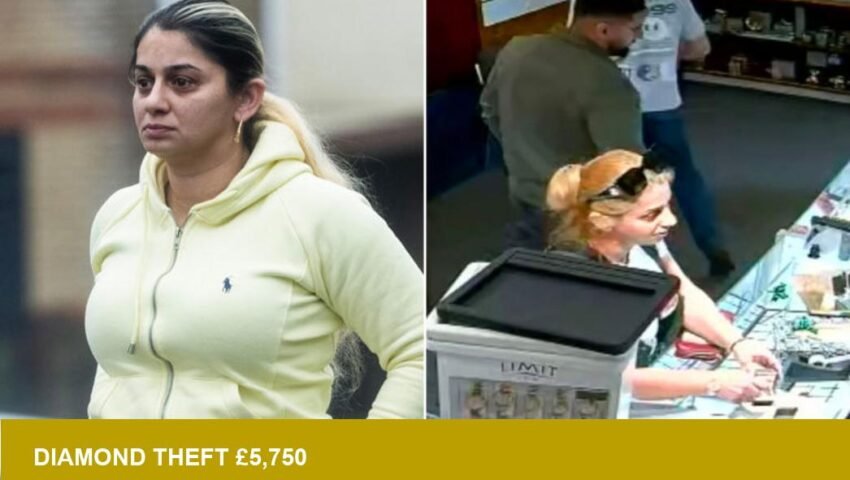
Claudia Rostas, identified as part of a Romanian gang known for travelling the UK to target jewellers, walked away with a diamond ring valued at £5,750 from a family jewellers in Dorset, demonstrating the distraction methods the group has refined. The theft converted a single high-value SKU into an immediate inventory loss and an insurance claim exposure for a small retail operator.
- Price: £5,750
- Item: Diamond ring (retail display theft)
- Perpetrator: Claudia Rostas — part of a Romanian gang operating across the UK
- Venue: Family jewellers, Dorset, UK
- Target segment: Independent retail / single high-value SKU
Context: organised in‑store theft and retail vulnerability
The incident fits a broader pattern of itinerant theft groups focusing on single, high-ticket items that can be removed quickly from salesfloors. Diamonds — with their vitreous luster and portable value — remain particularly exposed when presented as individual pieces in open displays. For independents and small chains the economic impact is not just the retail price: shrinkage hits gross margin, inflates insurance premiums and reallocates working capital from merchandising to loss mitigation.
Mitigations that have gained traction include hardened display cases, staff training on diversion tactics, discrete storage of top-tier inventory, and visible CCTV coverage. Where traceability matters, retailers are increasingly asking for laser inscriptions, unique SKU immobilisers and stronger provenance paperwork to improve recovery odds and accelerate insurer settlements.
Impact: what US retailers and wholesalers should consider
For US independents and regional chains the Dorset theft is a practical reminder that a single targeted incident can cascade into measurable margin erosion. Merchants should reassess the placement of items valued at several thousand dollars (or pounds) on the salesfloor: the trade-off between selling from display and securing pieces in a locked backroom has direct effects on conversion rates and insurance cost models.
Operational changes to consider: tighten two‑person handling for high-value viewings, deploy tamper‑resistant fixtures, introduce electronic tags or discreet immobilisation for loose rings, and log serials or certificates at point of sale. Buying teams and insurers will expect clearer documentation and may require different loss thresholds for coverage — a factor that will influence purchasing strategy for both natural and lab-grown diamonds.
Finally, merchandising language should align with quiet‑luxury sensibilities: present fewer single high-value items openly, emphasise craftsmanship and provenance in private viewings, and avoid visual cues that invite rapid removal. The Dorset case is not merely a local police matter; it is a practical prompt to rework the balance between accessibility and security in jewellery retail.
Image Referance: https://www.msn.com/en-in/news/other/moment-romanian-thief-steals-5-750-diamond-ring-from-under-the-nose-of-jeweller/ar-AA1UJbKt