
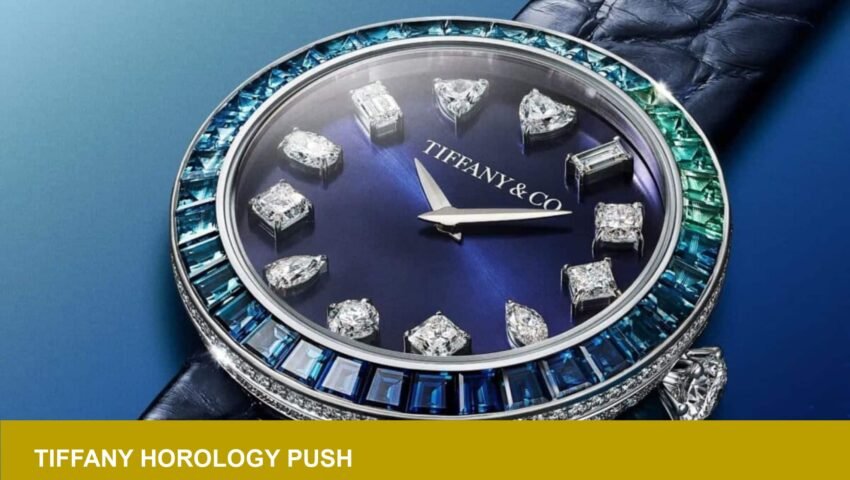
Tiffany & Co. introduced two exceptional timepieces at LVMH Watch Week 2026, presenting a deliberate fusion of the maison’s high‑jewelry language, artistic heritage and Swiss watchmaking expertise. The launches signal a strategic move toward haute‑horology that has immediate merchandising and pricing implications for US retailers and collectors.
- Brand: Tiffany & Co.
- Event: LVMH Watch Week 2026
- Offering: Two high‑jewelry timepieces combining jewelry craft and Swiss movements
- Positioning: Haute‑horology / high‑jewelry collectors
- Market focus: US retail and private‑client channels
Context: Where this fits in 2025–26 trends
The introductions sit squarely within the quiet‑luxury current: restrained surfaces, artisanal finishing and provenance‑led storytelling rather than conspicuous ornament. Tiffany’s presentation at LVMH Week continues a broader industry pivot that blends jewellery savoir‑faire with legitimate watchmaking — an approach that privileges craftsmanship vocabulary (tight pavé, satin‑finished gold planes, careful bezel geometry and movement finishing) over overt branding.
For the trade, this is not merely aesthetic. High‑jewelry watches compress two margin pools — jewellery and mechanical horology — into single SKUs. That hybrid affects sourcing (access to high‑quality gem‑setters and Swiss ateliers), price positioning (premium retail thresholds) and after‑sales commitments (movement servicing plus gem‑setting guarantees).
Impact: Why this matters in the US market
US retailers and wholesalers should view these launches as a signal to recalibrate assortment and client engagement. Practical steps include carving dedicated display space for high‑jewelry timepieces, training sales staff to explain both movement credentials and gem‑setting technique, and refining wholesale terms for slower turnover, higher‑ticket SKUs.
From an investment and marketing angle, Tiffany’s move creates two clear considerations. First, the brand’s credibility in watchmaking matters to collectors; merchandising should emphasise provenance, movement origin and craftsmanship rather than marketing hyperbole. Second, these pieces strengthen the case for appointment selling and private‑client communications — channels that protect margins and support scarcity messaging in a market increasingly driven by discrete, craft‑led luxury.
For wholesalers and authorized dealers serving the US, inventory decisions will need to balance sell‑through risk against the margin uplift of hybrid haute‑horology pieces. Expect demand from existing high‑net‑worth clients and watch collectors, and plan for inventory strategies such as controlled allocations, pre‑sale deposits and curated trunk shows to manage scarcity and pricing pressure.
In short, Tiffany’s two LVMH launches are a calibrated step into higher horological territory — a development that will shape assortment strategy, client servicing and margin planning for US players in 2026.
Image Referance: https://lenouveaureveil.com/en/tiffany-co-lvmh-watch-week-2026/