
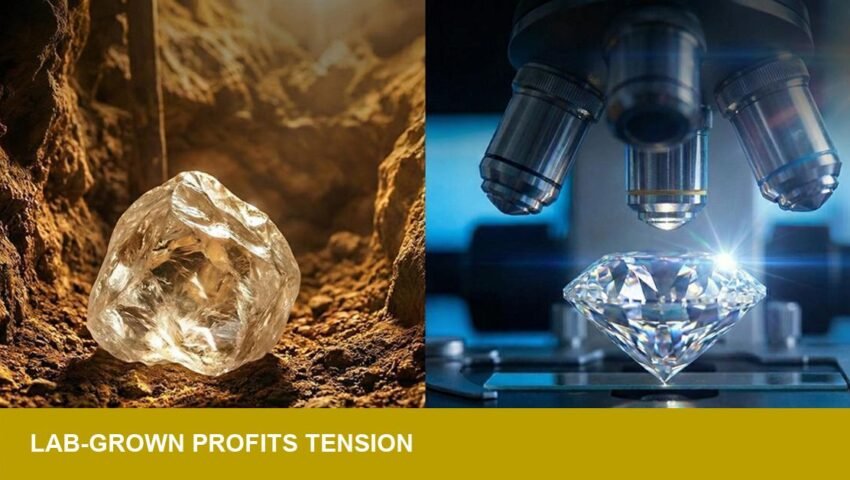
A new Brain Squad survey finds a majority of jewellers reporting a positive business impact from lab-grown diamonds — they are, in short, making money — even as many retailers describe the product in decidedly negative terms, calling it “garbage,” “costume jewelry” and a “sign of the apocalypse.” The tension between clear commercial gain and acute reputational discomfort is the central commercial story for vendors handling lab-grown inventory today.
- Source: Brain Squad survey of retail jewellers.
- Product: lab-grown diamonds (retailer volume and sell-through noted as positive by respondents).
- Retail sentiment: described in survey responses as “garbage,” “costume jewelry,” “sign of the apocalypse.”
- Commercial fact: retailers report improved business outcomes when selling lab-grown diamonds.
Context: lab-grown diamonds and the current market dynamic
Lab-grown diamonds have shifted from a niche talking point to a pragmatic inventory lever. For many shops the material offers a lower acquisition cost per carat and predictable supply that supports tighter inventory turns and promotional cadence without depending on natural-mined availability. That financial logic helps explain why retailers can report healthier top-line or sell-through while simultaneously registering cultural resistance.
The disconnect is aesthetic and brand-based rather than purely technical. Buyers and store owners who prize traditional provenance and the visual language of natural stones often find lab-grown assortments at odds with a quiet-luxury merchandising posture. At wholesale and retail levels the stones commonly appear in accessible collections — pricing that emphasises value over provenance, finish choices that favour closed-back settings or factory‑grade pavé, and service terms aligned to volume rather than bespoke high-jewellery craftsmanship.
Impact: what this means for US retailers, wholesalers and investors
For merchants operating in the US market the Brain Squad findings crystallise a dual mandate: capture the proven commercial advantage of lab-grown diamonds while managing brand and margin risks. Practical responses include physical segmentation of assortments, clearer point-of-sale disclosure, and differentiated aftercare to preserve perceived value. Merchants should consider separate merchandising strategies for bridal versus fashion, and test price architecture that protects full-margin SKUs.
From an investor and buyer perspective, the survey flags two signals. First, lab-grown supply can meaningfully improve inventory velocity and reduce reliance on volatile natural-diamond sourcing. Second, persistent negative language from frontline retailers highlights reputational risk that can erode long-term brand equity if lab-grown assortments are mixed indiscriminately with heritage lines. Those managing multibrand showrooms or private-label programs will need deliberate assortment rules, staff training and marketing scripts that reconcile short-term profit with mid-term positioning.
Ultimately, the Brain Squad survey shows lab-grown diamonds are a commercial tool that works — and that their effective use requires disciplined merchandising and messaging to avoid diluting the quiet-luxury cues high-end customers expect.
Image Referance: https://instoremag.com/lab-grown-diamonds-jewelers-are-making-money-but-theyre-not-happy-about-it/amp/