
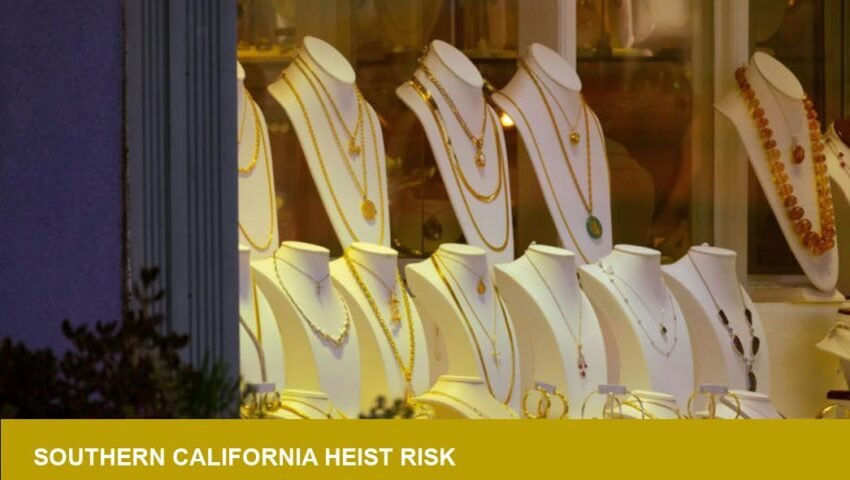
A violent smash‑and‑grab robbery at a Southern California jewelry store spiraled into a dangerous police chase and multiple crashes, ending in a SWAT manhunt that left innocent drivers injured and several suspects in custody. For local retailers the event immediately raises inventory exposure and insurance‑cost risk, and underscores gaps in perimeter and transport security.
- Region: Southern California
- Incident: smash‑and‑grab robbery escalated to police chase and multiple crashes
- Outcome: SWAT manhunt; several suspects in custody
- Collateral: innocent drivers injured during the pursuit
- Business implication: immediate inventory and insurance exposure for jewelers
Context: retail security and inventory exposure in 2025–26
The incident sits alongside a broader industry focus on physical‑security hardening. High‑value retail inventory — from large solitaires to micro‑pavé bridal sets and luxury watches with vitreous luster — is particularly vulnerable during opening hours and transit. Many independent stores still rely on glass‑front vitrines, open‑backed staffing practices and day‑safe procedures that can be outpaced by coordinated smash‑and‑grab tactics.
Insurers and loss‑prevention teams have pushed for pragmatic, low‑profile upgrades rather than theatrical fixes: laminated anti‑shatter glass, bolt‑down safes, remote monitoring with verified response protocols, and GPS tagging for high‑value items. For the quiet‑luxury sector, those measures must be integrated without undermining the tactile, close‑view experience clients expect — for example, keeping pieces behind satin‑finished pads in locked vitrines and offering appointment‑only viewings for oversized solitaires.
Impact: what US retailers, wholesalers and investors should do now
Retailers. Reassess inventory placement and movement immediately. Consider limiting window‑side exposure of high‑value items, adopting appointment viewing for high‑carat pieces, and tightening transfer protocols for couriers. Small operational changes — reinforced display cases, verified transport manifests and staff drills coordinated with local law enforcement — reduce loss and support insurance claims.
Wholesalers and consignors. Revisit delivery and pickup windows. Staggering movement of high‑value parcels and increasing use of insured, tracked transit can lower single‑event exposure. For consignments, insist on secure drop‑off procedures and verified chain‑of‑custody documentation.
Investors and insurers. Expect near‑term pressure on store‑level margins where premiums or security capital expenditure rise. Active loss‑prevention programs and verifiable operating practices will be material when underwriters price cover or when lenders assess collateral risk for retail locations.
For the sector, the episode is a sober reminder: protective measures that preserve the in‑hand, tactile experience of jewelry while materially reducing exposure will be the differentiator between resilient operators and those vulnerable to episodic loss.
Image Referance: https://www.msn.com/en-xl/news/other/violent-jewelry-store-heist-spirals-into-crashes-swat-manhunt-across-california/ar-AA1V5S3e?apiversion=v2&domshim=1&noservercache=1&noservertelemetry=1&batchservertelemetry=1&renderwebcomponents=1&wcseo=1