
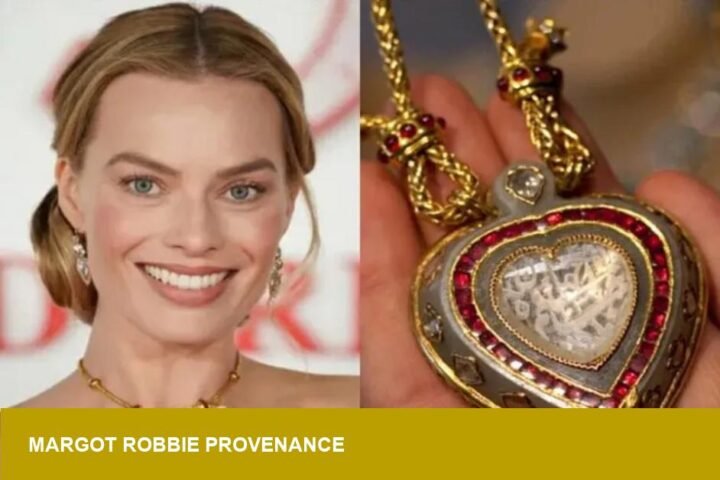
At the Los Angeles premiere of Wuthering Heights, Margot Robbie drew sustained attention not only for her role and wardrobe but for a necklace that has become the focal point of a debate about Mughal heritage — a discussion now carrying implications for provenance disclosure and valuation of historic‑style jewels in the US market.
- Who/When: Margot Robbie, Los Angeles premiere of Wuthering Heights.
- Issue: Public debate over Mughal heritage and cultural provenance.
- Market: US red carpet spotlight; implications for retailers, auction houses, and designers.
- Immediate effect: Elevated scrutiny on provenance claims and sourcing language for historic‑inspired pieces.
Context: provenance, historic motifs and industry scrutiny
The exchange around a high‑profile object worn on the red carpet reframes an ongoing industry conversation: how to distinguish authentic heritage pieces from contemporary designs that reference historical aesthetics. Mughal‑period jewellery historically shows techniques and materials — such as polki or rose‑cut diamond settings, enamel work with a vitreous luster, carved emerald cabochons and hand‑engraved gold surfaces — that carry both cultural significance and documentation requirements when sold as antiques.
In recent years collectors, museums and regulators have converged on traceability and origin disclosure as primary value drivers. That shift affects how an item marketed or described as “Mughal” is perceived: provenance documentation, export permits and clear seller statements now play a role in valuation and in reputational risk for retailers and auction houses.
Impact: what US retailers, wholesalers and designers should consider
For US retailers and wholesalers, the public debate illustrates three practical adjustments. First, merchandising language: label historic inspiration clearly as “inspired by” when provenance is not definitive, and avoid ambiguous claims that could invite scrutiny. Second, procurement and inventory: insist on chain‑of‑custody documentation for items positioned as antique or culturally significant, and archive import/export paperwork and expert reports where available.
Third, marketing and pricing: prepare for heightened customer questions about origin and ethical sourcing. Quiet‑luxury customers and institutional buyers increasingly expect detail — whether it’s an open‑back setting revealed to show original construction or a certificate that ties an object to a specific region and period. Where a piece references Mughal aesthetics, emphasize craftsmanship descriptors relevant to buyers (satin‑finished gold, filigree, micro‑pavé technique or tactile heft) without asserting historic provenance that cannot be documented.
Auction houses, appraisers and online platforms should likewise accelerate provenance checks and consider clearer taxonomy in catalogues: separate verified Mughal antiques from contemporary designs that borrow the language of the period. For designers and brands, the moment is a reminder that historic reference is marketable, but that it carries responsibility — in labeling, in supplier relationships and in the storytelling retailers choose to present to a discerning US clientele.
Image Referance: https://www.awazthevoice.in/entertainment-news/margot-robbie-s-necklace-sparks-debate-on-mughal-heritage-50241.html