
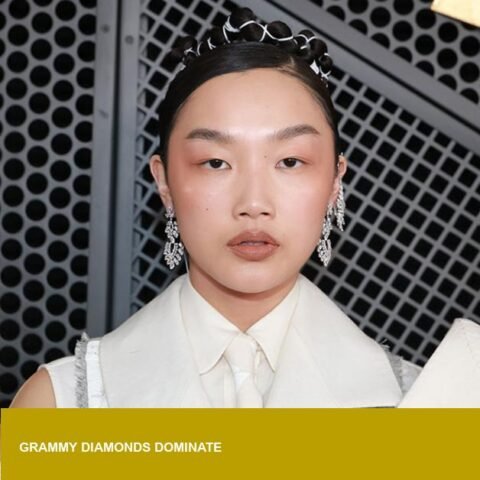
The 68th annual Grammy Awards delivered a “golden night” in more ways than one: while the evening produced historic wins for K-pop and other genres, the jewelry narrative was unequivocal — diamonds dominated red‑carpet styling, reinforcing the gemstone’s centrality in high‑profile cultural moments and drawing renewed attention from buyers and merchandisers.
- Event: 68th Grammy Awards (red carpet jewelry focus)
- Gemstone: Diamonds — dominant styling choice across celebrity looks
- Styling range: from delicate micro‑pavé accents to more substantial single stones (dainty and dazzling tension)
- Market region: United States — celebrity visibility that informs domestic merchandising
Context: where this sits in current jewelry demand
Diamonds have long been the default signifier for awards‑season dressing; at the 68th Grammys that preference was visible across both minimalist and more traditional red‑carpet approaches. The evening’s jewelry language — thin knife‑edge shanks set with micro‑pavé bands, single stones showing vitreous luster against satin‑finished metal — underscores two parallel currents in the market: an appetite for refined, wearable luxury and continued demand for classic diamond quality.
For trade professionals, the Grammys function as a framing event. Celebrity exposure does not create intrinsic rarity, but it amplifies perception: diamonds as a category retain cultural capital that can be translated into merchandising strategies without resorting to novelty alone.
Impact: practical implications for US retailers and wholesalers
Merchandisers should treat the Grammys’ diamond focus as a prompt to review assortments along two lines. First, ensure availability of pieces that showcase clean cuts and bright white stones with strong vitreous luster — settings that allow light return (open‑backed settings, minimal bezel) will read well to consumers influenced by red‑carpet imagery. Second, stock complementary dainty executions (micro‑pavé bands, knife‑edge profiles) that bridge bridal and fashion customers.
Wholesalers and buyers should calibrate merchandising language: emphasize craftsmanship notes — symmetrical cuts, secure prong work, satin‑finished gold for contrast — rather than hyperbolic claims. Marketing that references the Grammys should focus on provenance of design and the tactile qualities customers can expect: substantial heft in larger pieces, silky comfort in stacked rings, and consistent luster across matched sets.
Finally, this moment highlights a persistent truth for the US market: high‑visibility cultural events keep classic diamonds commercially relevant. For retailers the opportunity is operational rather than speculative — align inventory and visual merchandising to the quiet‑luxury preferences the Grammys showcased, and present diamonds in both minimal and elevated silhouettes to capture the broadest demand.
Image Referance: https://www.jckonline.com/editorial-article/diamonds-68th-grammy-awards/