
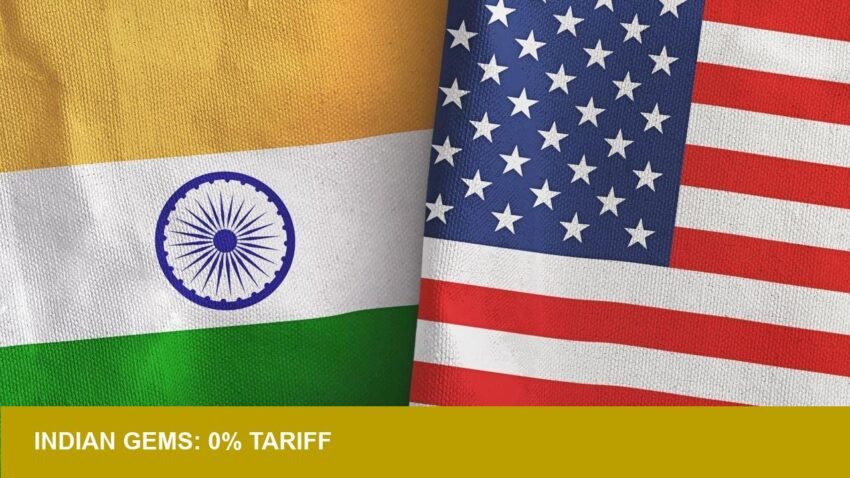
The United States and India have agreed on a trade framework that eliminates tariffs on Indian gems and natural-diamond imports, reducing the import tax to 0% under the proposed deal. The move removes a direct cost layer for Indian-sourced polished gems and natural diamonds entering the US market and creates immediate commercial levers for retailers and wholesalers.
- Tariff rate: 0% under the announced framework.
- Goods affected: Indian gems and natural diamonds for import into the US.
- Parties: United States and India; framework-level agreement.
- Market region: US imports, Indian export supply chain.
- Relevant segments: wholesale, bridal and high‑jewelry inventory sourcing.
Context: trade shift meets jewelry market structure
Removing import tariffs on Indian gems and natural diamonds intersects with long‑standing dynamics in the diamond and colored‑stone supply chain. India is a major processor of rough into calibrated, polished goods; lowering import charges reduces landed cost on inventory whose commercial value is graded by cut, color and clarity and finished with craft techniques such as micro‑pavé and open‑backed settings. For natural diamonds specifically, the tariff change narrows a structural cost gap between imports and domestic inventory, and it will shape purchasing decisions where vitreous luster and clarity grades are primary selling points.
The decision also sits alongside other forces — sustainability demands, chain‑of‑custody certification and the market’s ongoing dialogue about lab‑grown versus natural supply. While the framework addresses tariff barriers, traceability and disclosure remain separate competitive axes that sellers will need to reconcile with any lower landed cost.
Impact: what US retailers, wholesalers and investors should consider
For US retailers and wholesalers the most immediate effects are tactical: cost models and margin assumptions tied to Indian‑sourced stock should be revisited. Lower import taxation reduces a discrete cost input and can compress retail pricing or improve gross margin depending on how businesses choose to allocate the change. Merchandisers should re‑examine SKU-level profitability for products where origin, carat weight and clarity materially influence shelf price.
Operationally, buyers may accelerate direct purchasing from Indian cutting and polishing suppliers or expand assortment of calibrated stones, but they will also need to preserve controls on provenance and certification. Marketing and merchandising language should be precise — buyers and affluent consumers expect clear statements on origin, grading (cut, color, clarity) and whether items are natural rather than lab‑grown.
For investors and market watchers, tariff elimination is a structural variable that can increase supply responsiveness out of India and alter competitive dynamics between natural diamonds and other categories. The change may test price elasticity in key US segments such as bridal and high jewelry and will be a factor in inventory planning and working‑capital forecasts for retailers that source heavily from India.
Practical next steps for trade participants: update landed‑cost models, confirm certificate and chain‑of‑custody processes with new suppliers, and reassess promotional and pricing strategies to reflect the reduced tax burden while keeping transparency and product integrity front‑of‑house.
Image Referance: https://rapaport.com/news/us-to-nix-tariff-on-indian-gems-and-natural-diamonds/