
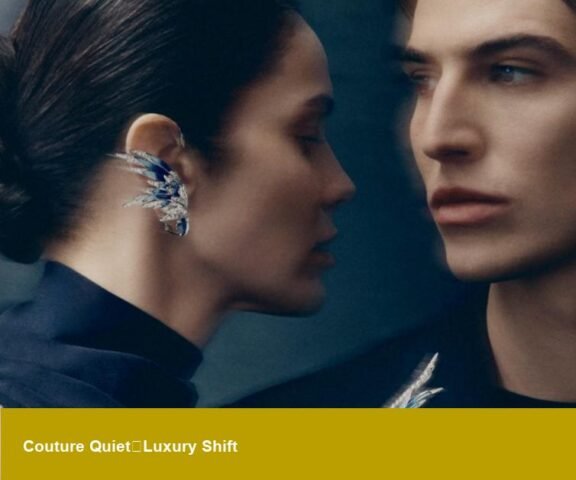
Who/What: High jewellery releases during 2026 Couture Fashion Week. What happened: Maison collections on the couture calendar presented reinterpretations of core heritage motifs, translating emblematic patterns into pared‑back, contemporary forms. Financial implication: The aesthetic pivot toward quieter, jewelry‑first designs carries clear merchandising and pricing implications for retailers and wholesalers.
- Event: 2026 Couture Fashion Week (high jewellery reveals)
- Design focus: heritage motifs reinterpreted into contemporary silhouettes
- Product tier: high jewellery; emphasis on craft and material presence
- Commercial signal: shift toward quiet‑luxury aesthetics with retailer impact
Context: where these releases sit in 2025–26 trends
The couture season’s high jewellery output continues a two‑year trajectory toward restraint over excess. Maisons are reworking signature emblems — scrolls, crests, architectural flourishes — into simplified volumes that foreground material quality and proportion. The effect is tactile: satin‑finished gold planes, open‑backed settings that reveal stone hue, and micro‑pavé used sparingly to preserve a stone’s vitreous luster rather than mask it. This is not maximalism retreating so much as a reallocation of visual weight from ornament to gemstone and silhouette.
For collectors and investors, the collections signal a renewed emphasis on legible provenance and craft. When heritage motifs are edited down to their graphic essence, they become easier to merchandise alongside contemporary wardrobes — a factor that matters for secondary market liquidity and studio commissions alike.
Impact: why US retailers, wholesalers and investors should care
US buyers will see the couture lexicon filter into wholesale assortments and retail windows over the next selling seasons. Practically, that means buyers should reassess inventory mix: allocate space to smaller counts of higher‑impact pieces that show substantial heft, closet‑friendly proportions and clear stories about origin and technique. Merchandising copy that explains a maison’s code — why a motif was edited, what metal and finishing were chosen — will become an advantage when the visual language prefers understatement.
From a pricing and margin perspective, quiet‑luxury trends can compress SKU velocity while raising per‑unit ASP if positioning is executed well. Retailers should test curated assortments that pair a restrained high‑jewellery anchor with accessible jewelry lines, rather than increasing depth in elaborate statement pieces. For wholesalers and designers, there is an opportunity to standardize technical specs (knife‑edge shanks, low‑profile prongs, calibrated open backs) so production can scale without diluting artisanal attributes.
Finally, marketing should reflect the material decisions consumers now prize: clear views of stone color and cut, notes on finishing (satin vs. high polish), and succinct provenance. In the US market, where quiet luxury messaging resonates with both established clientele and younger, investment‑minded customers, these couture releases provide a timely playbook — not a trend of spectacle, but a design language that supports longer product life and clearer price narratives.
Image Referance: https://www.luxuo.com/style/jewelry/2026-high-jewellery-releases-from-couture-fashion-week.html