
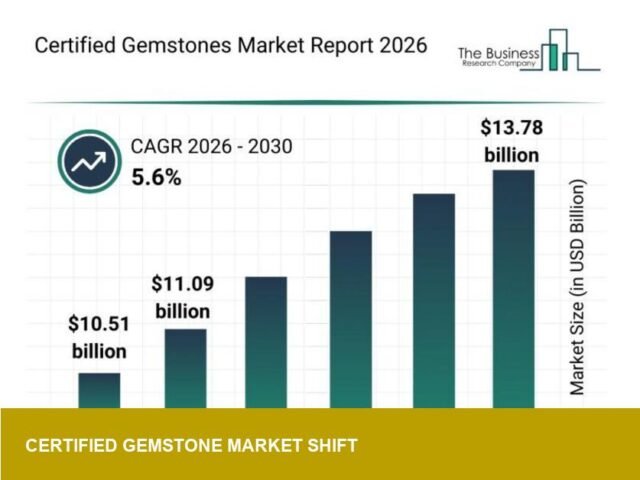
The Business Research Company has published a press release on openPR outlining key trends and emerging changes shaping the certified gemstones market landscape. The briefing highlights shifts in certification standards, sourcing transparency and distribution channels that could carry pricing, inventory and buyer‑confidence implications for retailers, wholesalers and investors in the US market.
- Source: The Business Research Company (press release)
- Published on: openPR.com
- Topic: certified gemstones market — certification, sourcing and distribution
- Primary audience: industry stakeholders — retailers, wholesalers, investors
- Date: as published on openPR (see original release)
Context: Where this fits in 2025–26 trends
The certified gemstones category is increasingly defined by provenance and verifiable grading rather than purely by carat, color or clarity alone. Buyers and B2B purchasers now expect certificate‑backed stones, clear origin disclosure and consistent grading language—factors that support pricing differentiation for stones with traceable origin and reputable laboratory reports. That dynamic touches both natural and lab‑grown supply chains: certification is moving from an optional sales tool to a component of risk management for inventory.
Practically, the market conversation extends to verification technologies and presentation: high‑resolution images of a stone’s facets, cut proportions (brilliant vs step cuts), and documentation that records treatment history and origin. For gems where tactile qualities matter—vitreous luster on a sapphire, silky nacre in a pearl, or the substantial heft paired with a knife‑edge shank in finished jewellery—clear certification reduces friction in higher‑value transactions and resale channels.
Impact: Why this matters in the US market
For US retailers and wholesalers the report signals that inventory without reliable certification will face higher commercial friction. Merchants should audit provenance practices, prioritise SKUs that carry laboratory reports, and display certificate images alongside product photography. From a merchandising perspective, certification allows a quiet‑luxury positioning: understated pieces in satin‑finished gold set with vetted stones command buyer trust more readily than similar items without documentation.
Operationally, suppliers and buyers will need tighter controls: standardised grading vocabulary on invoices, training for staff to read and explain reports, and updated online product pages that call out certificate issuer and treatment disclosures. Wholesale channels may shift toward suppliers who can bundle traceability with inventory, while online marketplaces that surface certificate metadata can reduce return rates and support premium pricing for verified lots.
For investors and category strategists, the development is a signal to weigh companies’ certification and traceability capabilities when assessing risk. Firms that integrate verifiable sourcing—either through recognized gemological laboratories or transparent supply‑chain documentation—are likely to better protect margins and buyer confidence than peers that rely on unverified stock.
What to watch: how quickly certification becomes standardised across segments (bridal, high jewellery, fashion), which laboratories gain market preference, and how retailers translate certificate assurance into quiet‑luxury merchandising and pricing strategies.
Image Referance: https://www.openpr.com/news/4423306/key-trends-and-emerging-changes-shaping-the-certified-gemstones