
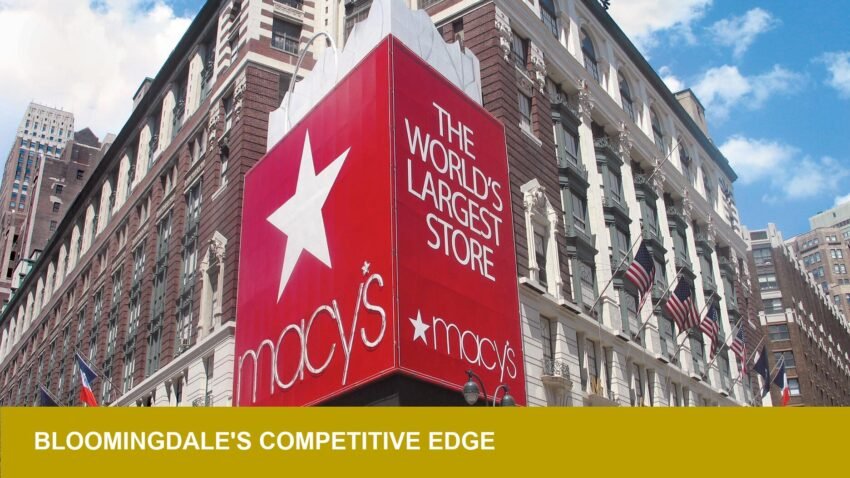
Macy’s has signalled a clearer path to recovery, a trajectory the retailer says is being bolstered by stronger performance at Bloomingdale’s. Industry observers note that the recent Saks Global bankruptcy has created a competitive opening that appears to favour Bloomingdale’s — a development that improves the outlook for Macy’s broader turnaround plans and reshuffles placement and bargaining power in the US luxury retail channel.
- Primary players: Macy’s and Bloomingdale’s (US department-store luxury channel)
- Catalyst: Saks Global bankruptcy creating competitive displacement
- Implication: improved positioning for department-store jewelry assortments and vendor negotiations
- Market region: United States — implications for national wholesale and retail accounts
Context: department-store shifts and jewellery assortment strategy
Department stores remain a key conduit for mid- and upper-tier jewellery brands. A stronger Macy’s, with Bloomingdale’s benefiting from competitors’ retrenchment, fits into a 2025–26 dynamic where retailers prioritise curated, high-margin assortments. For jewellery partners that sell through these channels, that means a renewed emphasis on pieces that read as quiet luxury: discreet proportions, satin-finished gold surfaces, micro-pavé detail, open-backed settings that optimise brilliance, and design choices that convey substantial heft without overt branding.
Merchandising teams will likely favour SKUs that balance accessibility with perceived value — for example, classic knife-edge shank rings, streamlined chain necklaces with high-quality clasps, and pearl pieces showing silky nacre — over more experimental, high‑ticket couture items that require intensive sell-through effort.
Impact: what US retailers, wholesalers and designers should act on
For jewellery vendors, Macy’s strengthened positioning and Bloomingdale’s competitive gain mean re-evaluating wholesale strategies and inventory allocation. Practical actions include tightening assortments to focus on higher-velocity quiet-luxury lines, negotiating better terms for priority placement, and preparing merchandising narratives that emphasise craftsmanship and traceability rather than promotional depth.
Buyers should re-assess planograms and promotional calendars: with fewer high-end doors from a competitor, demand could concentrate in remaining department-store fixtures, changing sell-through cadence and replenishment rhythm. Retail teams should brief visual merchandising on tactile attributes — lustre, weight distribution, and setting openness — that influence in-store conversion, while marketing pivots to subtle storytelling that underscores provenance and build quality rather than discounting.
Investors and category managers monitoring margin and inventory risk will read this as a strategic redistribution rather than a sudden windfall. The net effect for the US jewellery market will depend on how quickly Macy’s and Bloomingdale’s convert competitive displacement into stable sales gains without eroding price architecture through promotions.
For suppliers and independent designers, the moment is an invitation to secure stronger listings with department stores that are consolidating luxury jewellery demand — but do so by aligning product with the quiet-luxury aesthetic and operational realities of national retail chains.
Image Referance: https://nationaljeweler.com/articles/14801-macy-s-turnaround-plans-shows-promise-boosted-by-bloomingdale-s