
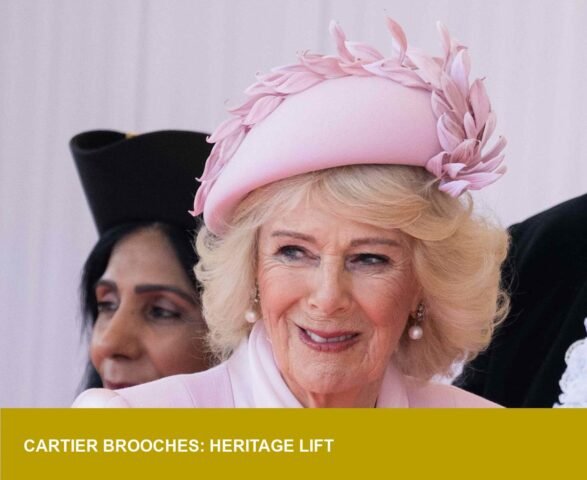
On March 18, Queen Camilla wore a pair of Cartier diamond brooches that Queen Elizabeth previously wore on what has been described as one of the monarch’s worst days. The accessories’ royal provenance and public reappearance are quietly significant: such provenance tends to increase collector interest and reinforce the pieces’ heritage value within the high‑jewellery secondary market.
- Piece: Cartier diamond brooches
- Date worn by Camilla: March 18
- Provenance: Previously worn by Queen Elizabeth on a notably difficult day
- Market signal: Reinforces premium for royal‑provenance jewellery among collectors
Context: provenance and quiet‑luxury demand in 2025–26
Provenance has become a primary value driver as collectors and private buyers favour pieces with documented history over anonymous inventory. Within the quiet‑luxury register, a royal association functions less as ostentation and more as an assurance of pedigree — a shorthand for craftsmanship, conservation and continuity. In that light, Cartier brooches with a direct link to the late Queen qualify as heritage objects whose attribution can command a pricing premium in resale and auction channels.
For dealers and auction houses, the visual cues matter: an archival Cartier setting, the diamonds’ vitreous luster and a classic brooch silhouette read as authentic. Retailers positioning estate and vintage categories should prioritise clear provenance statements, dated photographs and conservators’ notes to translate that narrative into buyer confidence.
Impact: what US retailers, consignors and investors should do
In the US market, the reappearance of high‑profile royal pieces is a reminder that storytelling is central to moving higher‑ticket heritage stock. Brick‑and‑mortar retailers and online platforms can capitalise by tightening provenance documentation on consignments, highlighting verified royal connections in merchandising, and offering private‑viewing experiences for serious collectors. For auctioneers and consignors, the move suggests a steady appetite for named‑owner jewels rather than anonymous estate items.
Investors and category buyers should treat this as a signal, not a guarantee: royal provenance can add liquidity and a margin premium, but it also places a premium on authentication and condition. Where possible, secure photographic evidence of prior wear, conservation records and any archival correspondence to support valuation. For jewellery teams, the lesson is practical — provenance is part of product quality, and in 2025–26 it will increasingly determine whether a vintage piece sits in the showcases or in the sale catalogue.
Image Referance: https://www.aol.com/queen-camilla-wears-pair-cartier-134524686.html