
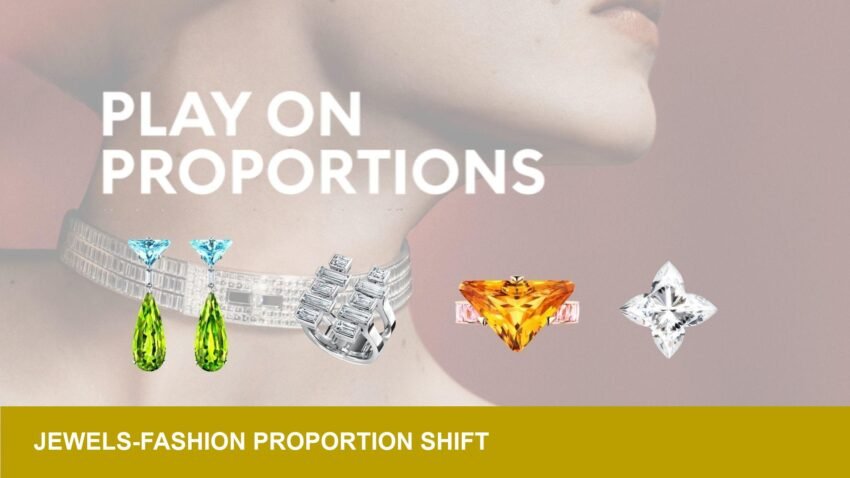
The new dialogue between fashion icons and jewelers is changing how volume, scale and finish read on the wrist and neckline. Designers are playing deliberately with proportions—oversized links against fine chains, sculptural cuffs with micro-pavé edges and open-backed settings—that signal a design-led retail shift in assortment and price-tiering rather than a fleeting trend.
- Design focus: proportion play—contrast between bold volume and delicate accents
- Craft techniques: micro-pavé detailing, open-backed settings, satin-finished metals
- Wearability: layered volumes for daytime and scaled pieces for evening
- Commercial angle: luxury and accessible-luxury assortments must reconcile heft with subtlety
Where this sits in 2025–26 trends
Proportion manipulation is a logical extension of the quiet-luxury movement: pieces read as restrained at a glance but reward close inspection. The work is less about overt embellishment and more about tactile contrast—substantial heft in a satin-finished gold cuff, the vitreous luster of a bezel-set stone set against a knife-edge shank, or the silky nacre of mother-of-pearl used as a planar counterpoint to chunky links. Techniques such as open-backed settings and micro-pavé allow light control and economy of weight while preserving perceived value. On runways, these pieces act as architectural counterpoints to tailoring, translating directly into buyable tiers for both high jewelry and elevated ready-to-wear collaborations.
Why US retailers and buyers should take note
For US retailers and wholesalers the practical implications are inventory and merchandising driven. Assortments will need clearer tiering—introducing scaled interpretations of the same proportion play across price points so shoppers can trade up without abandoning a stylistic thread. Visual merchandising should emphasise tactile qualities and craft: display pieces to highlight substantial heft, exposed joinery, satin versus polished finishes, and the way layered proportions sit on the body.
From a marketing standpoint, quiet narratives that call out craftsmanship, finish and fit will outperform purely promotional language. For designers and buyers, the opportunity lies in modularity—pieces that transform proportion through detachable elements or layering systems—which preserves margin while addressing cross‑category demand. For investors and category managers, this is a design direction that re‑frames SKU velocity: expect slower, higher‑margin sales on standout volumetric pieces alongside faster turnover of pared‑back, stackable essentials.
In short, the romance between jewels and fashion is less about flashy collaboration credits and more about scale and finish: a shift that influences assortment architecture, merchandising language and how price tiers are communicated to a discerning US clientele.
Image Referance: https://www.prestigeonline.com/id/style/jewellery/fashions-new-love-affair-with-jewels-2026/