
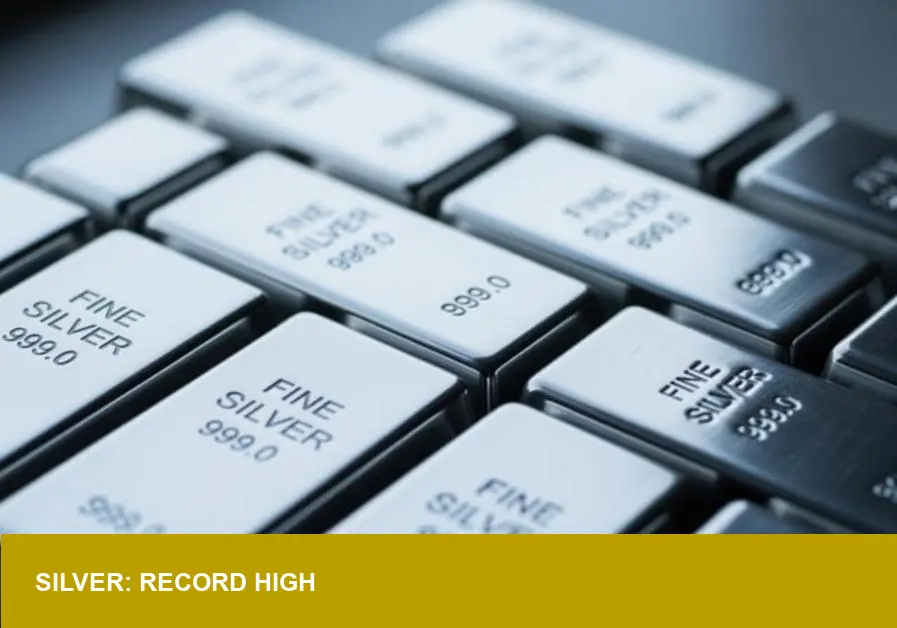
Silver has surged to record highs as a structural supply squeeze and booming green-technology demand converge, creating fresh investment upside and a consensus forecast near $55 per troy ounce for 2026. The white metal’s industrial role — in EVs, PV solar and data-center hardware — is already translating into physical tightness and higher leasing costs, with some strategists projecting a test of $65–$75/oz if the industrial expansion continues.
- Price: Record highs (Dec 2025); consensus ~ $55/oz 2026; upside $65–$75/oz under stress scenarios
- Carat Weight: Unit: 1 troy ounce (tr oz) — industrial-scale demand measured by tonnes
- Origin: Primary supply concentrated in Mexico, Peru; ~70–80% produced as byproduct of base-metal mining
- Date: December 2025 (current rally and analyst outlook)
Context: Industrial Demand Meets Monetary Appeal
Unlike gold’s investor-and-jewelry profile, silver carries substantial heft in industry. Its vitreous luster and unmatched electrical conductivity make it indispensable for photovoltaic cells and certain high-conductivity contacts in EVs and AI hardware. The Silver Institute’s data point to a fifth consecutive annual deficit: demand from solar installations, EV electrical systems and expanding 5G/AI infrastructure has outpaced the slow-moving supply curve, since most silver is recovered incidentally from copper, lead and zinc operations.
Macroeconomic signals are reinforcing the move. A softer dollar and expectations of Fed easing have pushed investors toward tangible, non-yielding assets. Silver now sits at the intersection of a green-energy materials boom and renewed safe-haven flows — a dual-demand dynamic that amplifies price momentum and physical scarcity.
2025 Trends That Matter
Sustainability: The acceleration of utility-scale and distributed PV projects is a direct demand driver for silver. Policy incentives and corporate decarbonization commitments continue to scale installations, increasing long-term metal intensity per MW.
Sculptural Aesthetics and Retail: On the jewelry front, designers are responding to consumer preference for substantial, tactile pieces. That means higher finished-goods silver usage in statement work, supporting retail-level demand even as industrial use dominates volumes.
Supply Inelasticity: With 70–80% of output tied to other base-metal cycles, silver’s supply response to price is muted. This structural inelasticity is why leasing costs and physical premiums have widened — a market mechanic that can translate elevated prices into persistent tightness rather than short-lived spikes.
Impact: What US Retailers and Investors Should Do
For investors: Treat silver as a hybrid exposure. Recommended tactical steps include a staggered accumulation to manage volatility, allocation to silver-backed ETFs for liquidity, and selective physical holdings where storage and provenance standards are met. Monitor Fed communications and industrial capex signals — both drive short-term volatility but also define the medium-term trend.
For US retailers and manufacturers: Expect higher sourcing premiums and longer lead times for physical silver. Negotiate fixed-price supply windows where possible and consider modest inventory buffers for finished goods, particularly substantial sculptural pieces where metal content is a margin driver. For high-volume industrial consumers, explore forward contracts and alloys that preserve conductivity while optimizing cost.
Near-term risk: a sudden industrial slowdown or sharper-than-expected Fed tightening could trigger volatility. Upside scenario: continued green-tech deployment and ETF inflows push prices into the $65–$75/oz corridor.
Sources
Image Referance: https://southfloridareporter.com/%F0%9F%9A%80-silver-surges-to-record-highs-amid-supply-squeeze-and-green-tech-boom/