
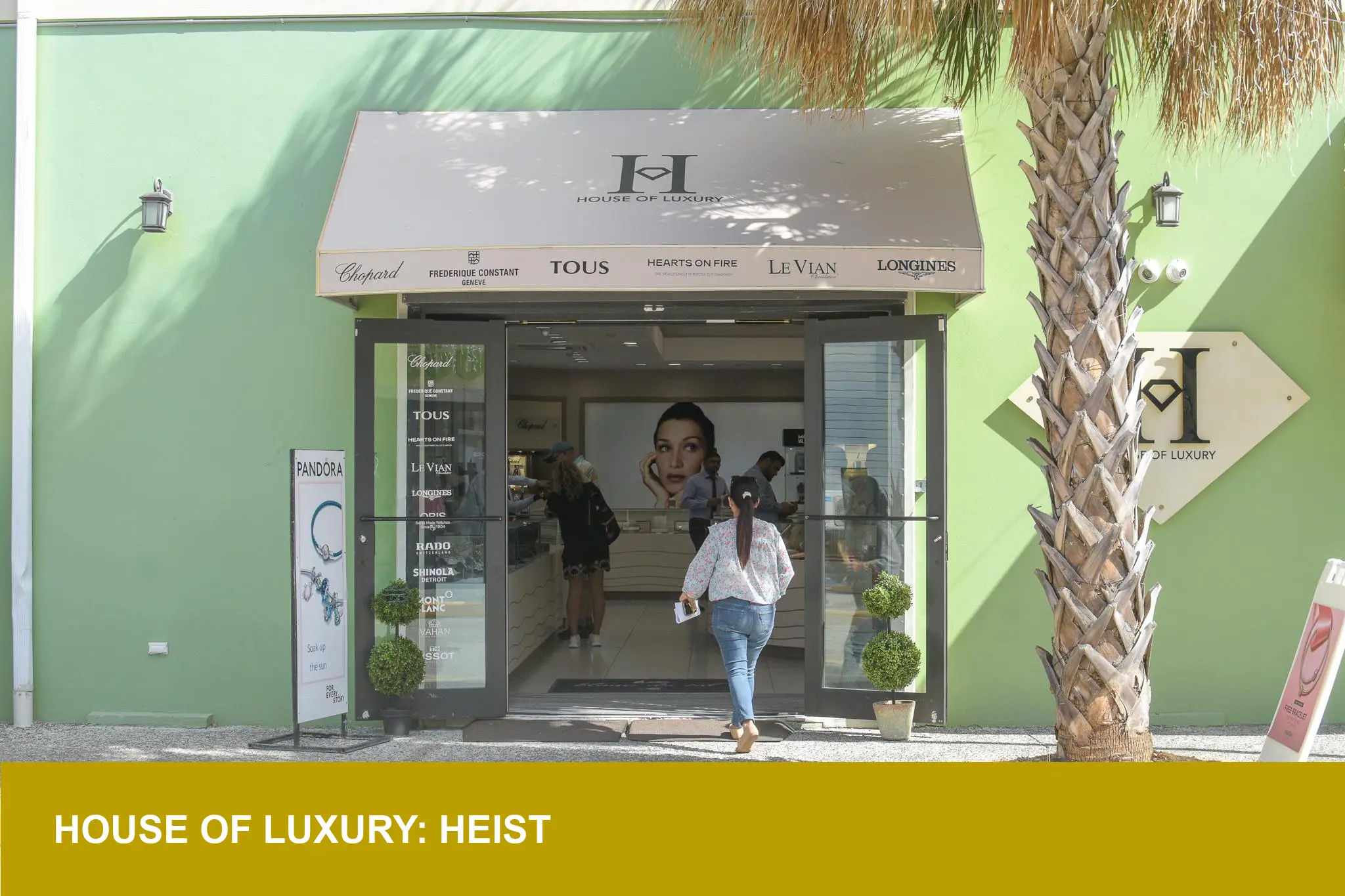
The House of Luxury jewellery store at Tortola’s Cyril B. Romney Pier Park was targeted by armed assailants on Dec. 2; officials confirm a recovered speedboat and four people brought in for questioning, but the value and weight of the stolen inventory remain undisclosed, leaving retailers to price the risk in real time.
- Price: Undisclosed (previous 2023 loss: nearly $300,000)
- Carat weight: Not released
- Origin: House of Luxury, Tortola Pier Park, Road Town, British Virgin Islands
- Date: Dec. 2, 2025 — boat recovered in Kingstown; four persons questioned
What officials have said
Interim Police Commissioner Richard Ullger confirmed increased patrols and said investigators are pursuing “a number of important leads,” but public briefings have been deliberately sparse. Tortola Pier Park Ltd. and the National Security Council issued statements condemning the attack and promising enhanced crime-prevention measures; both declined to disclose operational specifics “for security reasons.”
Context — why this matters in 2025
High-value jewellery thefts are morphing with the market. While lab-grown diamonds have softened price points for some categories, natural stones and signature high-jewellery pieces retain vitreous luster and substantial heft in secondary markets — and they remain primary targets for organized theft. The 2023 Pier Park robbery, in which nearly $300,000 was taken and not recovered, prompted a government-led security audit recommending electronic gating, denser patrols and CCTV upgrades. Yet the recurrence of a brazen, speedboat-backed escape highlights persistent gaps between recommended controls and street-level vulnerabilities.
Retailers in 2025 are also juggling sustainability expectations and provenance tracking. Buyers increasingly demand traceable supply chains; that same traceability — when paired with RFID or serialized certificates — can improve recovery prospects but also creates new operational overhead and data-security considerations.
Impact for US retailers and investors
For US independents and regional chains that stock high-value natural stones or transport inventory to resort markets, this incident is a market warning rather than an anomaly. Key takeaways:
- Security architecture: Revisit perimeter controls and transit protocols. Electronic gating and layered CCTV are baseline; consider tamper-evident transport containers and vetted courier partners.
- Inventory composition: Diversify assortments between high-ticket natural stones and lab-grown or design-forward pieces with lower black-market liquidity. Lab-grown stones tend to command narrower resale margins, reducing their attractiveness to opportunistic thieves.
- Provenance and tech: Adopt serialized tagging, secure ledgers or limited-access provenance systems. These slow illicit resale and aid law enforcement recovery without creating visible storefront cues that invite theft.
- Insurance and crisis planning: Ensure policies cover transit and offshore retail exposure. Rehearse statements and tenant coordination to avoid contradictory public messaging that can harm customer confidence.
The silence from authorities and the limited public detail will likely drive retailers to treat operational security as a competitive, not just compliance, consideration. For investors, rising incidence of targeted robberies in tourist-facing luxury nodes argues for underwriting that factors in geographic concentration risk and the growing cost of protective technology and insurance premiums.
For now, the House of Luxury matter remains under investigation. The recovered speedboat and four persons brought in for questioning suggest leads are moving, but until charges or inventory disclosures follow, the financial exposure for the brand and the broader Pier Park luxury cluster will remain part of a quiet, costly recalibration of how high-value jewellery is displayed, moved and insured.
Image Referance: https://www.bvibeacon.com/cops-stay-tight-lipped-about-pier-park-robbery/