
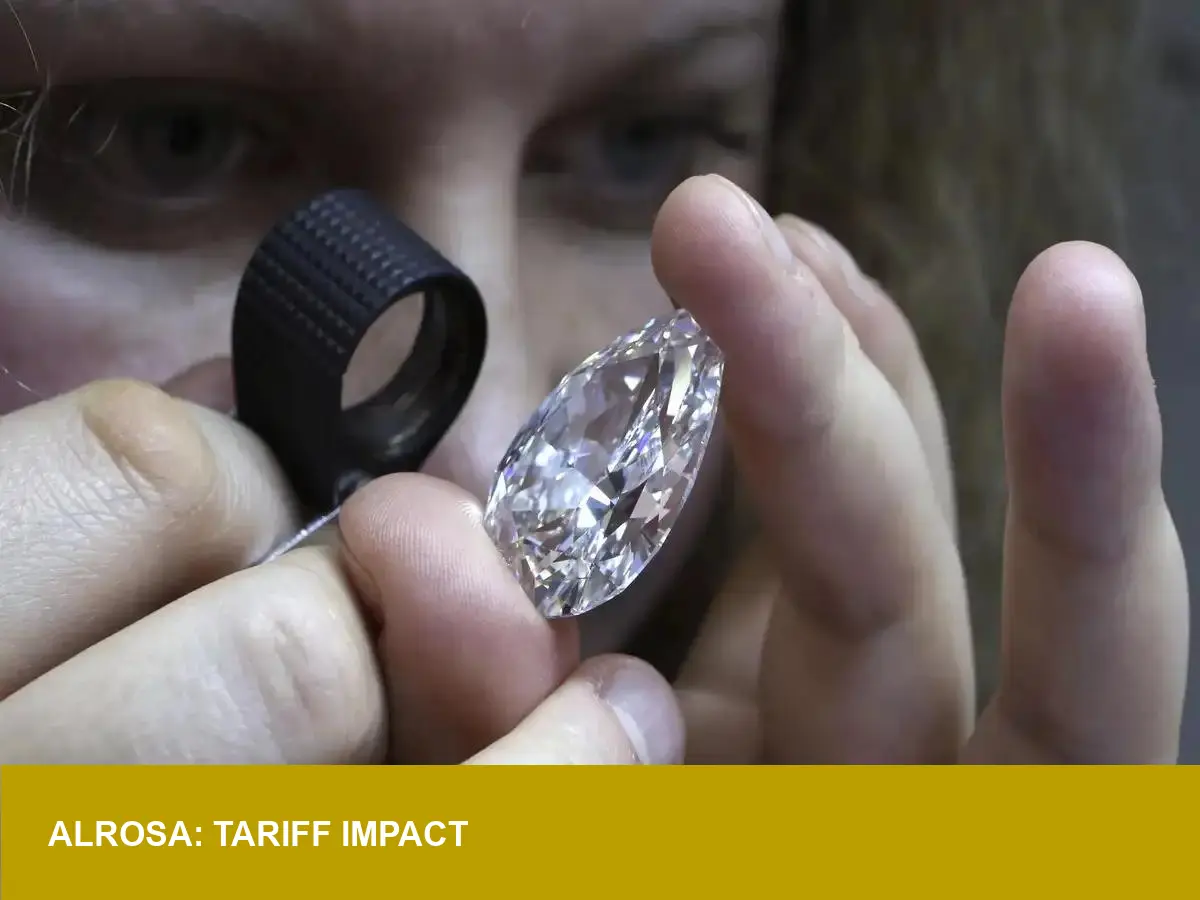
ALROSA CEO Pavel Maryinchev says the company expects a 10–15% production reduction this year as U.S. tariff hikes on polished imports force adjustments across India’s cutting-and-polishing pipeline. The long-term view: manageable disruption with pressure on margins and a potential through-cycle price recovery for natural stones.
- Price: N/A (market context — natural diamond segment > $80B)
- Carat weight: 33 million carats produced in 2024; 10–15% expected decline (2025)
- Origin: ALROSA — Russia (natural diamonds)
- Date: December 2025 (market comments and Q3–Q4 2025 data)
Impact of U.S. Tariffs on Polished Diamonds
Maryinchev framed the U.S. tariff hikes on polished imports from India as a shock to the value chain rather than an existential threat. India’s cutting-and-polishing sector — responsible for the vitreous luster and polished facets that give stones retail appeal — registered a buying spike in August–September and a slowdown in October as participants recalibrated. Higher import levies will translate into near-term cost pressure; some of that additional burden is likely to be transmitted down the chain or reflected in slightly higher retail prices for finished pieces.
Market Stability and Production Adjustments
ALROSA has responded by suspending output at marginal mines and steering production toward higher-value goods. The company’s planned 10–15% reduction from a 33 million-carat base in 2024 reduces supply while inventories across the pipeline are normalising — a dynamic that supports price recovery for natural stones. Strong retail readings in Q3 2025, including an average 29% year-on-year sales rise among major Indian retailers and encouraging Chinese data, underpin the CEO’s cautious optimism for the holiday season.
Synthetic Diamonds and Price Divergence
Wholesale prices for lab-grown diamonds plunged nearly 40% year-on-year in Q3 2025. Maryinchev described that segment as occupying a different market stratum — lower-priced alternatives with less historical provenance and different buyer intent. The widening price gap gives natural diamonds a clearer premium: collectors and luxury buyers pay for provenance, the substantial heft of authenticated supply chains, and the rarity embedded in natural stones’ formation.
Environmental Claims and Carbon Accounting
ALROSA has leaned into provenance as a competitive advantage. The company cites independent audits that attribute a net negative carbon effect to its operations — absorbing more than one million tonnes of greenhouse gases annually — while pointing to lifecycle assessments that place lab-grown production emissions in the 300–500 kg CO₂ per carat range. For sustainability-minded consumers, these contrasting claims reshape the conversation: origin, audited carbon accounting and verifiable chain-of-custody matter as much as aesthetics.
Context: 2025 Trends That Matter
Three 2025 currents intersect here. First, sustainability disclosure and third-party verification are now core buying signals for affluent customers. Second, lab-grown diamonds are settling into a distinct price tier — useful for design-forward, sculptural aesthetics but unlikely to displace natural stones in high-luxury segments. Third, supply moderation from major miners is creating a technical backdrop for price recovery if demand holds through the holidays.
Why This Matters to U.S. Retailers and Investors
For U.S. retailers: the immediate task is margin management and assortment strategy. Tactical responses include selective inventory sourcing, clear provenance messaging at point of sale, and price architecture that preserves the premium on natural stones while offering lab-grown options for entry-level or statement pieces. For investors: monitor inventory days across the pipeline, Q4 retail sell-through, and ALROSA’s production cadence. A sustained inventory normalisation coupled with constrained supply can create a favorable re-rating environment for natural-diamond exposure.
In practical terms, expect temporary passthroughs of tariff-related costs, opportunities to reprice midstream inventory as supply tightens, and renewed marketing emphasis on audited origin and carbon claims. The luxury buyer’s sensitivity remains tactile — the vitreous luster, the calibrated heft, the finish of a polished facet — and that experiential advantage is central to ALROSA’s case for the natural-diamond premium.
Image Referance: https://observervoice.com/alrosa-ceo-discusses-diamond-market-outlook-indias-adaptation-to-us-tariffs-164820/