
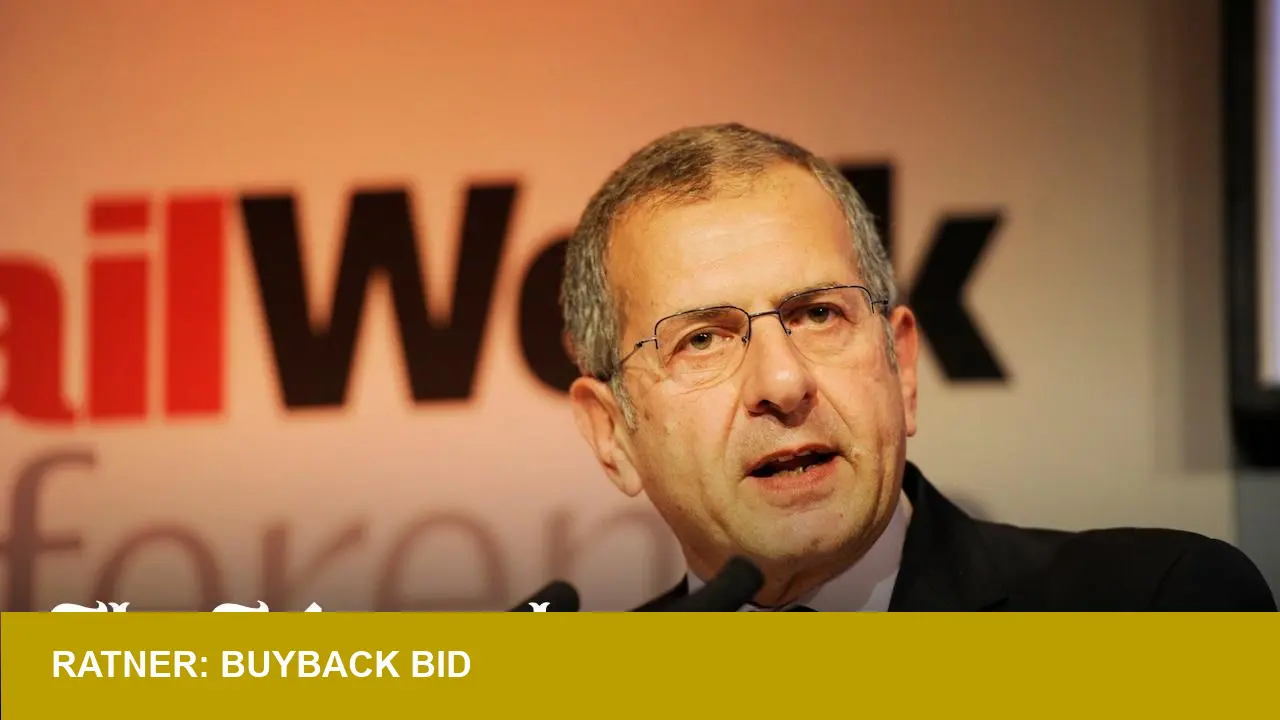
Gerald Ratner, the entrepreneur whose 1990s remark cost him control of Ratners, has launched a formal push to buy back the UK arm of the jewellery business he once ran. He is targeting H Samuel and Ernest Jones in a bid he says would stop ongoing shop closures and address rising pre-tax losses — a move that, if completed, would transfer an underperforming division off Signet’s $3.7bn balance sheet and into a privately backed consortium overseen by Mr Ratner.
- Price: Undisclosed (consortium committed funds)
- Carat Weight: c.2,500 shops (historical scale of Ratners network)
- Origin: Former Ratners Group — now Signet’s UK division
- Date: 13 December 2025
Background
Mr Ratner, 76, says he has been pressing shareholders and speaking to Signet’s executive team through a New York bank. His appeal is blunt: he believes the US owner is “doing everything wrong” in the UK and has allowed the division to decline, citing last year’s disposal of the company’s best locations. The episode resurrects an infamous episode from his past — a public gaffe in which he described some products as “total c–p” — but his current pitch is framed as a pragmatic rescue rather than nostalgic revival.
Market Context — 2025 Retail Trends
The bid lands against a backdrop of 2025 retail dynamics: brands are rebalancing physical footprints, prioritising experiential merchandising and tighter inventory turn. For jewellery specifically, buyers are increasingly sensitive to provenance and price transparency; lab-grown diamonds and sustainably sourced metals continue to reprice segments of the market. Signet’s decision to keep the UK arm on its books while concentrating returns in the US mirrors a wider strategy among multinational retailers to consolidate where margins are strongest.
What Mr Ratner Proposes
Mr Ratner proposes a localised turnaround: smaller price points, revised buying strategies and assortments calibrated to British buying patterns. He argues that a UK-specific buying formula — not a one-size-fits-all American import — will restore footfall. He also says his backers, largely British with one US investor, have the substantial heft to complete a purchase and reposition the brands toward value-led customers.
Impact for US Retailers and Investors
For US retailers and investors, Ratner’s campaign is a case study in strategic allocation. A sale would allow Signet to convert a loss-making arm into liquidity and sharpen focus on higher-margin North American operations. For investors, the outcome offers two clear scenarios: a clean divestment that improves Signet’s operating profile, or a reputational flip that could reintroduce an iconic UK retail footprint under local stewardship but with significant execution risk.
Why It Matters
Beyond the personal drama, the bid highlights a recurring 2025 theme: the value of local market knowledge in jewellery retail. Physical fixtures — the vitreous luster of counters, the calibrated lighting, the measured heft of a sale — still matter to British customers. If Ratner succeeds, he could demonstrate that brand rehabilitation and inventory reengineering can unlock latent value. If he fails, it will reinforce the lesson that legacy names alone do not guarantee a commercial recovery.

Signet was contacted for comment. Mr Ratner says he would welcome the challenge: “I’d very much like to try and get that business back on its feet. It would be a wonderful experience.”
Image Referance: https://www.telegraph.co.uk/business/2025/12/13/gerald-ratner-plots-to-buy-back-jewellery-empire-he-ruined/