
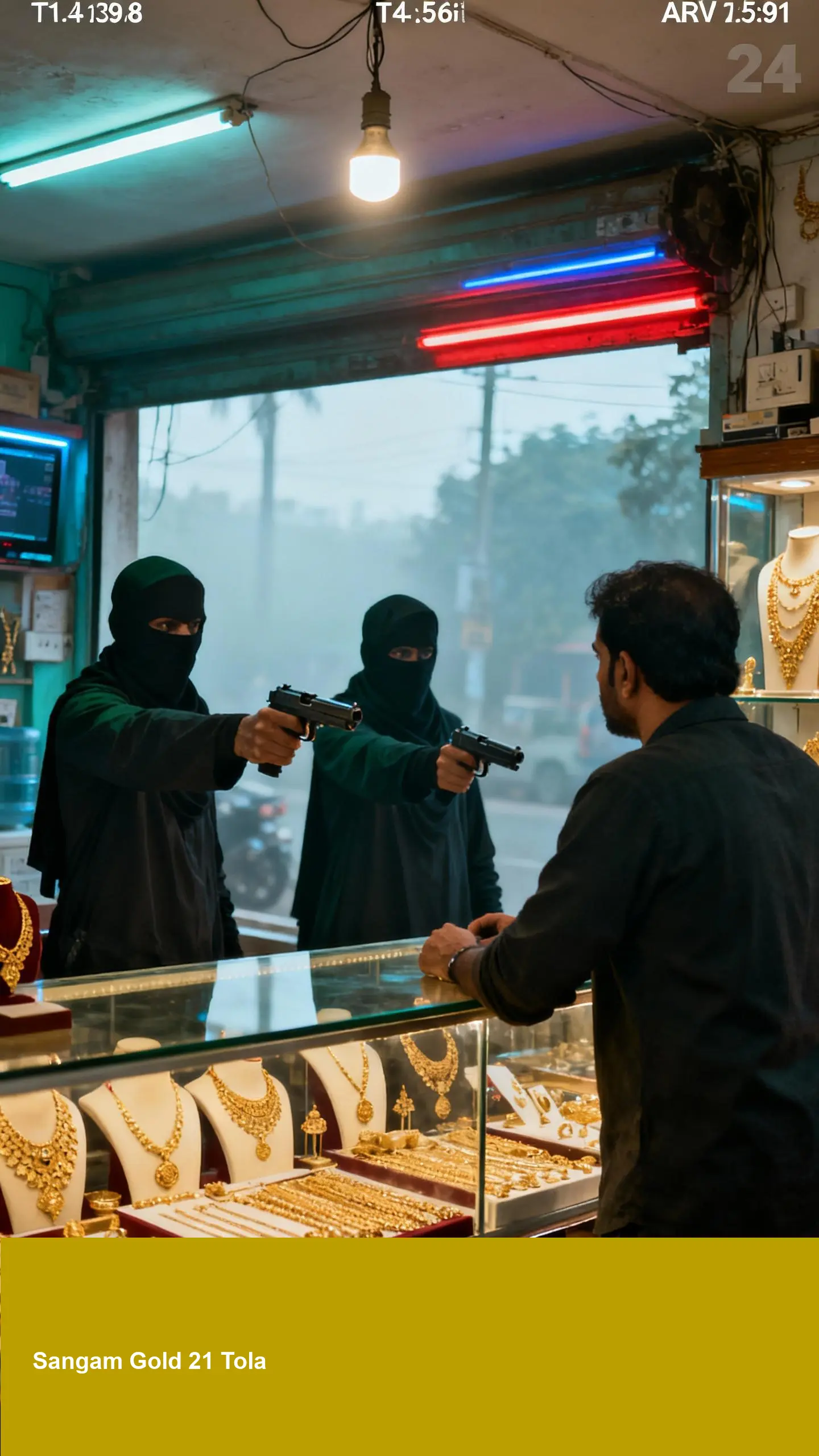
Sangam Gold Jewellers in Seawoods was held at gunpoint on 23 December 2025; three assailants in burqas forced entry and escaped with 21 tola of gold and ₹35,000 in cash, representing a substantial inventory loss and an immediate retail-security alert for jewellery operators.
- Price (cash taken): ₹35,000
- Weight: 21 tola (~245 g)
- Location: Sangam Gold Jewellers, Seawoods, Navi Mumbai
- Date: 23 Dec 2025
What happened
At about 10:35 a.m. three individuals disguised in burqas entered the shop posing as customers and threatened owner Narayanlal Sharma at gunpoint. They removed a tray of gold—the 21 tola with its palpable, substantial heft and warm, satiny surface—and fled in a car with a fake number plate. The episode was captured on CCTV; a formal complaint has been registered at the NRI Police Station. Investigators say the suspects were seen earlier in the Nerul area from 8:30 a.m. and were tracked toward Kamothe via the Sion–Panvel Highway after the robbery.
Investigation and immediate facts
Navi Mumbai Police and the Crime Branch have launched an intensive search using CCTV footage and vehicle tracking. ACP Mayur Bhujbal noted that facial identification is hampered by the disguises, but the operation has been escalated. The use of a fake licence plate and a planned route indicate premeditation; insurers and local retailers are watching the case closely for leads on pattern and method.
Context — why this matters in 2025
In a market increasingly focused on traceability and sustainability, physical gold remains uniquely portable and therefore a persistent target. The theft underscores three 2025 trends converging on jewellery retail: the push for stronger supply-chain provenance (hallmarks, micro-engraving and blockchain registers), a move toward decentralised inventory strategies that minimise on-floor bullion, and sharper investment in layered security—vaults with measurable access logs, RFID-enabled trays and AI-assisted CCTV analytics. The tactile reality of gold—its density and easy liquidity—keeps it in a different risk category from morphing categories such as lab-grown diamonds or sculptural pieces, which are less fungible on secondary markets.
Impact for US retailers and investors
For U.S. retailers and investors the incident is a practical reminder: operational risk is an asset-class consideration. A direct loss of 21 tola of gold affects working capital, insurance premiums and can skew stock assortment decisions. Retailers should review three practical controls immediately: reduce overnight floor stock and retain higher-value items in off-site vaults; adopt traceability measures (micro-engraving, discreet serialisation and tamper-evident packaging); and accelerate investment in predictive monitoring—AI-driven alerts and linked police feeds where available.
Insurers will press for verifiable provenance and demonstrable security standards during renewal. Investors should expect sharper disclosure from operators on inventory controls and contingency reserves. For a category where the material itself carries a palpable heft and instant liquidity, these steps are not cosmetic but central to preserving retail margins and investor confidence.
The Sangam Gold episode in Seawoods is being treated as both a criminal matter and a market signal: beyond the immediate manhunt and recovery effort, it will likely shape how small and mid-size jewellers balance display, disclosure and defensive design into 2026.
Image Referance: https://gallinews.com/seawoods-jewellery-shop-me-din-dahaade-loot-burqa-pahan-aaye-chor-21-tola-gold-aur-%E2%82%B935000-cash-le-kar-farar/