
India will chair the Kimberley Process (KP) in 2026, a move that restores consensus to the body that governs the rough‑diamond trade and immediately reduces a layer of market uncertainty for retailers and investors tracking conflict‑free supply.
- Price: Not applicable — governance role; expected to stabilise market confidence in conflict‑free rough diamonds
- Carat Weight: N/A (policy appointment, not a gemstone)
- Origin: Kimberley Process (international certification initiative); India is a founding participant
- Date: Consensus vote, Dec. 5, 2024; India will serve as vice‑chair for the tail end of 2025 and chair in 2026
Context
India’s election — its third term leading the KP — follows more than a year of friction inside the forum. The process requires 100% consensus to enact policy, and several candidacies faltered: Thailand withdrew from the vice‑chair role for 2025, Belarus was rejected by Western members over ties to Russia, and Israel declined Qatar’s bid. The United Arab Emirates served an unprecedented second year as a custodian chair while the KP sought a successor.
The appointment was confirmed by India’s Gem & Jewellery Export Promotion Council (GJEPC) after a consensus vote on Dec. 5. GJEPC chairman Kirit Bhansali framed the selection as an endorsement of India’s “principled and inclusive approach,” and signalled the council will work closely with government and industry to shore up compliance and confidence in conflict‑free diamonds.
Why the Decision Matters in 2025–2026
For a market increasingly shaped by sustainability narratives and provenance demands, the KP’s chairmanship is not merely ceremonial. Policy stewardship affects how the industry documents crystalline provenance, enforces chain‑of‑custody protocols and responds to geopolitical risks. That matters now as buyers weigh the vitreous luster and pedigree of natural stones against the rising acceptance — and price discipline — of lab‑grown alternatives.
Operationally, a clear chair reduces the risk of regulatory fragmentation. Buyers, insurers and exchanges prefer a predictable governance rhythm: fewer administrative delays on export certificates, steadier verification of parcels with substantial heft, and more consistent messaging on what qualifies as “conflict‑free.”
Impact for U.S. Retailers and Investors
Short term: the appointment calms an immediate reputational and compliance pressure point. U.S. retailers that market provenance and conflict‑free sourcing should expect a steadier flow of certification and a lower probability of sudden policy disputes that can freeze shipments or cloud inventory provenance.
Medium term: if India’s chairmanship pushes for tighter compliance or clearer reporting standards, suppliers with robust traceability will gain pricing soft power; stocks of uncertified rough could face longer clearance times or discounting. For investors, that dynamic refocuses premium on companies with audited supply chains and reduces tail risk associated with sudden sanctions or member withdrawals.
Strategic adjustments to consider:
- Increase supplier audits and documentation for chain‑of‑custody.
- Revisit inventory lead times for natural rough and consider lab‑grown allocations to manage price flexibility.
- Lock in insurance and financing terms that explicitly cover provenance queries.
What to Watch
Watch for India’s policy priorities once the chair assumes the role in 2026: whether the KP pursues stricter certification, refines rules on source disclosure, or opens technical pathways for better verification. Any move that tightens provenance controls will nudge premium toward suppliers who can demonstrate high‑resolution traceability — a growing axis of value in the U.S. market.
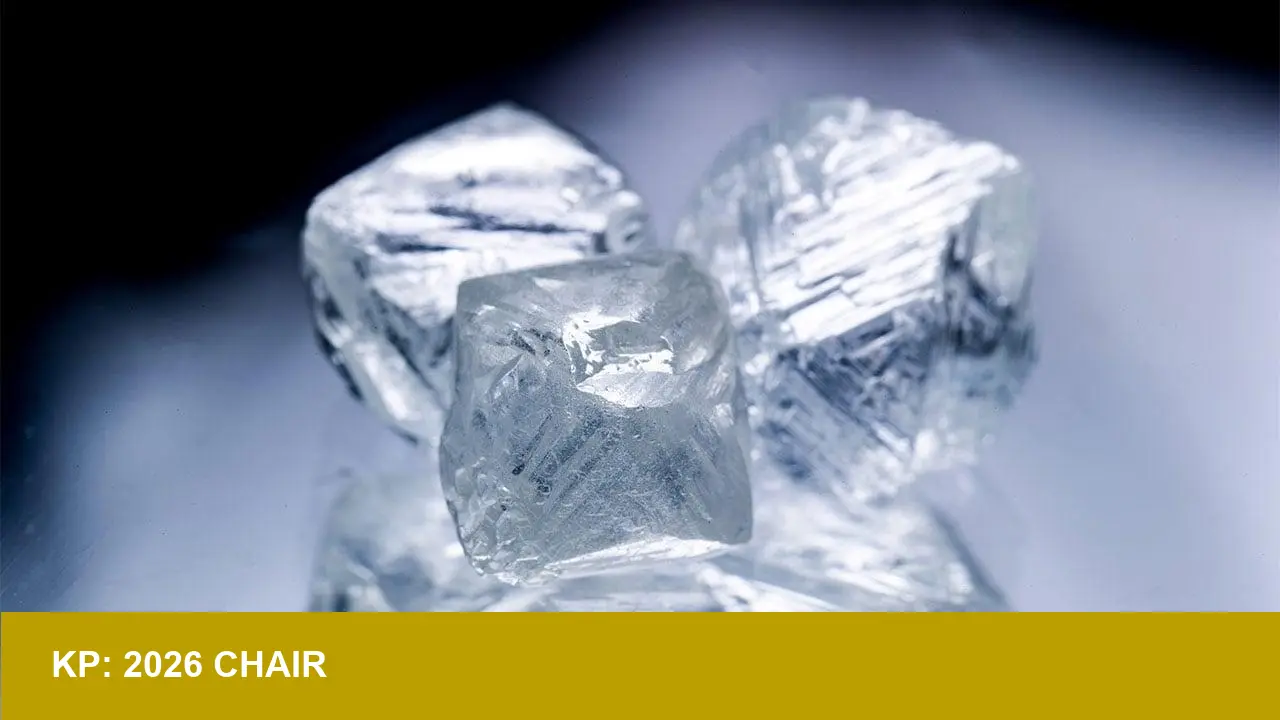
Image: Rough diamonds. (Shutterstock)
Image Referance: https://rapaport.com/news/kimberley-process-finally-secures-2026-chair/