
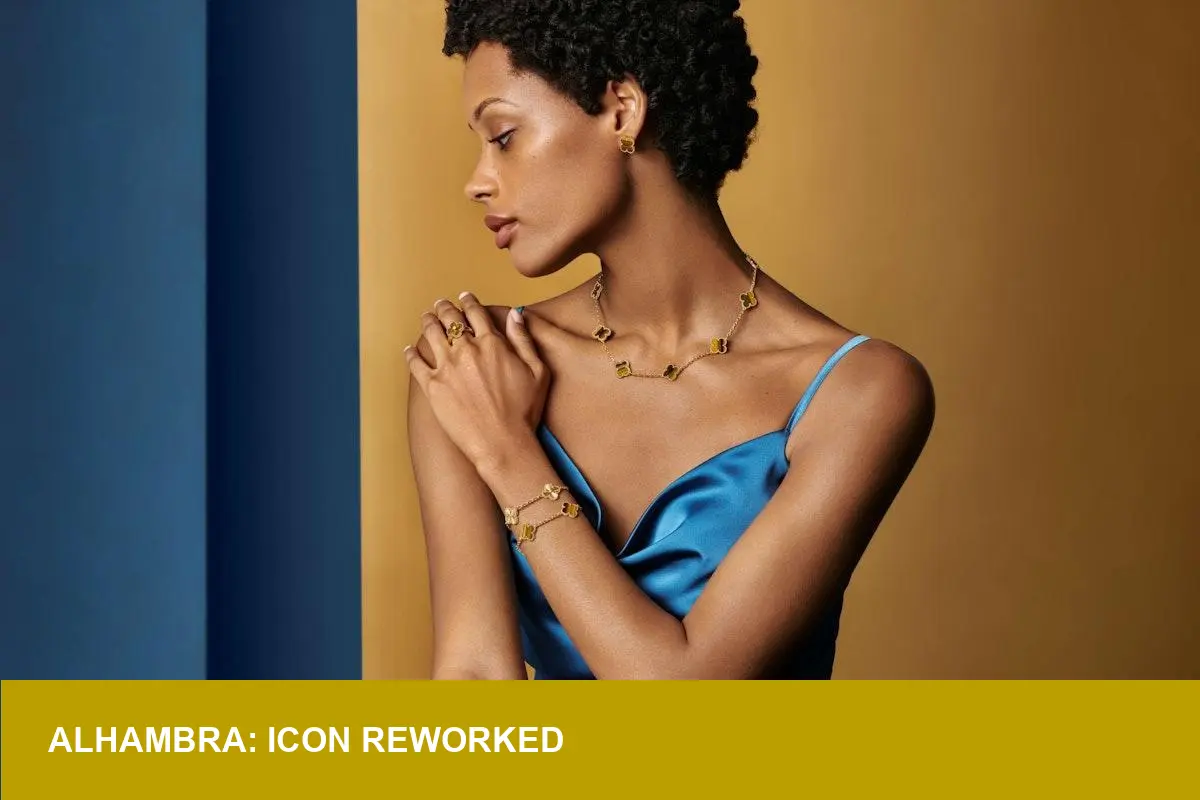
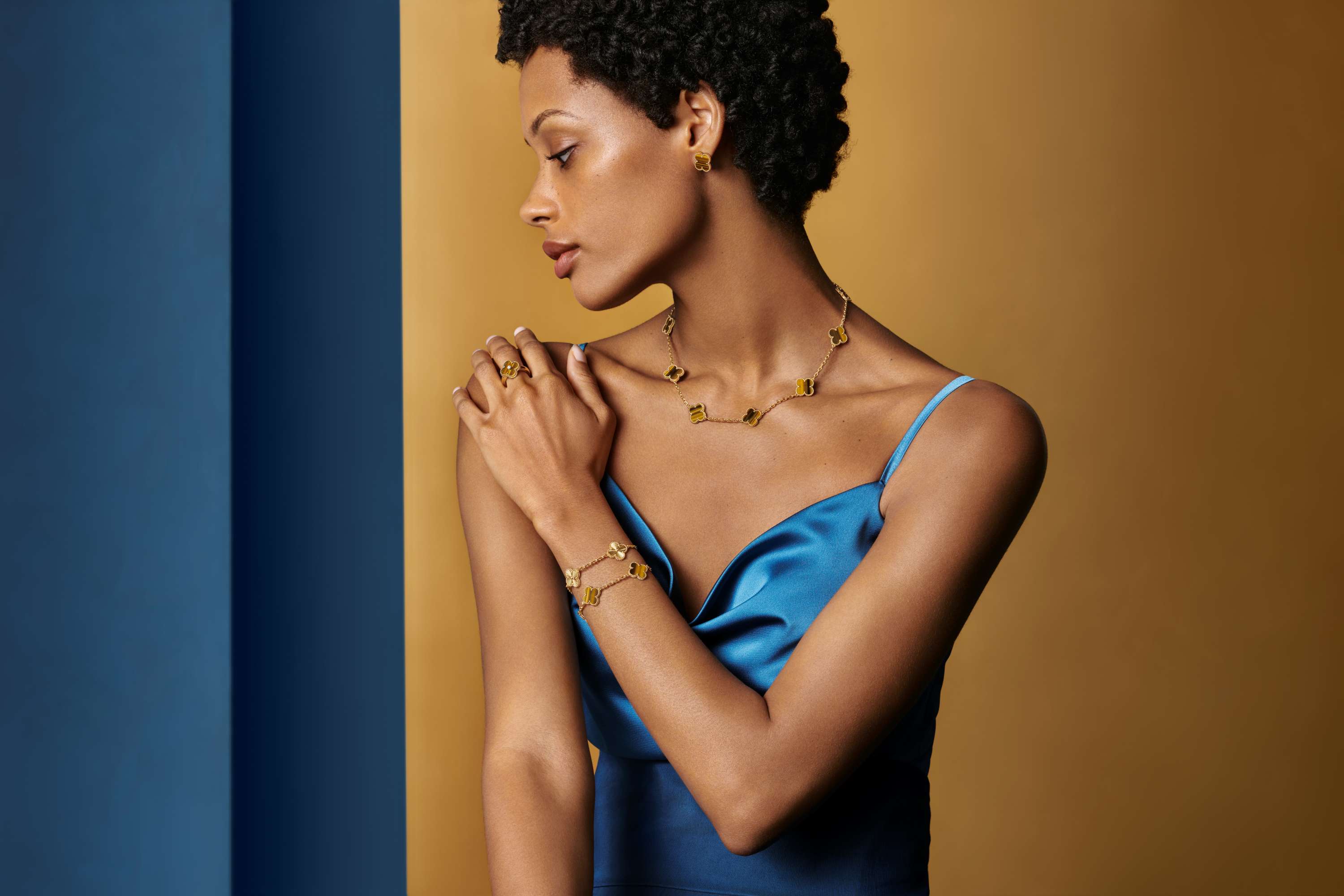
Van Cleef & Arpels has quietly refreshed the Alhambra emblem, and the Maison’s material and scale experiments are already reshaping secondary-market pricing and boutique demand.
December 26, 2025 — Tim Ngau
Fast Facts
- Price: Entry motifs start in the mid four‑figures; high‑jewellery iterations can reach six figures at retail.
- Carat weight: Varies by model — motif stones typically 0.1–3 ct; high‑jewellery versions carry larger calibrated gems.
- Origin: Maison Van Cleef & Arpels, Paris; design language evolved since 1968.
- Date: Launched 1968; continual refreshes through 2025.
Design and Craft
The Alhambra’s four‑leaf clover motif remains the structural backbone of the collection, but successive iterations have altered scale, material and finish. The original long necklace presented 20 motifs in creased gold with a beaded border; later variants introduced stones such as malachite, lapis lazuli, onyx and mother‑of‑pearl. Recent reworkings lean into tactile contrasts — polished vitreous lusters against satin‑brushed gold, motifs of varying proportions that offer a discernible substantial heft when worn.
How the Icon Has Shifted
What reads as continuity is in fact steady adaptation. From the Vintage Alhambra beaded border to Pure Alhambra’s pared geometry and Sweet Alhambra’s reduced scale, the Maison has stretched the motif across price points and occasions. That pluralism is intentional: it keeps the Alhambra collectible while feeding both entry‑level demand and couture‑grade appetite for rarer stones and bespoke executions.
2025 Context: Sustainability, Materials and Market
In 2025 the conversation in fine jewellery centers on provenance and material innovation. Alhambra’s latest variations respond to three converging trends: a pivot toward responsibly sourced coloured stones, the selective use of lab‑grown diamonds for accent stones to maintain price accessibility, and a growing appetite for sculptural silhouettes that read as jewellery and miniature objet d’art. For Van Cleef & Arpels, preserving artisanal beadwork and hand‑finished edges remains a way to differentiate against lower‑cost alternatives.
Impact for US Retailers and Investors
For US retailers, the Alhambra’s breadth is an operational advantage: a single motif supports multiple entry points — from accessible motif pendants that rotate through floor stock to high‑ticket, limited‑run pieces that drive appointment sales and private client traffic. For investors and secondary‑market observers, the collection’s longevity and periodic refreshes create predictable vintages. Earlier references, especially 1968–1990 pieces in unaltered condition, are increasingly sought after; refreshed releases tend to lift desirability for vintage counterparts, tightening supply on the secondary market.
What to Watch
- Price stratification: expect pressure upward on vintage prices as boutiques promote limited high‑jewellery runs.
- Material sourcing: traceable stones and disclosure will be central to maintaining US demand.
- Lab‑grown positioning: used as accents rather than headline stones to preserve perceived value.
After 57 years the Alhambra is not merely an icon; it’s a living product strategy — a motif reinterpreted across technique, surface and scale to meet evolving tastes and market dynamics. For retailers, the task is curatorial: place pieces that convey vitreous colour and substantial heft on the selling floor, and use limited‑run launches to drive urgency without resorting to overt discounting. For collectors, the signal is clear: discretion and condition will command the premium.
Image Referance: https://www.lofficielsingapore.com/jewellery/van-cleef-arpels-reinvents-luck-heritage-alhambra-collection-jewellery-accessories