
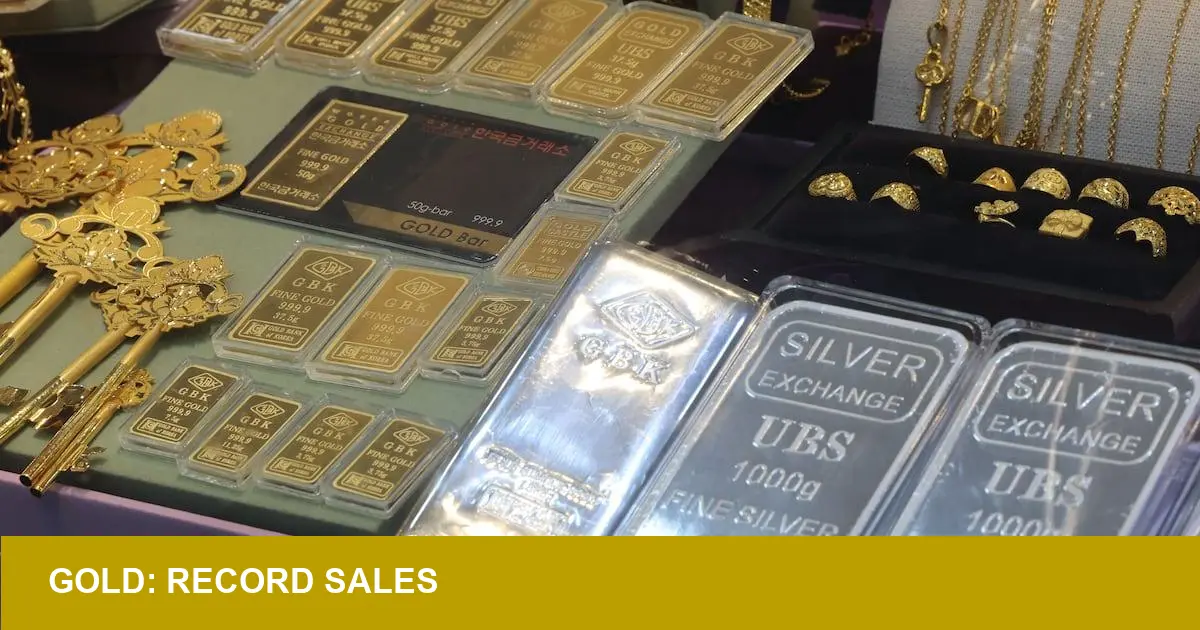
Individual investors in South Korea have driven record purchases of physical gold, silver and dollar-denominated deposits, pushing gold bar sales to KRW 678.64 billion year‑to‑date and dollar deposits to a fresh high — a marked shift into tangible, liquid stores of value.
- Price: Gold bar sales KRW 678.64 billion; Silver bar sales KRW 30.68 billion; Individual dollar deposits $12.73 billion (five major banks, data to the 24th).
- Carat Weight: Not applicable — transactions in bullion measured in grams and kilograms; gold banking trades from 0.01 g units.
- Origin: Reported across five major South Korean banks (KB Kookmin, Shinhan, Hana, Woori, NH Nonghyup); visual context in Jongno‑gu, Seoul.
- Date: Data reported through the 24th of the month (reported by financial sector on the 28th).
What happened
Sales of physical gold bars at the five major banks rose to KRW 678.64 billion through the 24th — already four times last year’s annual total (KRW 165.44 billion) and exceeding prior annual records. Silver bar sales jumped more sharply (KRW 30.68 billion, roughly 38× last year among handling banks). Meanwhile individual dollar deposits at the same banks reached $12.73 billion, a year‑to‑date record as customers sought hard currency amid exchange‑rate swings and occasional central‑bank intervention.
Context: 2025 market drivers
Three structural forces in 2025 help explain the pivot to tangible stores of value. First, prolonged regulatory constraints in domestic real estate markets have narrowed traditional avenues for retail wealth accumulation, redirecting savings toward liquid, physical assets. Second, currency volatility and intermittent foreign‑exchange intervention have elevated the dollar as a functional hedge. Third, evolving consumer preferences in luxury jewelry — an emphasis on substantial heft, visible provenance and materials with clearly auditable supply chains — dovetail with demand for bullion over speculative paper positions.
Supply frictions amplified buying: South Korea’s official suppliers paused gold bar shipments twice this year, yet retail demand held firm. At the same time, innovations such as “gold banking,” which allows trading from 0.01‑gram units, are widening access and converting small savers into bullion holders.
Why US retailers and investors should care
For US jewelers and luxury retailers the signal is twofold. Retail: demand is shifting toward pieces and offerings that convey tangible value — customers respond to substantial heft, dense golden tone and the vitreous luster of unalloyed silver, and to transparent provenance that reads well in both showroom and online imagery. Stocking or partnering to offer small‑unit bullion, allocated gold‑linked products or insured vaulting can capture customers looking to convert discretionary spend into a liquid asset.
Investment: elevated retail appetite for physical metal can presage broader price support. Rapid accumulation at the retail level compresses available supply, especially when official mints curb distribution; that dynamic increases upside risk for bullion prices during periods of renewed geopolitical or rate volatility. Dollar deposit inflows also matter for FX exposure — US retailers with cross‑border supply chains should monitor USD/KRW swings and potential pass‑through effects on sourcing costs.
Practical takeaways
1) Reassess inventory and product mix: introduce heavier‑weight pieces and small‑denomination bullion options that communicate both jewelry craftsmanship and capital preservation. 2) Tighten provenance messaging and audited supply‑chain documentation to align with sustainability and traceability demand. 3) Hedge operational exposure: consider contractual FX clauses or forward cover if sourcing from markets affected by won/dollar volatility. 4) Monitor supplier availability: pauses in official mint supply can create short windows to buy physical stock at retail.
That understated shift — from speculative assets to tactile stores of value with substantial heft and clear provenance — is quietly remapping how consumers allocate savings and how luxury retailers should position product and services in 2025.
Image Referance: https://www.chosun.com/english/market-money-en/2025/12/28/RWAUEGKZD5C7BCY4STVL7FFEFE/