
The second headline: Six consumer shifts in China are reallocating billions in retail spend — from a high-end gold revival that drew Kering’s investment to a 602.1 billion RMB sports-market surge — reshaping where luxury returns will land in 2026.
- Market size: Sports gear market projected at 602.1 billion RMB (2025)
- Audience: Micro-short drama users forecast at 696 million (2025)
- Household power: Women aged 45–59 — 157 million people, ~10 trillion RMB in annual spending influence
- Corporate signal: Kering investment in Baolan (Dec 2025)
- Distribution shift: Instant retail delivery window — 30–60 minutes
Context: Why these shifts matter in 2025
China’s market is moving from scale to structural value. The six trends below — fitness as identity, short-drama commerce, maximalist aesthetics, middle-aged women as power consumers, a domestic-led gold revival, and instant retail — each intersect with larger 2025 forces: sustainability criteria filtering premium buys; lab-grown and alternative-value narratives challenging diamond primacy; and sculptural aesthetics, which favour tactile materials and substantial heft over visual lightness.
1. Fitness boom transforms the sports market
Government-backed weight-management programmes and a cultural pivot to exercise have created a new consumer logic: sport as habitual identity. The result is a market with vitreous luster — dollars flowing into performance wear, technical footwear and ancillary services such as sports rehab and sports tourism. Domestic players like Anta have used acquisitions and cultural collaborations to claim mid-to-high-end share, pairing technical know-how with local design cues. For jewelers and accessory makers, the lesson is material: durable finishes, ergonomic fittings and a tactile sense of utility will command premium margins.
2. Short dramas emerge as a new marketing frontier
Short-form dramas have matured into stylised, campaign-ready narratives. With nearly 700 million viewers projected in 2025, micro-dramas now function as acquisition channels as much as entertainment. Luxury houses experimenting with the format are focusing on sustained storytelling and character-led commerce — not one-off product drops. The format rewards texture in storytelling: slow, sensorial moments (a ring catching lamplight; the substantial heft of a purse) translate into measurable purchase intent.
3. The maximalist revival: luxury embraces abundance
Maximalism is returning as an emotional antidote to uncertainty: saturated colour, dense ornamentation and layered silhouettes deliver psychological surplus. Brands tailoring pieces with sculptural proportion, textured metalwork and richly worked surfaces are meeting an appetite for expressive certainty. This is particularly relevant to high-end jewelry, where the tactile quality — the cold resistance of gold, the tactile grain of an engraved surface, the vitreous luster of polished stones — becomes a currency of perceived value.
4. Middle-aged women emerge as new power consumers
Women aged 45–59 now represent a decisive purchasing cohort, controlling meaningful household spend and preferring depth over projection. They respond to craftsmanship narratives that demonstrate provenance and long-term value: artisan storytelling, focused editorial programming and products with a measured, substantial presence. For brands, engagement must move from trend-driven imagery to sustained value conversations that respect experience and durability.
5. Gold takes center stage in the high-end jewelry market
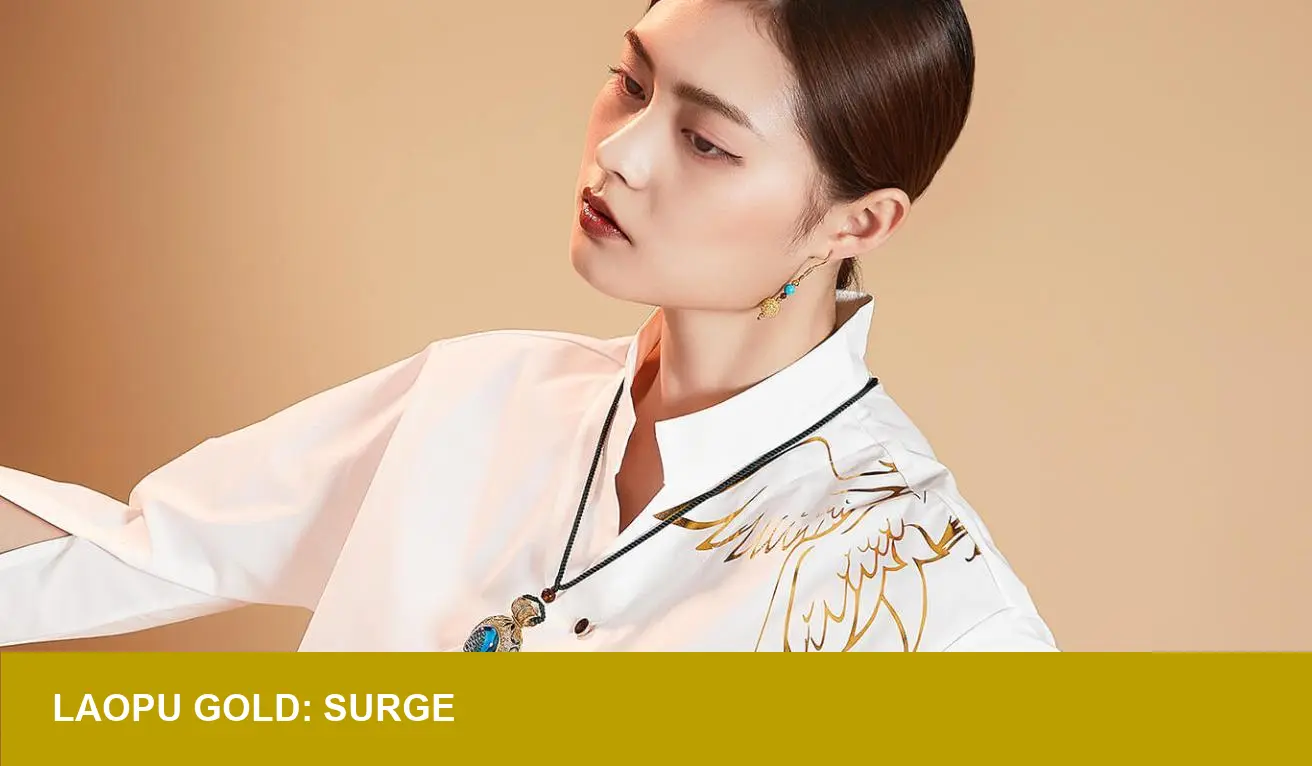
Domestic brands such as Laopu Gold, Jemper and Baolan have re-centred gold as a premium expression rather than a commodity. The market’s revival — evident in queues outside flagship stores and in strategic minority investments by global groups like Kering — reframes gold with renewed craftsmanship credentials. These pieces trade on a textured patina, engraved reliefs and the substantial heft of traditional techniques, creating distinct price resiliency and collectible appeal within domestic retail precincts.
6. Instant retail transforms brand distribution strategies
Instant retail collapses the lead time between desire and possession. By delivering goods inside 30–60 minutes, the model converts narrative momentum into impulse conversion across categories. Sportswear, fast-moving accessories and lower-price point jewelry are natural fits; high-end categories will need to engineer localized availability, micro-fulfilment and curated instant assortments to participate without diluting brand equity.
Impact: What this means for US retailers and investors
These shifts recalibrate risk and opportunity. For US retailers and luxury investors the implications are practical and strategic:
- Inventory & assortment: Prioritise tactile, well-finished pieces and limited-run gold work that read as collectible rather than disposable.
- Channel strategy: Experiment with micro-fulfilment pilots and short-drama partnerships to shorten the path-to-purchase while preserving brand control.
- Customer targeting: Rebalance marketing investment toward affluent middle-aged women and sport-lifestyle consumers; craft narratives around provenance and substantial heft rather than ephemeral trends.
- Partnerships & M&A: Monitor Chinese domestic brands with artisanal credentials — Kering’s stake in Baolan is an early signal that global capital will pay premiums for heritage craft anchored in local technique.
- Sustainability & alternatives: Position lab-grown or recycled-metal offerings as technical and ethical complements to traditional gold, not as substitutes — emphasise measurable provenance.
In sum, China’s luxury landscape in 2025 rewards material conviction: pieces with visible craft, tactile surfaces and a sense of substantial presence will out-perform. Brands that translate those qualities across product, storytelling and delivery stand to capture the next tranche of premium spend.
Image Referance: https://jingdaily.com/posts/six-consumer-shifts-shaping-china-s-luxury-future