
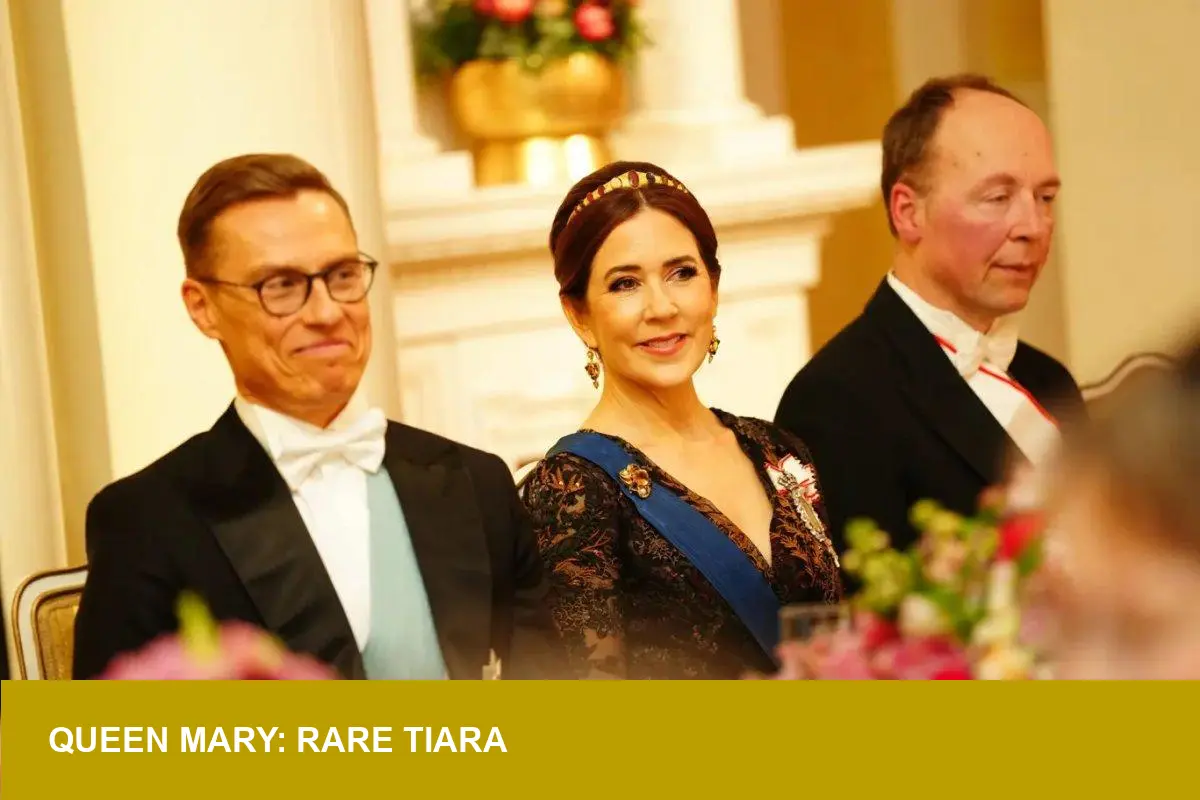
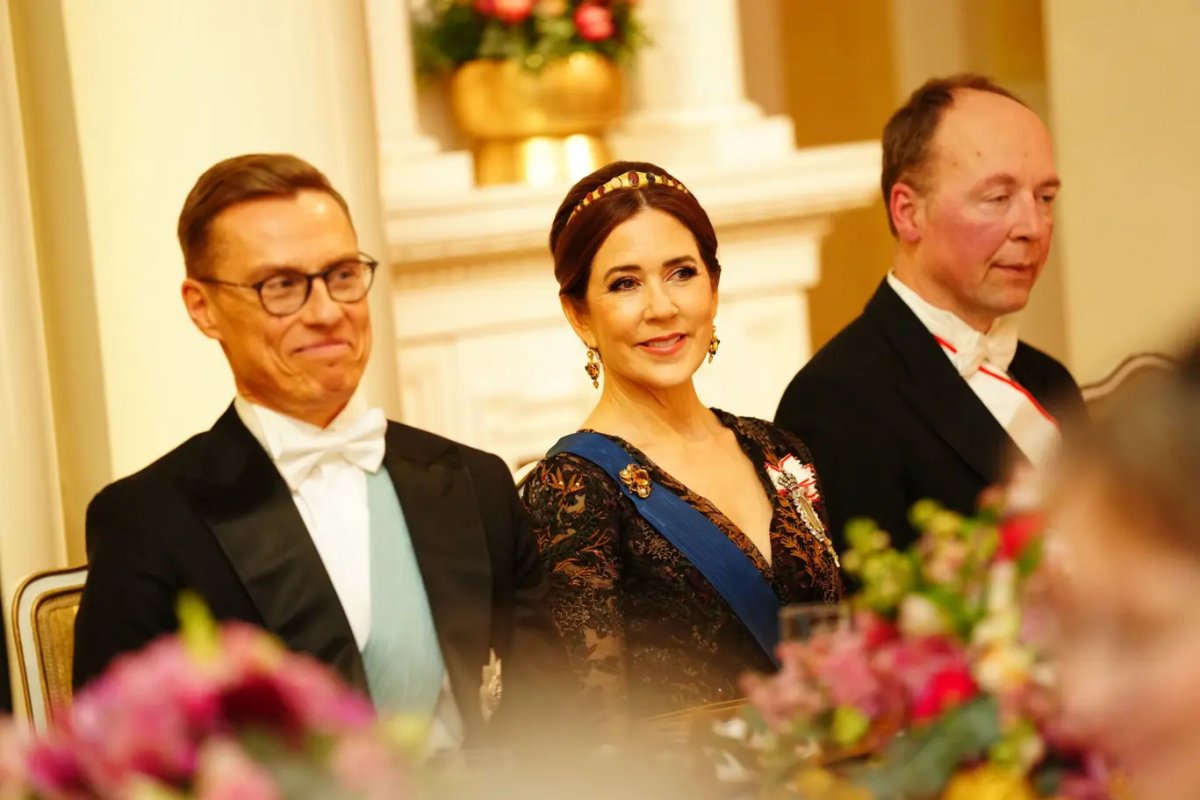
Queen Mary of Denmark brought a slender 1820 Italian cameo bandeau from the Rosenborg vaults to a Helsinki state banquet — a provenance-rich appearance that tightens the collector premium on authenticated royal pieces and signals heightened market appetite for museum-calibre jewellery in 2025.
Fast Facts
- Price: N/A — crown collection, not publicly for sale (insured as state property)
- Carat weight: N/A — eleven intaglio/relief cameos set in gold
- Origin: Italy; acquired by Christian VIII and Queen Caroline Amalie
- Date: c.1820 (bandeau-style gold diadem)
- Public debut: March 4, 2025 — State Banquet, Presidential Palace, Helsinki
What was worn
The bandeau is a slender, low-profile diadem set with eleven cameos whose vitreous luster and carved relief read close and intimate to the camera. Mary paired the tiara with a warm-gold bracelet set with colourful gemstones — a Vesuvian bracelet gifted by Frederik VII in 1828 — and a citrine brooch and earrings once owned by Countess Danner. The ensemble presented a layered narrative: archive wardrobe, warm gold patina, and discrete but substantial historic weight.
Context: 2025 market forces
Two currents define luxury jewellery demand this year. First, provenance is a form of sustainability: buyers and institutions now prize authenticated history and documented stewardship as much as material origin. That shifts value away from purely new-production metal and lab-grown debates toward objects with museum-calibre stories. Second, sculptural minimalism — the pared bandeau, articulated cameo relief, and archival bracelets — is crossing from royal salons into bridal and couture design books. In a market where lab-grown stones compress price points, royal provenance and unique historic motifs are becoming clear differentiators that command a premium.
Impact: why US retailers and collectors should take notice
For US retailers, the lesson is practical and immediate. Storytelling tied to provenance—exhibition loans, curated archive shows, and detailed custodial histories—translates into higher margin opportunities for antique and certified pieces. Departments that can authenticate and present provenance certificates will outcompete generic inventory as collectors hunt rarity. For investors and auction houses, appearances like Mary’s tighten liquidity for verified royal-origin jewellery: authenticated pieces increasingly attract institutional interest and cross-border loans, which bolsters realised prices and lowers market friction.
Stylistically, expect trickle-down demand for low-profile, sculptural headpieces and cameo motifs in bespoke bridal commissions. Operationally, insurers and appraisers will lean on documented public appearances as valuation drivers — meaning provenance management is now part of the cost of doing business for high-value pieces.
Queen Mary’s vault reveal was quiet in execution but loud in implication: a specialist, story-driven market is deepening in 2025, and royal provenance sits near its centre. Which of this year’s royal reveals will reshape collector appetite next — that will be the market story to watch.
Image Referance: https://www.thecourtjeweller.com/2025/12/the-best-royal-jewels-of-2025-3-queen-mary-unearths-an-italian-tiara.html