
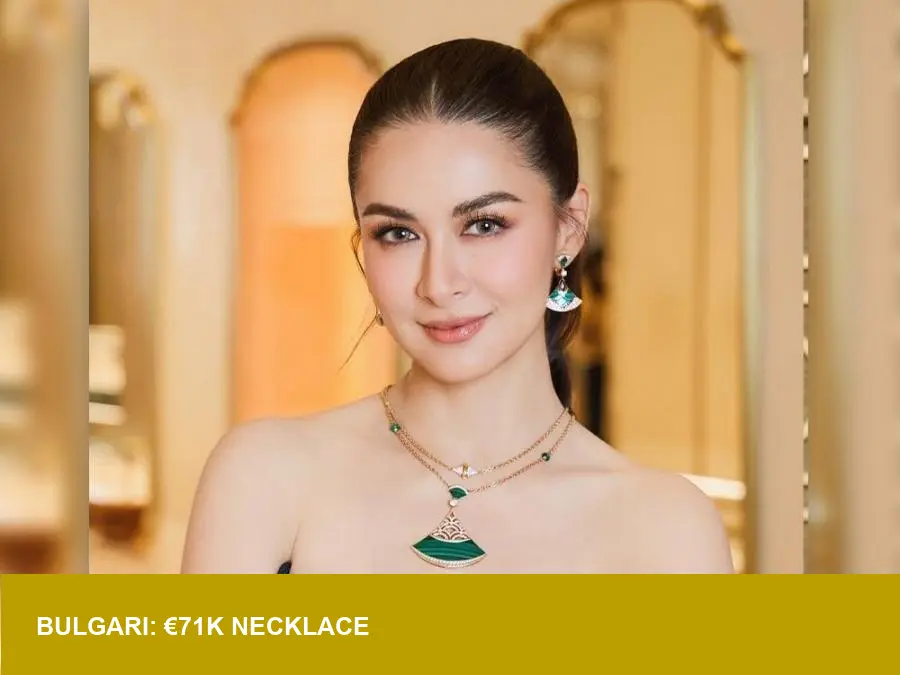
Marian Rivera — Bulgari headline piece, estimated value: ~€71,000; total Bulgari look ~P12,099,415. The Kapuso star posted images of a rose-gold Divas’ Dream necklace inset with malachite and diamonds, an item no longer listed on Bulgari’s storefront and circulating online at roughly €71,000 (≈P4.9M). The post also showcased earrings and a Serpenti mini top-handle bag, bringing the assembled Bulgari ensemble to an estimated P12,099,415.
- Price (necklace): ~€71,000 (≈P4,912,987)
- Carat weight: Not disclosed / N/A
- Origin: Bulgari, Italy
- Date: December 31, 2025 (Instagram post)
Context
The pieces are textbook Bulgari in material and gesture: rose gold with malachite inlays, diamonds set to catch a vitreous luster, and a Serpenti mini bag rendered with a satin-suede finish and sinuous hardware. In 2025 the market has bifurcated — collectors prize provenance and sculptural design while mainstream buyers are increasingly attentive to sustainability claims and the economics of lab-grown diamonds. A high-value, delisted necklace such as this functions both as a stylistic statement and a liquidity marker: scarcity on the manufacturer’s site amplifies aftermarket demand.
Why it matters to U.S. retailers and investors
For U.S. retailers the post is a practical case study in celebrity-driven demand and inventory signaling. When a recognized talent appears in an item that is no longer widely available, traffic to pre-owned channels and boutique appointment books rises. For buyers and investors the factors to watch are simple: condition, documented provenance, and platform of sale. A piece with substantial heft and identifiable serials commands a premium in certified pre-owned markets and can serve as short-term collateral in specialty lending.
Market implications for 2025
Three trends intersect here. First, scarcity: limited availability from houses like Bulgari supports price resilience in secondary markets. Second, sustainability scrutiny: consumers increasingly ask for responsible sourcing and disclosure, which benefits brands that can document supply chains. Third, the aesthetic shift toward sculptural, tactile jewelry — pieces that read as small-scale sculpture rather than mere ornament — underpins demand for signature models such as Divas’ Dream and Serpenti.
Retail playbook
U.S. boutiques should treat similar celebrity placements as conversion catalysts. Practical steps: update pre-owned inventories, prepare authentication dossiers, and highlight materiality in merchandising copy (for example, note malachite’s banded matrix and the piece’s vitreous luster). Offer private-view appointments to capture affluent clients who respond to quiet, tactile signals — the substantial heft of rose gold, the cool touch of malachite — rather than overt sales language.
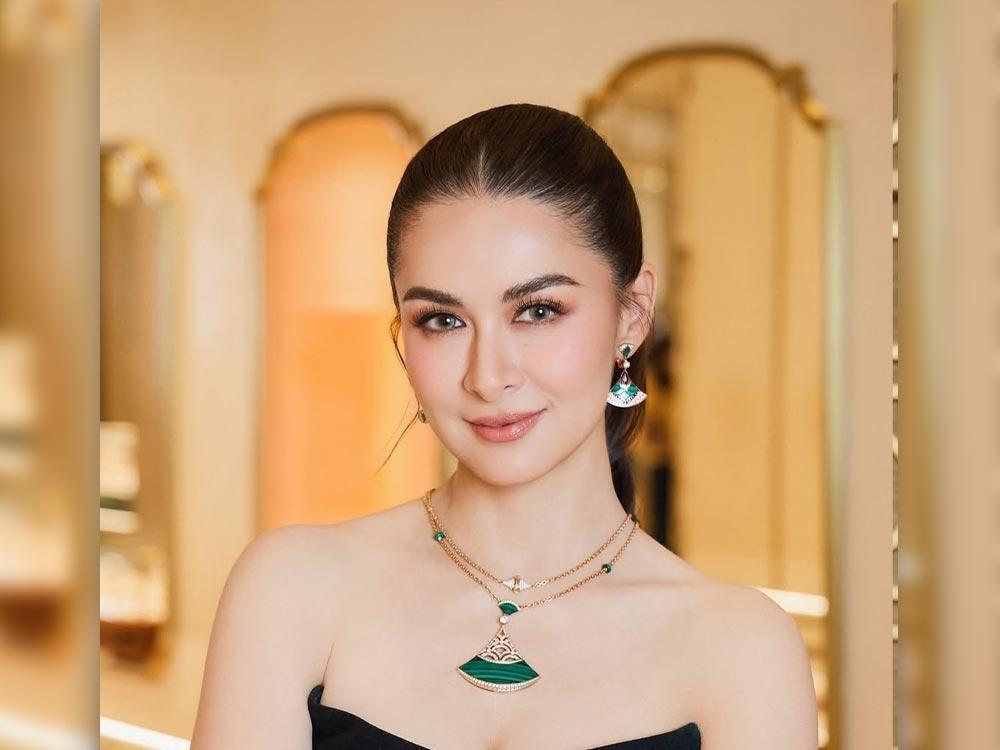
Photo credit: @marianrivera
In sum, Marian Rivera’s post is more than a moment of holiday styling. It’s a compact market signal: a de-listed high-value piece worn publicly can accelerate buyers’ interest, lift search demand for specific models, and strengthen the business case for certified resale. For investors, that translates to a clearer path from celebrity exposure to liquidity — provided condition and provenance are airtight.
Image Referance: https://www.gmanetwork.com/lifestyle/fashion-beauty/129113/marian-rivera-welcomes-the-new-year-in-luxurious-designer-jewelry/story