
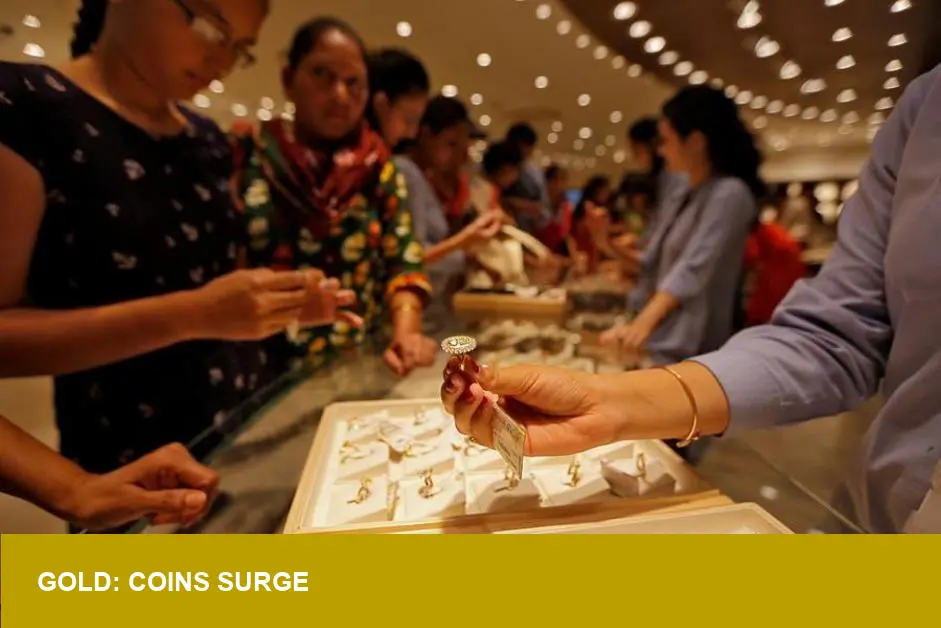
Second Headline: Indian consumers are shifting from ornament purchases to coins and bars as domestic gold prices jump 77%, altering jewellery demand and boosting investment flows.
- Price: Record $4,549.7 per troy ounce (Dec 26, 2025)
- Carat / Weight: Typical purchase cited — 10‑gram coin (household sample)
- Origin: India (domestic demand) / Global bullion markets
- Date: December 31, 2025
What happened
As global safe‑haven buying and a softer dollar pushed gold to an annual gain not seen in decades, Indian buyers reappraised how they hold the metal. Households that once marked festivals with necklaces and bangles are increasingly choosing small coins and bars to avoid steep making charges. The shift is both tactile and financial: a 10‑gram coin offers a compact, substantial heft and straightforward resale value, without the 15% or more in fabrication premiums that accompany many ornaments.
Market context
Gold’s run this year—up roughly 67% globally and peaking at $4,549.7 per troy ounce on December 26—has reverberated across India, where domestic prices rose about 77%. The World Gold Council reports a 14% drop in total demand through the first nine months of 2025: jewellery consumption fell 26% to 278 metric tons while investment rose 13% to 185 tons, taking a record 40% share of overall demand. India‑listed gold ETFs recorded $3.3 billion of inflows, adding nearly 29 tonnes to holdings.
Retailers and jewellers — from established family houses to regional chains — are responding. Some have launched sub‑brands aimed at lighter‑weight designs and lower caratages. Others are promoting 10‑gram coins or small bars as an accessible form of ownership that preserves liquidity and avoids the perceptible weight and warm, burnished surface of traditional ornaments.
How 2025 trends intersect
The behavioural change connects to three defining trends of 2025. First, sustainability narratives — recycled gold and lower‑waste manufacturing — support investment‑style buys that minimize fabrication. Second, lab‑grown gemstones have normalized lower‑cost, design‑forward pieces, nudging younger buyers toward 14k–18k options that balance daily wearability with budget discipline. Third, sculptural aesthetics and refined, lightweight workmanship have made reduced mass feel intentional rather than compromise: the visual language of contemporary jewellery now favors form over carat weight.
Why this matters to US retailers and investors
For US retailers, the Indian pivot has three practical implications. Inventory strategy must balance heavier‑margin traditional ornament with a growing appetite for small bullion, lightweight 14k/18k collections, and certified recycled gold. Marketing that foregrounds resale value, purity, and sustainable sourcing will resonate with price‑sensitive yet design‑aware buyers. Operationally, offering measured bullion SKUs (10g, 20g coins; 1oz bars) and clear buyback terms reduces friction for cross‑border collectors and NRIs.
For investors, the story is a reminder that bullion demand can decouple from jewellery cycles. Large ETF inflows and household purchases in India have tightened physical availability and can sustain price momentum into 2026, particularly if central bank easing and currency moves persist. Portfolio managers should monitor ETF holdings, imports into major consuming centres, and rupee–dollar dynamics as leading indicators of spot pressure.
Takeaway
India’s move toward coins, bars and ETFs is both a defensive and structural shift: households prioritise liquidity and unit value over traditional ornamentation. For market participants in the US, the opportunity lies in meeting that need—via bullion retailing, lightweight design lines, certified recycled sourcing, and transparent resale pathways—while watching ETF flows and currency moves that will continue to set the tone for prices in 2026.
Image Referance: https://www.zawya.com/en/news/insights/as-gold-hits-records-indians-opt-for-bars-and-coins-over-jewellery-nvy0jg8w