
 Bulgari’s Serpenti motif has evolved from a single 1948 bracelet-watch into a persistent revenue and cultural signal — a collection that now underpins premium retail margins and sustains secondary‑market prices for estate and auction lots.
- Price: entry Serpenti from mid‑five figures; high‑jewellery pieces into six figures
- Carat weight: central stones commonly 1–5+ ct; pavé totals vary (5–30+ ct)
- Origin: Rome, Italy (Sotirio Bulgari, founded 1884)
- Date: Serpenti first 1948; Serpenti Infinito launched 2025
The timeless serpent
The serpent has a vitreous luster in cultural memory — a motif that reads as power, eternity and guarded allure. Bulgari began translating that vocabulary into metal and stone in 1948, when scarcity of platinum and diamonds forced new solutions: gold tubing, flexible tubogas coils and geometric dials that read as engineering and ornament in equal measure.
That combination of inventive mechanics and tactile finish — the polished tubogas band with its cool, substantial heft; the sinuous head set with a pavé frost of diamonds — is why Serpenti is more than a motif. It functions as a commercial engine. Celebrity ownership, most famously Elizabeth Taylor in the 1960s, amplified demand beyond Rome and made Serpenti a recognizable trading name in boutiques and on the secondary market.
Serpenti Infinito and the year of the snake
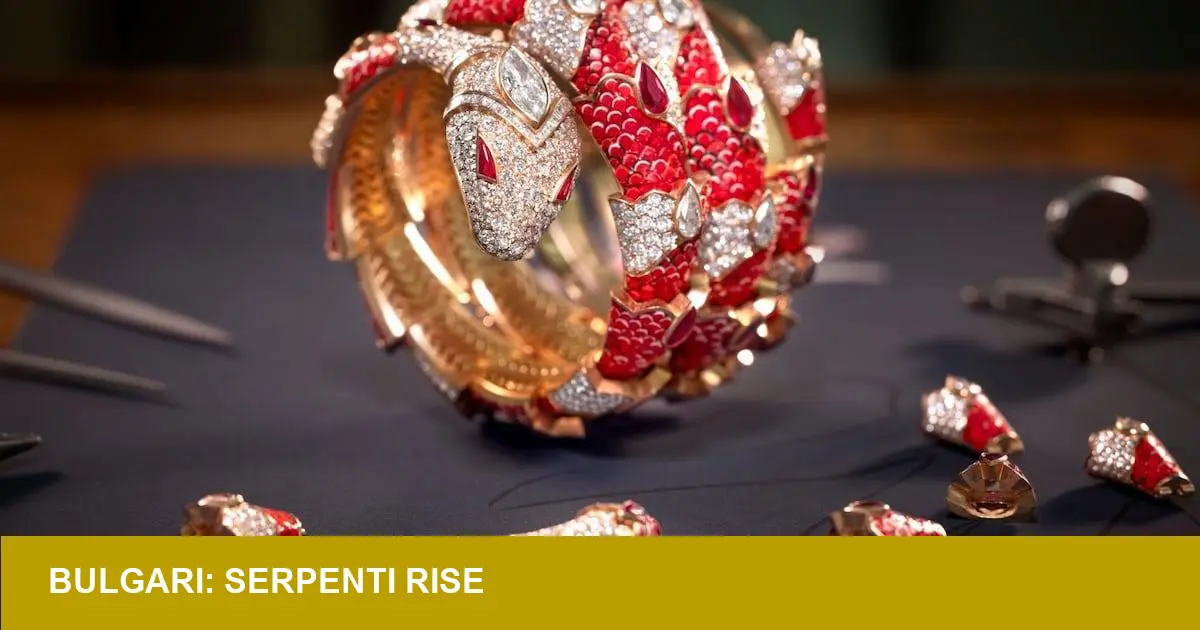
In 2025, coinciding with the Chinese zodiac Year of the Snake, Bulgari emphasized the motif’s sculptural potential with Serpenti Infinito: intertwined necklaces and tubogas pieces set with diamonds, rubies, emeralds and onyx. Tactile details — a rose‑gold head with vitreous emerald eyes, micro‑mosaic scales that catch and fragment light, and pavé surfaces that read like a silken coil — signal intentional craft over mere logo.
Late‑2024 collaborations, such as the Sicis micro‑mosaic Genesis Mosaic Serpenti Bracelet, demonstrate how artisanal techniques refresh brand equity. More than ornament, those scales are hand‑laid tesserae that create a mosaic sheen and alter reflectivity in ways machine finishing cannot replicate.
Context — 2025 trends that matter
Three market forces shaped Serpenti’s relevance this year: provenance, material sourcing and sculptural design. Consumers are asking for traceability — certificates and origin narratives that authenticate stones and metals. At the same time, lab‑grown diamonds have sharpened price sensitivity; brands that justify a premium now lean on craftsmanship, archival designs and limited collaborations rather than raw‑material rarity alone.
In form, the market has tilted toward sculptural jewellery that reads as small wearable art. Serpenti fits this demand: the piece is felt as much as seen — a coil that offers a substantial heft on the wrist and a tactile memory that outlasts seasonal logos.
Impact for U.S. retailers and investors
For U.S. retailers, Serpenti is a frontline merchandising tool. It drives foot traffic, anchors trunk shows and justifies experiential selling: clients will trade time and trust for provenance, fitting and bespoke adjustments. Stocking Serpenti, or partnering on certified pre‑owned consignments, can lift average transaction values and create VIP pipeline opportunities.
For investors and secondary‑market buyers, the lesson is selective: provenance and condition matter more than headline branding alone. Well‑documented Serpenti pieces — original boxes, service records and clear conservation — tend to hold premium resale value. Conversely, mass‑market logo fatigue and a flood of entry pieces can compress returns on less distinguished variants.
Operationally, U.S. sellers should emphasize certification, offer transparent buyback pathways, and position Serpenti alongside storytelling: archival dates, artisanal collaborations (such as the Sicis partnership) and the piece’s mechanical pedigree. Those elements translate into both margin and resale resilience.
Your next Bulgari consideration
If you are curating inventory or advising collectors, look for Serpenti examples that combine identifiable provenance with distinct craft markers: micro‑mosaic scales, sizable central rubies or emeralds, original tubogas construction and intact original packaging. Those tactile and documentary cues — the cool weight of a coil, the vitreous glow of an emerald eye, the hand‑laid mosaic surface — are what sustain value when the fashion cycle turns.
Jo Buitendach — Wanted contributor | December 31, 2025
Image Referance: https://www.dailydispatch.co.za/lifestyle/2025-12-31-how-serpenti-became-a-bulgari-signature/