
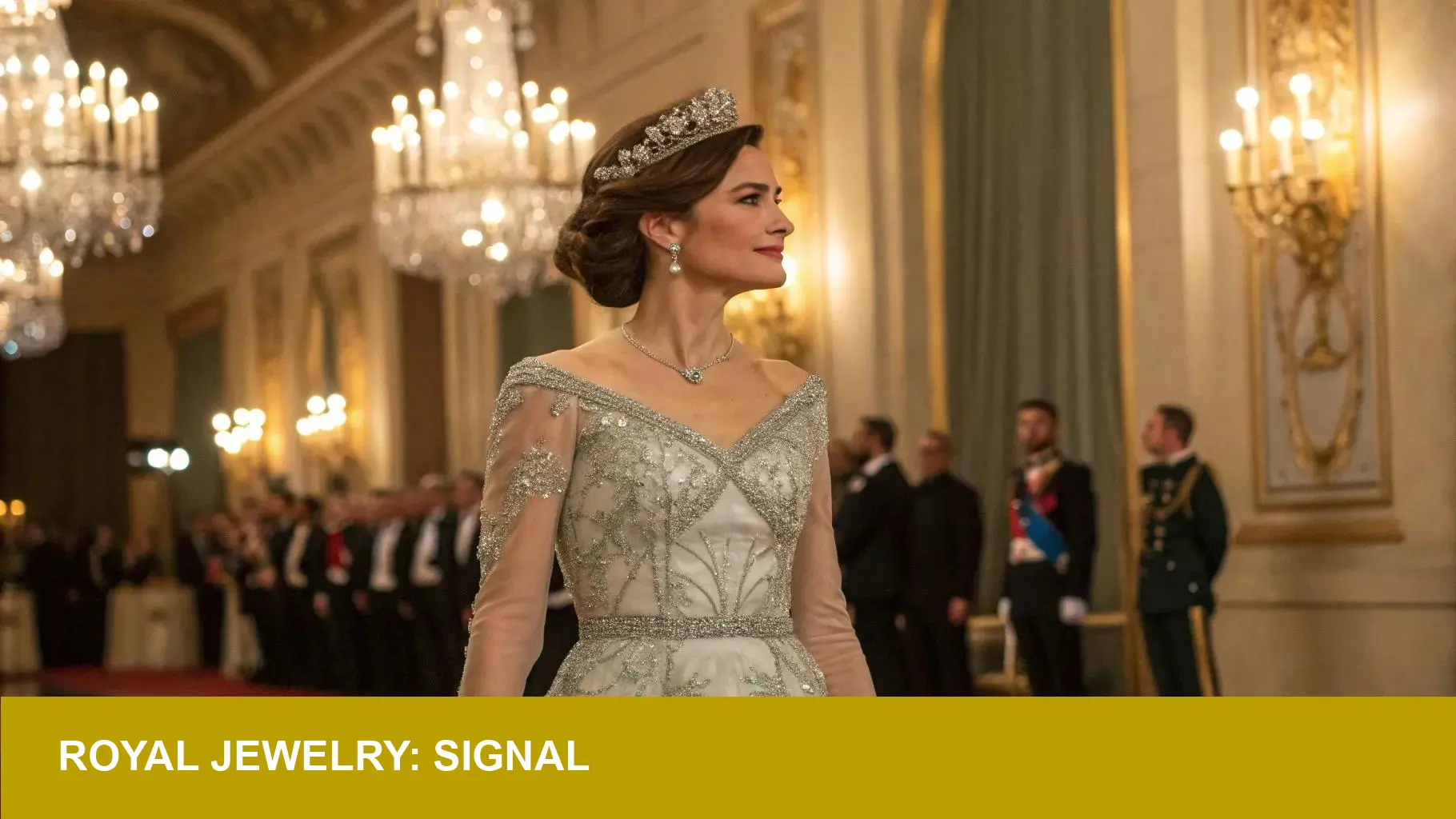
Royal women’s public dress—especially pearl sets and diamond brooches—has become a measurable market signal, tightening demand for provenance-backed pieces and lifting resale premiums across luxury jewellery markets.
- Price (Representative): $150,000–$600,000 (state pearl necklaces; estimate)
- Carat Weight (Representative): 3–12 ct total (brooch focal diamonds; estimate)
- Origin: Heritage ateliers, regional craft houses, and house archives
- Date: Appearances across 2024–2025 ceremonial and media calendar
Quiet signals, measurable value
Across state banquets, commemorative services and televised studio appearances, senior royal women have translated ceremonial constraints into commercial cues. The repeated use of pearls, legacy brooches and carefully noted colours has not been merely stylistic: it has nudged collectors, secondary-market buyers and luxury retailers to prize pieces with documented provenance and adaptable styling. Textures — the vitreous luster of natural pearls, the crisp snap of a crepe coat, the substantial heft of a brooch — are now read as indicators of longevity and resale integrity.
Fast facts meet 2025 trends
What designers and buyers called attention to this year aligns directly with the three vectors shaping 2025 luxury jewellery: transparent sourcing, the commercial ascent of lab-grown stones, and sculptural silhouettes that tolerate repeat wear. Repeat-wear narratives — gowns and jewels reconfigured through altered hems or new mountings — foreground circularity. That narrative has increased demand for pieces that can be restored or remounted without loss of value, and it has put a premium on archive-friendly materials and hallmarks.
Jewellery reading: what viewers see
Small signals carry institutional weight. A brooch set to the left lapel, a string of pearls worn at multiple formal visits, a regional textile paired with a historic tiara — these choices communicate continuity and partnership. The marketplace responds: when a royal appearance is paired publicly with an atelier or a named stone, enquiries spike for similar provenance and construction. Online searches, private-client briefs and auction-watch lists all register the effect within days of major televised events.
Retail and investor impact in the U.S.
For U.S. retailers and investors the implication is specific and actionable. Inventory strategies should prioritise pieces with clear paperwork, adaptable mountings and repair-ready designs. Assortments that emphasise tactile quality — firm clasps, clean pavé settings and stones with documented chain-of-custody — will outperform purely trend-driven lines. Investors in pre-owned stock should underwrite restorability and provenance rather than speculative novelty; resale multiples favour pieces whose materials and construction signal long-term wearability.
Sustainability, lab-grown stones and small ateliers
Duty-bound wardrobes have also been a laboratory for sustainability messaging. Repeat wear, local tailoring, and visible notes about recycled metals or lab-grown diamonds have moved from optional talking points to purchasing criteria. For U.S. merchants, this means curating clear claims — certification for lab-grown stones, documented recycled-metal content and stories that make provenance tangible without grandstanding. Small, regional ateliers that supply national tours see a distinct visibility premium; discoverability on a state visit translates into measurable orders for months afterward.
How to act: merchandising and marketing
Practical steps for retailers: update product pages with restoration policies and origin notes; highlight pairing suggestions so a client can envision a pearl necklace across formal and broadcast settings; build a pre-owned pipeline that emphasizes documented restorability. For investor-facing messaging, quantify the uplift: show historical resale performance for hallmark-backed pieces versus unproven lots, and stress low-obsolescence attributes — modular settings, serviceable clasps, and standards-based hallmarks.
What to watch next
Expect the repeat-wear script to remain central through 2025. Televised state visits and memorial services will continue to set colour palettes and silhouette expectations; the documentary pull of provenance will keep lifting premiums for pieces that can be authenticated and serviced. In this quiet luxury moment, the market reward goes to durable materials, incontrovertible provenance, and designs engineered for long lives — the same qualities royal wardrobes have made visible to millions.
By the Jewellery Market Desk, Jewellers News — senior market analysis and editorial assessment for U.S. retailers and investors.
Image Referance: https://www.considerable.com/royal-women-define-year-in-style/