
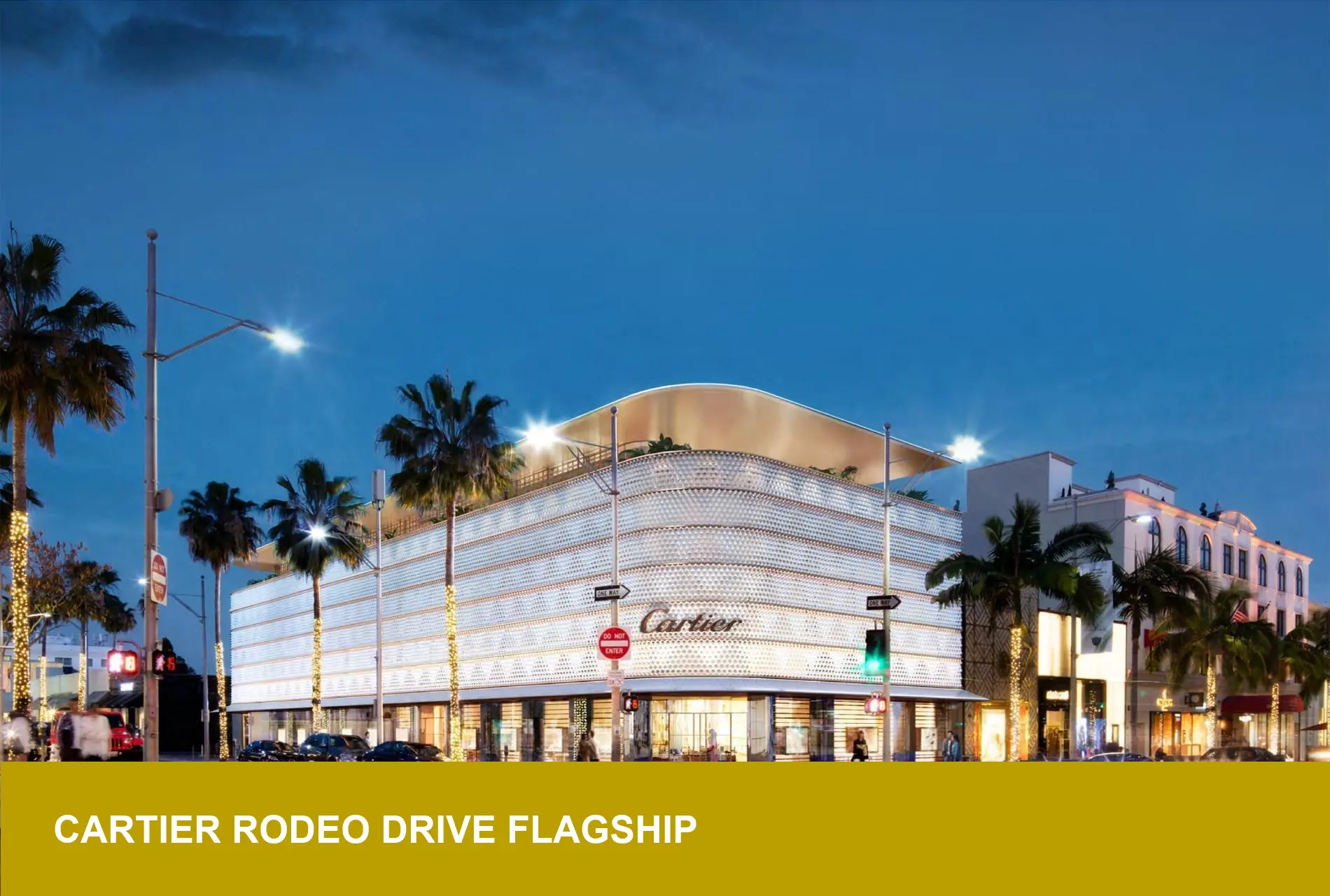
Cartier will open a three‑storey flagship on Rodeo Drive — its second‑largest U.S. store and a multi‑million retail investment expected to redefine Beverly Hills luxury retail when it opens in 2027.
- Estimated investment: multi‑million‑dollar (undisclosed)
- Scale: three storeys; 45‑foot high showroom with VIP rooms and outdoor terrace
- Location: Rodeo Drive, Beverly Hills, Los Angeles
- Approved: March 2025; Planned opening: 2027
Context: A Fourth “Temple” in a Changing Market
This Rodeo Drive project will be Cartier’s fourth so‑called “Temple” — alongside Paris, London and New York — and the brand’s second‑largest U.S. boutique. The three‑storey configuration and a 45‑foot showroom give the space a substantial heft uncommon on the avenue, joining the sculptural, multi‑level flagships opened by Geary’s for Rolex and Patek Philippe in 2024–25.
The fit‑out will likely foreground tactile materials and restrained, high‑precision detailing: vitreous display cases, bronzed hardware, and terraced salons that prioritize privacy and pause over spectacle. That approach echoes 2025 luxury trends — a premium on material provenance, energy‑efficient operations in new retail footprints, and architectural gestures that read as sculpture rather than signage.
Why This Matters to Retailers and Investors
The Rodeo Drive flagship is both a marketing asset and a real‑estate event. For landlords and adjacent tenants, a Cartier Temple delivers measured but affluent footfall: clients who spend across jewelry, watches, hospitality and bespoke services. For investors, the project signals continued appetite among top houses to concentrate expensive inventory in brand‑run spaces rather than push volume through third‑party doors.
Important operational implications for U.S. retailers and authorized dealers: Cartier maintains strict control over jewelry sales through its boutiques while allowing watches only via its network and selected partners. That control can compress wholesale allocation and redirect local wealthy customers toward brand‑operated experiences, pressuring independent dealers to recalibrate inventory and service offers.
Practical Takeaways
Retailers and mall operators should treat the boutique as a demand‑engine more than a single tenant. Expect higher average transaction values, increased concierge traffic, and elevated expectations for in‑store climate, security and hospitality. Investors should watch leasing comps around Rodeo Drive — rent and service charges may track upward as brands double‑down on sculptural flagships.
For authorized watch partners, the opening is a reminder to refine client‑eling: prioritize appointment‑driven sales, enhance aftercare, and explore experiential services that cannot be replicated by a marquee brand’s in‑house salons. For luxury investors, the move underscores a market preference in 2025 for concentrated, high‑quality retail exposure over broad, discountable distribution.
Outlook
Cartier’s Rodeo Drive flagship is scheduled to open in 2027 and will sit alongside Piaget, Jaeger‑LeCoultre, Panerai, Grand Seiko, Vacheron Constantin, IWC and Audemars Piguet on the avenue. As more maisons invest in three‑level showrooms with terraces and VIP salons, Beverly Hills is consolidating as a laboratory for the next phase of luxury retail — one defined by tactile finishes, curated privacy and the strategic centralization of inventory.
Image Referance: https://usa.watchpro.com/cartier-to-open-beverley-hills-boutique-second-only-in-scale-to-its-new-york-flagship/