
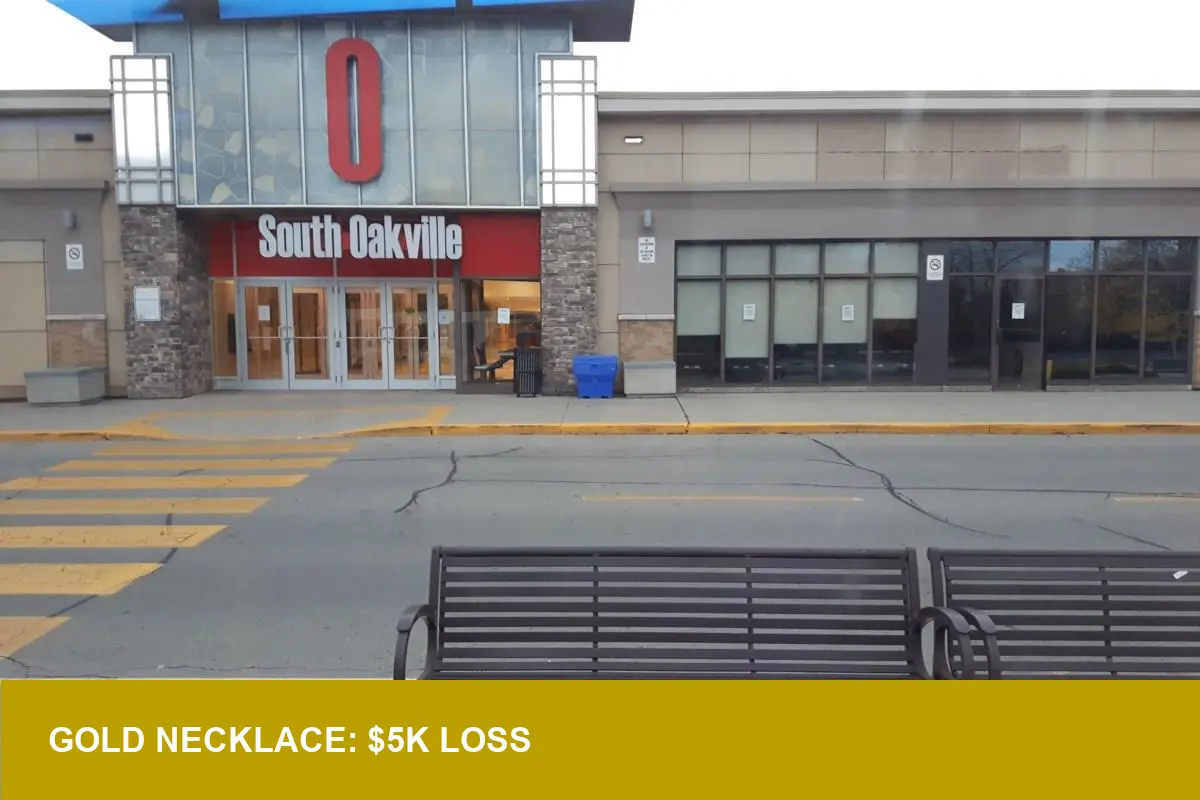
Halton Police say a woman staged a directional question and a staged ‘thank you’ to swap a real gold necklace—estimated at about $5,000—with a counterfeit outside South Oakville Centre on Dec. 27, 2025, exposing a simple tactic that can erase an owner’s asset overnight.
- Price: Estimated $5,000
- Carat Weight: Not disclosed
- Origin: Not disclosed
- Date: Dec. 27, 2025
Halton Police are investigating the incident after officers were told the suspect approached a shopper around 12:30 p.m., asked for directions and placed a necklace on the victim’s neck as a gesture of thanks while offering a pair of AirPods. Investigators say the suspect left with the victim’s genuine gold chain and left behind a convincing counterfeit; the offered AirPods were also fake.
Context: Counterfeits and Consumer Expectations in 2025
The swap is emblematic of a wider 2025 trend: as demand for provenance and sustainability grows, counterfeiters have sharpened their tactics. Physical markers that once signalled value — a burnished finish, hallmark stamps or the substantial heft of a piece — can be imitated. For retailers and appraisers the consequence is clear: visual appraisal alone is increasingly unreliable against well-executed fakes.
Retailers and secondary-market buyers are also navigating two parallel pressures this year: a stronger emphasis on traceable supply chains, and a rise in lab-grown gemstones that require different authentication protocols. The practical gap between consumer desire for ethically sourced metal and the ease of swapping a warm, burnished chain for a light, flimsier copy is narrowing for criminals and widening for sellers who lack verification tools.
Impact: What U.S. Retailers and Investors Should Do
The incident in Oakville is a practical warning for U.S. stores and investors who handle walk-in trade-ins or on-the-street purchases. Actions to consider:
- Train staff on distraction tactics and insist on transactional distancing — avoid accepting items from customers outside secure areas.
- Adopt portable verification tools (handheld XRF, electronic hallmark readers) and standardize paperwork that records provenance before ownership changes hands.
- Upgrade camera coverage to capture close-range interactions and keep visible security presence to deter staged approaches.
- Require a cooling-off verification period for unsolicited trades and reinforce insurer and police notification protocols to preserve claims and evidence.
For investors, the case underscores a second-order risk: asset substitution can distort secondary-market supply and valuation if counterfeit pieces re-enter circulation. Provenance documentation and prompt authentication are no longer administrative niceties; they are protections of monetary value.
Police Response and Advice
Halton Police describe the suspect as female, light-skinned and wearing dark clothing; the investigation is ongoing. Officers urge anyone with information or dashcam footage from the South Oakville Centre parking area on Dec. 27 to contact investigators. Retailers should also liaise with local law enforcement to align reporting procedures.
The loss is measured in dollars today; the lesson is procedural. A piece’s warm, burnished surface and substantial heft can no longer be the sole proof of authenticity — verification systems must be equally tangible.
Image Referance: https://www.oakvillenews.org/police-beat/distraction-theft-in-oakville-leaves-victim-with-fake-jewelry-and-air-pods-11690015