
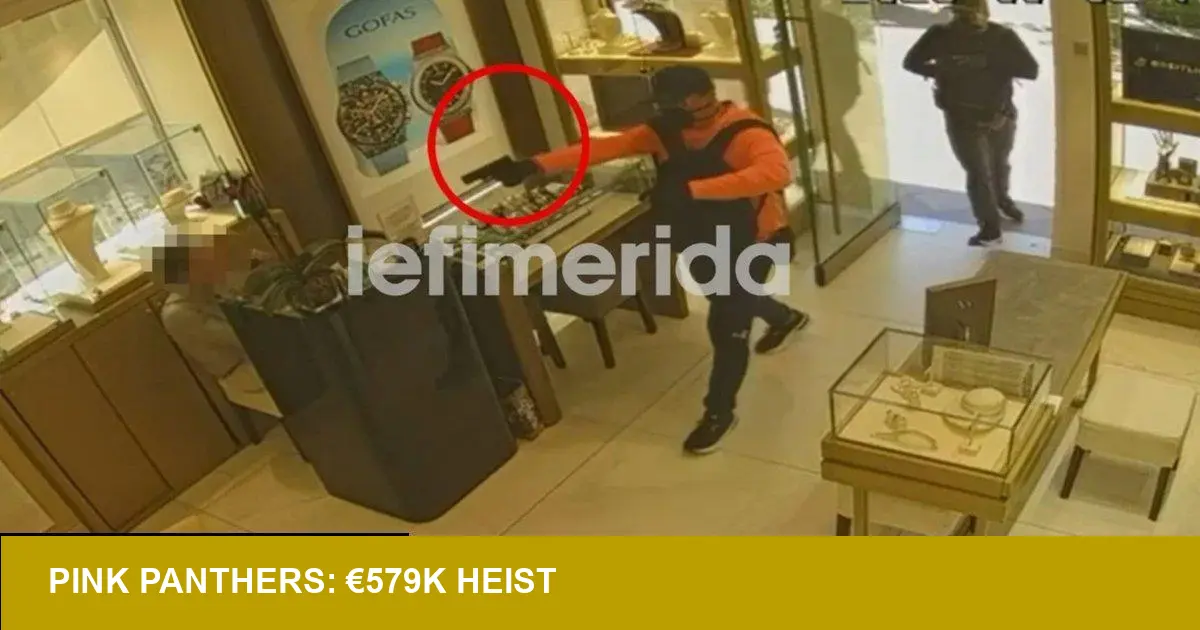
Two alleged members of the transnational group known as the “Pink Panthers” have been arrested abroad in connection with a Halkidiki jewellery robbery that removed €579,805 in watches and valuables.
- Price: €579,805.75 (reported value of stolen items)
- Carat weight: Mixed — watches and assorted jewellery (not itemised)
- Origin: Jewellery shop, Halkidiki, Greece
- Date: 2 September 2025
- Arrests: Two suspects detained in Bulgaria and Croatia; extradition pending
The lede
The arrests—two foreign nationals aged 48 and 46—follow a carefully planned raid on 2 September 2025 in which luxury timepieces and other valuables with a combined reported value of €579,805.75 were taken. Greek authorities say the pair are part of a well-organised, transnational criminal network associated with Balkan organised crime; Europol and several national police forces contributed intelligence that led to detentions in Bulgaria and Croatia. Extradition decisions now await judicial authorities.
Context: retail risk in 2025
For retailers and insurers, the incident is not an isolated headline but a signal of three converging 2025 trends. First, the rise in cross-border, high-value robberies is testing cooperation frameworks—Europol-led information exchange is now a staple of investigations. Second, the growing market share of lab-grown gemstones and the demand for clearly documented provenance are changing how stock is valued and declared to insurers. Third, sculptural, open-front display strategies that accentuate the vitreous luster and substantial heft of watches and jewellery can, paradoxically, increase exposure if perimeter and staff protocols are not aligned with electronic tagging and hardened safes.
Why this matters to US retailers and investors
American retailers and investors watching the European market should take practical signals from the Halkidiki case. Insurers may tighten clauses or raise premiums where physical security and inventory-tracking systems are inadequate. Items with a pronounced secondary-market value—luxury watches with identifiable serials or gems with certified reports—carry a different risk profile than lower-value, mass-produced pieces. Simple measures matter: RFID or NFC tagging, reinforced display cases with reduced tactile access, calibrated CCTV for capturing the cold metal of a display being breached, and staff training for perimeter threats can materially reduce loss frequency and claims exposure.
Operational takeaways
- Reassess insurance schedules: ensure replacement valuations reflect market resale values for watches and certified gems.
- Enhance provenance and documentation: lab-grown certificates and digital ledgers improve recoverability and underwriting terms.
- Upgrade physical and electronic controls: RFID/NFC inventory, remote-locking showcases, and hardened safes reduce opportunistic losses.
- Coordinate internationally: if buying or consigning across borders, verify partners against law-enforcement alerts and Europol notices.
The Greek investigation notes one suspect is known to Swiss authorities for residential burglaries; police are reviewing potential links to similar armed robberies across Europe in 2024–25. For US operators, the takeaway is administrative and tactile: tighten documentation, harden displays, and treat provenance as part of loss prevention as much as marketing.
Image Referance: https://www.iefimerida.gr/english/pink-panthers-gang-halkidiki-jewellery-robbery