
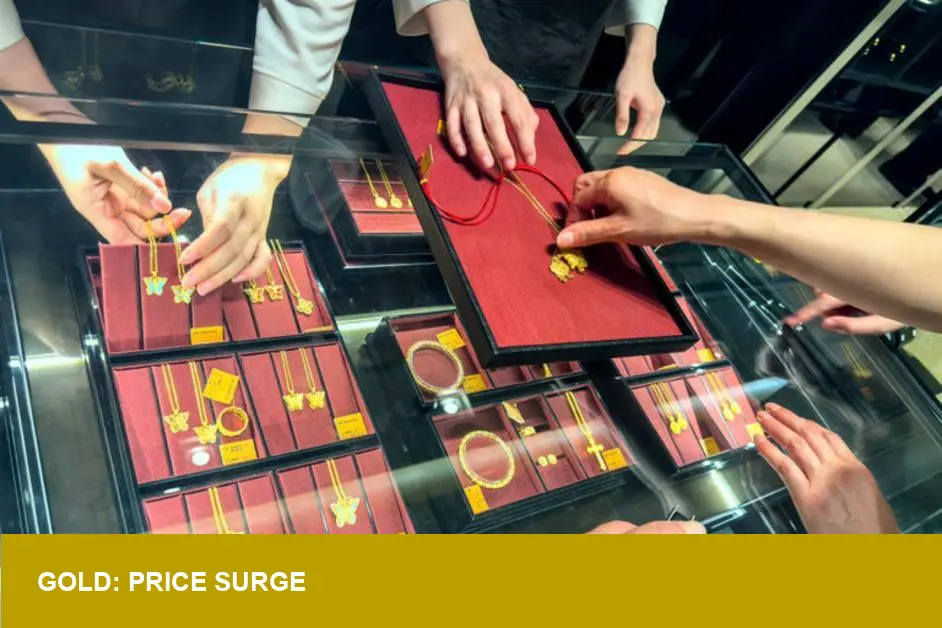
Who: The U.S. fine-jewelry market broadly; What: a continuing gold bull run amplified by creativity-driven premiums; Financial impact: designers and retailers that price design and provenance appropriately are capturing higher margins and insulating revenue against commodity swings.
- Price: Spot gold ~ $2,000–2,300/oz (Jan 2026 estimate)
- Carat weight: Typical centre-stone in premium launches: 0.8–1.5 ct
- Origin: Mixed supply — mined, responsibly sourced recycled gold, and increasing certified lots
- Date: Jan 7, 2026
Market pulse: commodities meet craft
Gold is no longer only a macro hedge; in 2025 the metal became a tactile canvas. Buyers are paying for substantial heft, a warm patina and hand-finished surfaces as much as for ounces. That shift has translated into measurable retail premiums: pieces that foreground sculptural form, visible workmanship and verified sourcing now sell at higher markups than commodity-heavy assortments.
2025 trends shaping 2026 positioning
Sustainability and lab-grown alternatives reconfigured value perceptions last year. Recycled gold and transparent chain-of-custody labeling reduced downside for risk-averse buyers, while lab-grown diamonds stabilized price expectations for center stones — allowing retailers to trade down raw commodity exposure without sacrificing perceived quality. Sculptural aesthetics, meanwhile, moved from niche to mainstream: asymmetric silhouettes, textured surfaces and integrated mixed metals invite tactile interaction and justify premium pricing.
Why this matters to U.S. retailers
For stores, the opportunity is twofold. First, design-led assortments create margin buffers against fluctuating spot prices; a ring with a pronounced hand-sanded finish and integrated setting can command a higher gross margin per gram of gold than a polished, commodity-focused SKU. Second, provenance sells. Consumers who can feel the substantial heft of a recycled-gold bracelet and read a concise sourcing label are likelier to accept price premiums.
Practical moves for merchandising and buying
- Prioritize small-batch, design-forward drops that emphasize tactile finishes and craftsmanship.
- Offer parallel ranges: certified recycled-gold pieces at premium price points and value tiers that use lab-grown stones to manage overall cost.
- Train sales teams to describe materiality — use phrases such as “vitreous luster,” “warm patina” and “substantial heft” to convey sensory value rather than relying on raw ounce counts alone.
- Use dynamic pricing models tied to a weighted commodity index and design premium to protect margins when spot gold moves.
Why investors should care
Retail-level premiums compress the link between raw commodity performance and corporate revenue. Companies that control design, storytelling and supply-chain traceability can expand gross margins even if spot gold softens. Conversely, pure-play commodity exposure without branded differentiation remains vulnerable to price swings and margin erosion. For investors, look for retailers with clear sourcing policies, creative directors with repeatable design language and a track record of converting craftsmanship into price realization.
Bottom line
Gold’s bull run has not ended; what changed in 2025 is the buyer: more discerning, more sustainability-minded and more willing to pay for sculptural, tactile design. For U.S. retailers and investors the pathway is straightforward — invest in material transparency, emphasize sensory-rich finishes and price creativity as a distinct, defensible asset.
Image Referance: https://www.msn.com/en-us/money/markets/what-to-watch-jewelry-continues-to-shine-with-creativity-enhancing-expensive-commodities/ar-AA1TILw1?ocid=finance-verthp-feeds