
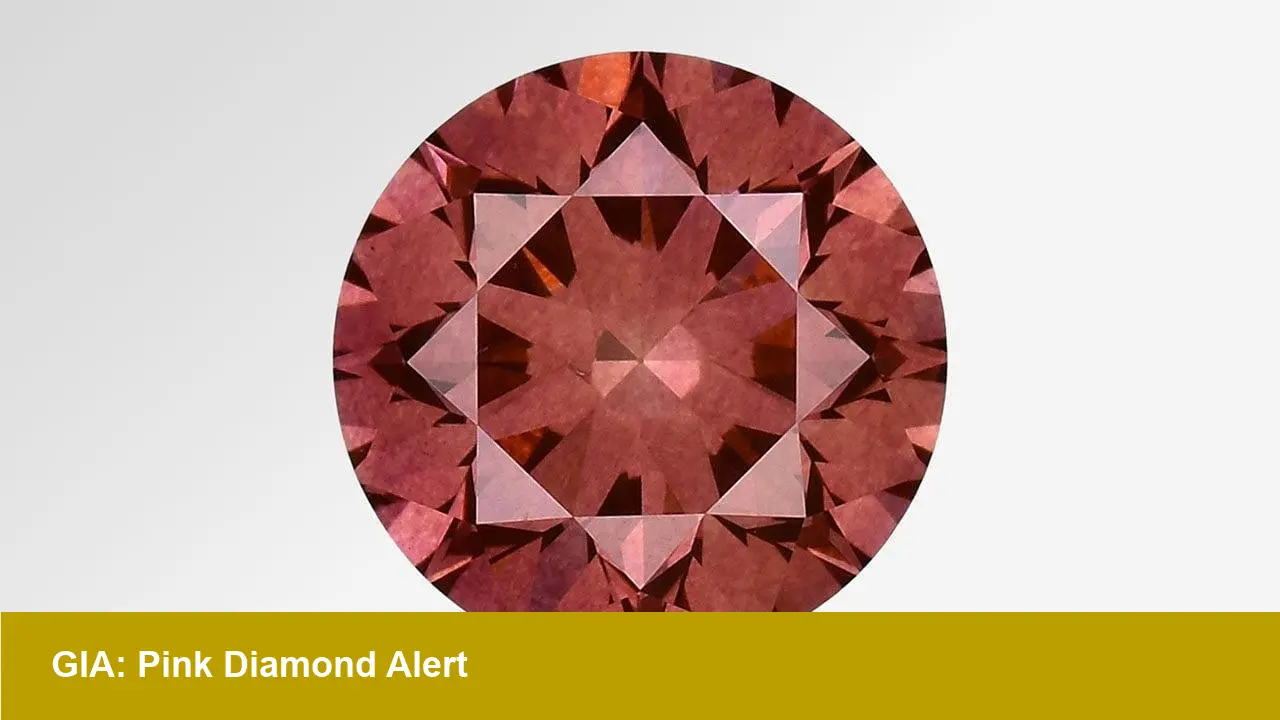
The Gemological Institute of America examined a 1.10‑carat natural diamond that received multiple treatments to produce a pink hue — a finding that could compress premiums on treated pinks and sharpen disclosure requirements for U.S. retailers and investors.
- Price: Not disclosed
- Carat weight: 1.10 ct
- Origin: Natural (originally brown)
- Date: GIA lab note, Fall 2025 (examined in New York)

The findings at a glance
GIA reported the round stone as fancy‑deep‑brownish‑orangey‑pink and noted an unusual face‑up mottling that extended from shallow depth to the polished surface. Spectroscopic analysis showed signatures consistent with laboratory irradiation and subsequent heating; additionally, the stone had undergone HPHT annealing. The institute concluded that nitrogen‑vacancy (NV) centers — formed by the combined treatments — likely created the uneven pink distribution.
The surface retained a vitreous luster while microscopic inspection revealed subsurface patterning and uneven NV concentration. GIA emphasised it did not perform detailed spatial mapping to fully confirm the linkage between nitrogen aggregates and the mottled pattern, leaving questions about the treatment’s internal distribution.
Why the technical detail matters in 2025
Two market themes converge on this finding. First, sustainability and provenance scrutiny have shifted buyer attention toward transparent treatment histories; treated natural stones sit in a different ethical and valuation band than both untreated naturals and lab‑grown counterparts. Second, the growing acceptance of engineered colour — from lab‑grown pinks to treated naturals — is reshaping price strata: sculptural, colour‑forward pieces are in demand, but buyers now expect clear attribution and commensurate pricing.
Technically, the formation of NV centers through irradiation plus heat and HPHT alters both the optical character and resale profile. Where an untreated pink commands a substantial premium for its rarity and even colour saturation, a treated stone with visible mottling will generally trade at a discount to comparable natural, untreated pinks. That spread matters for inventory valuation, loan collateral and insured replacement cost.
Practical impact for U.S. retailers and investors
For merchants and buyers, the GIA brief is a reminder to tighten intake and disclosure protocols. Steps to consider:
- Require full laboratory reports and request spectroscopic or spatial mapping when available — don’t accept a terse summary for high‑value coloured stones.
- Segregate treated stones in inventory systems and price them to reflect treatment, visible mottling and potential resale erosion.
- Update sales training and marketing copy to describe treatment types and visual consequences in tactile terms (e.g., subsurface patterning, uneven colour distribution) rather than euphemisms.
- Include treatment status in consignment and insurance paperwork; treated pinks should not be represented or insured at untreated pink premiums.
There remains a market for treated pinks — designers may prize the colour and the stone’s substantial play of hue under certain mounting styles — but the margin and collateral considerations differ. For investors, the takeaway is straightforward: provenance and treatment transparency are increasingly the primary drivers of premium in the coloured‑diamond market.
GIA’s note is a technical bulletin and a market signal: as colour treatments become more sophisticated, the industry’s due diligence standards must sharpen in step.
Image Referance: https://rapaport.com/news/gia-examines-pink-diamond-with-mottled-look/