
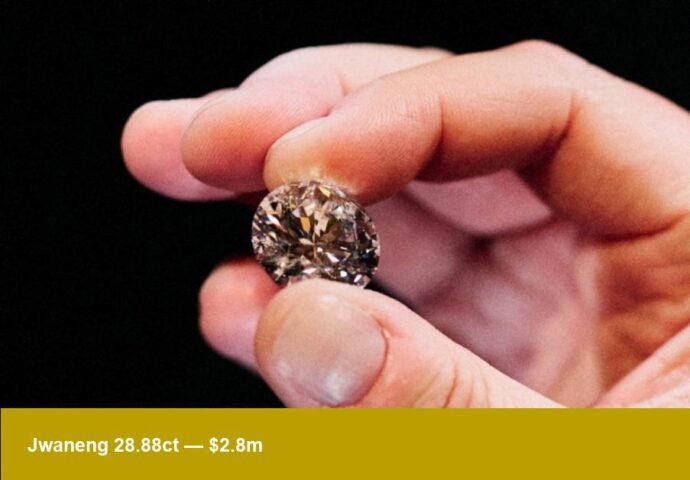
A 28.88‑carat diamond from Jwaneng is being circulated with an estimated value of $2.8 million, a price marker that will attract collectors, private clients and trade buyers tracking high‑carat natural stones. The size alone makes the lot a reference point for how top‑end natural diamonds are pricing relative to recent market headwinds.
- Estimated price: $2.8 million
- Carat weight: 28.88 ct
- Gemstone: natural diamond
- Origin: Jwaneng (mine source identified)
- Market relevance: high‑carat collectors, investors, trade buyers
Context: where a 28.88ct sale fits current trends
In today’s market, high‑carat natural diamonds function differently to smaller goods. At 28.88 carats the piece carries substantial heft — both physically and on a balance sheet — and is typically evaluated on per‑carat scarcity, optical performance and documented origin. While lab‑grown stones continue to compress price points in lower carat ranges, large natural parcels remain a separate category where provenance and rarity sustain different buyer behavior.
For the trade, factors such as traceability, documented mine source and the stone’s cutting proportions influence buyer confidence. Technical attributes — table size, pavilion symmetry and the diamond’s vitreous luster — will determine how close the market comes to the $2.8m estimate once the stone is examined and offered to qualified bidders or private clients.
Impact: implications for US retailers, wholesalers and investors
US sellers should view the Jwaneng 28.88ct estimate as a signalling event rather than a mass‑market turning point. For specialty retailers and wholesalers handling high‑net‑worth clients, this is a reminder to: ensure provenance documentation is fronted in marketing materials; price large stones with a per‑carat narrative that reflects scarcity; and prepare private‑client channels for confidential negotiation rather than public markdowns.
For investors and stockists, the practical implications are inventory and margin management. High‑carat natural diamonds tend to hold a different risk profile than high‑volume lower‑carat SKUs: they require bespoke insurance, discreet sales processes and a narrower pool of buyers. Merchants should balance allocation between tradable, smaller goods that drive velocity and occasional trophy pieces that confer catalogue depth and attract bespoke commissions.
Ultimately, a $2.8m estimate on a 28.88ct Jwaneng stone tests appetite for sizable natural diamonds in the present market climate and underlines the persistent premium placed on provenance and rarity within the high‑end segment.
Image Referance: https://www.idexonline.com/FullArticle?Id=51119