
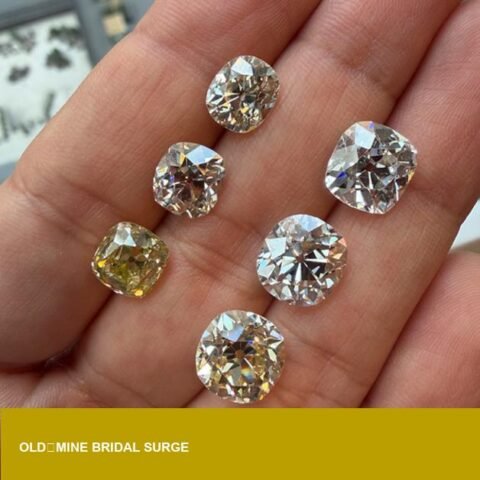
Antique diamonds — in particular old mine–cut stones — have moved from specialist showcases into mainstream bridal consideration after Taylor Swift drew global attention to the cut. The shift is not merely aesthetic: renewed buyer interest changes sourcing priorities and raises questions about provenance, remounting costs and how retailers price historically cut stones versus modern brilliant cuts.
- Gemstone: old mine–cut diamonds and other antique stones
- Spotlight: Taylor Swift brought global attention to the category
- Representative figure: Jay Moncada, a third‑generation gem dealer
- Segment: bridal jewellery — renewed interest in vintage cuts
Context: vintage cuts within 2025–26 quiet‑luxury trends
Old mine–cut diamonds read differently in hand and on the finger: high crowns, smaller tables and broader, asymmetrical facets produce a warmer, more textured scintillation than modern large‑table brilliants. That tactile quality — a lower, more refracted flash and a particular vitreous luster — aligns with the quiet‑luxury current that favors restrained surface detail over overt sparkle. Celebrity exposure has accelerated consideration among shoppers who want age, patina and singular cutting geometry rather than engineered brilliance.
For the trade this is a design as well as sourcing story. Antique stones often require open‑backed settings or bespoke bezels to show colour and depth; they can benefit from remounting onto satin‑finished gold or knife‑edge shanks to reconcile vintage proportions with contemporary wearability. The supply chain for well‑documented antique stones is narrow; provenance and treatment history are the principal currency sellers can offer.
Impact: what US retailers and investors should consider
For US retailers the most immediate consequence is a merchandising and education task. Sales teams need tactile language and visual comparisons — for example, explaining how an old mine’s broad facets alter perceived colour and light return compared with modern cuts. Inventory strategy should distinguish true antique stones with verifiable provenance from newly‑cut stones in antique styles; the two carry different pricing logics and consumer expectations.
Operationally, expect increased demand for services: careful cleaning that preserves patina, secure provenance documentation, and remounting expertise. Buyers attracted to old mine cuts are often sensitive to narrative and traceability, so clear provenance notes from third‑generation dealers and established suppliers — such as the long family line represented by Jay Moncada — become a value proposition.
For investors and wholesalers, the category signals a rotation in consumer taste rather than a wholesale replacement of modern brilliants. Old mine and antique stones are scarce by nature; their value proposition rests on uniqueness and provenance. Positioning these stones correctly — in pricing, in-store presentation and online storytelling that stresses craft and history without hyperbole — will determine whether the current attention translates into sustainable margin or a short-lived spotlight.
Image Referance: https://www.jckonline.com/editorial-article/antique-diamonds-bridal-obsession/