
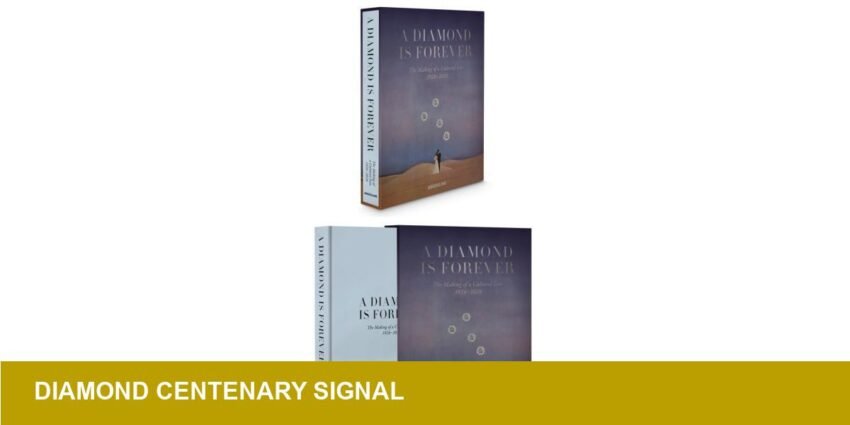
De Beers Group and Assouline this year celebrate the launch of A Diamond Is Forever: The Making of A Cultural Icon 1926–2026, a centenary volume that assembles the advertising, photography and corporate narrative behind one of the industry’s most enduring campaigns. While the book is principally a cultural and archival project, it functions as a strategic brand asset that reinforces De Beers’ heritage positioning and the perceived scarcity and premium of natural diamonds.
- Title: A Diamond Is Forever: The Making of A Cultural Icon 1926–2026
- Collaborators: De Beers Group and Assouline (publisher)
- Timeframe covered: 1926–2026 (centenary)
- Focus: cultural history and advertising that shaped diamond demand
- Audience: collectors, trade, and brand‑heritage buyers
Context: Heritage, narrative and where this sits in 2025–26
Heritage publishing has become a deliberate tool for luxury houses seeking to defend margin and scarcity perception. A centenary volume that traces a campaign’s rise from advertising copy to cultural shorthand operates as more than nostalgia; it is a curated provenance narrative. For diamonds — gems judged by cut, color, clarity and carat and prized for vitreous luster and optical performance — provenance storytelling can strengthen the case for a natural‑stone premium versus alternative supply sources.
Within broader trends to 2026, the release aligns with quiet‑luxury merchandising: restrained visual language, emphasis on material quality and craft, and narratives that privilege origin and continuity over rapid trend cycles. For designers and retailers, the book reinforces category cues such as classic knife‑edge shanks, open‑backed settings that maximize brilliance, and micro‑pavé pavings executed to highlight the stone’s scintillation — technical choices that tie directly to how consumers perceive value.
Impact: What it means for the US market and trade players
For US retailers and private‑client teams the book is a tangible storytelling asset: a physical touchpoint to justify premium pricing, reinforce trade‑in programmes, or underpin private‑sale conversations where provenance and brand continuity matter. Wholesalers and buying groups may use the centenary narrative to lean into assortments weighted toward natural diamonds with strong cut and finish, rather than assortments focused on price‑led, lab‑grown alternatives.
Marketing teams should view the volume as an invitation to recalibrate quiet‑luxury messaging — shorter copy, photographic restraint, and inventory that favors items showing substantial heft and refined finishing, such as satin‑finished gold mounts and precision micro‑pavé. For investors and category strategists, the book signals a defense of long‑term brand equity: heritage content can slow commoditization by reframing diamonds as cultural assets as much as commodities.
The release is cultural as much as commercial. In a market where provenance, traceability and narrative now factor into purchase decisions, a centenary volume curated by a leading publisher provides retailers and designers a ready reference to align assortments, client‑communications and pricing strategy without relying on promotional discounting.
Image Referance: https://www.manilatimes.net/2026/03/19/tmt-newswire/media-outreach-newswire/de-beers-group-and-assouline-celebrate-the-launch-of-a-diamond-is-forever-the-making-of-a-cultural-icon-1926-2026/2303292