
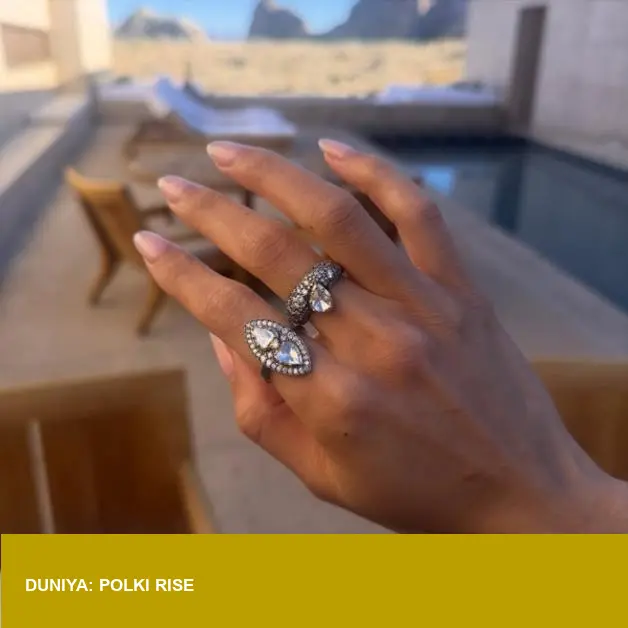
Duniya’s Noctara collection recasts hand-cut polki diamonds for everyday wear, pairing Indian stonecraft with Los Angeles settings and price points from $3,200 to $6,000—an accessible, artisanal diamond option for retailers and collectors aiming to broaden assortments without chasing lab-grown trends.
- Price: From $3,200 to $6,000 (select pieces)
- Carat weight: 0.65–3.84 c.t. total per piece (examples from the collection)
- Origin: Polki stones hand-cut in India; finished in Los Angeles by Duniya
- Date: January 2026 (Noctara launch)
Context: Why polki matters in 2025–26
Polki diamonds are raw-cut diamonds with organic, irregular shapes and hand-polished faces that show a softer, more dimensional light than engineered brilliants. Their vitreous luster and hand-polished surfaces align with three clear forces shaping jewelry demand: a move toward artisanal provenance, a counterpoint to the lab-grown conversation, and a turn to sculptural, tactile forms that read as wearable objects rather than engineered gems.
Because polki cutting minimizes material loss and emphasizes the stone’s original form, the pieces speak to sustainability-conscious shoppers who value lower-processing impact and cultural provenance. At the same time, polki sits outside the 4Cs pricing grid—making it an affordable natural-diamond alternative that doesn’t compete directly with high-grade brilliants or lab-grown marketing narratives.
Impact: What this means for US retailers and investors
For retailers, Noctara offers an inventory play that is both distinct and easy to merchandise. The collection’s combination of 14k yellow gold and oxidized silver with polki stones delivers visual contrast—a satin patina against the stones’ raw planes—that reads well in window displays and online imagery. Key commercial implications:
- Merchandising: Feature polki as a story-led category: provenance, hand-cut technique, and the designer connection. Use tactile language—”hand-polished surface,” “substantial heft,” “organic irregular shapes”—to help customers imagine the feel as well as the look.
- Price architecture: Price points from roughly $3,200 to $6,000 sit between lower-priced fashion jewelry and traditional diamond solitaires, enabling higher margins per linear foot than commodity silver while broadening the purchase set beyond classic engagement buyers.
- Target customer: Creative brides, style-conscious professionals and collectors who prefer natural stones and quiet distinction over engineered brilliance or lab-grown messaging.
- Inventory strategy: Start with small, curated assortments—rings and studs that translate well online—then expand into necklaces and statement pieces once sell-through benchmarks are met. Track piece-level performance; polki pricing is driven by individual stones, not a formulaic 4Cs model.
- Staff training & POS: Equip sales teams with short talking points: cultural origin (India), hand-cut method, and the visual/tactile differences vs. modern brilliants. High-quality images and macro detail shots that show the stone’s plane and luster will convert better than generic sparkle shots.
- Investment view: Polki’s collectible appeal and cultural provenance can offer diversification for investors focused on unique, low-volume categories. Resale is niche—value is in scarcity, condition, and provenance—so document chain-of-custody and supply origin where possible.
Duniya designer Nataliya Mehta frames Noctara as a bridge between heritage and wearable modernity: polki that reads as everyday jewelry while retaining the weight of tradition. For US retailers seeking differentiation in 2026, polki provides a tactile, lower-processed diamond story that sells on touch, not just sparkle.
Fast-sell angle: Lead with the Tara pieces—pear-drop necklace and twin-pear ring—as entry points. They illustrate the collection’s balance of tasteful heft, oxidized-metal contrast, and approachable price-per-piece.
Image Referance: https://www.jckonline.com/editorial-article/duniya-noctara-polki-diamonds/