
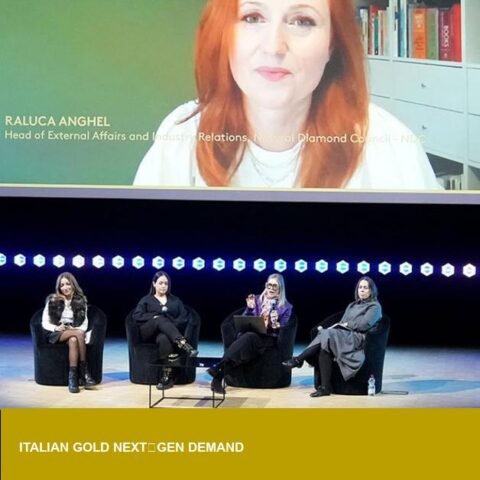
Curated venues and trade showcases positioning themselves as havens for rarely seen high jewelry and the best Italian gold jewelry producers — alongside sumptuous packaging solutions — are explicitly addressing the so‑called “next generation of jewelry buyers.” That reorientation alters assortment priorities and presentation costs, with clear implications for price mix, inventory turn and margin management for retailers and wholesalers.
- Focus: rarely seen high jewelry and Italian gold makers
- Distinctive element: premium, bespoke packaging solutions
- Audience: the next generation of jewelry buyers (discovery‑driven)
- Commercial consequence: shifts in assortment presentation and cost structure
Context: how this fits current category trends
Across markets, a quieter, craft‑forward aesthetic is reshaping buying behaviour. Platforms that surface uncommon high jewelry alongside established Italian ateliers leverage provenance, refined finishes and tactile details — think satin‑finished gold surfaces, knife‑edge shanks and open‑backed settings that maximize vitreous luster. For younger buyers who prize discovery and curation, the physical presentation — from fitted boxes to protective inserts — is part of the product’s perceived value.
That nexus of craftsmanship and presentation intersects with other industry themes: tighter assortment strategies, a premium on traceable supply chains, and a greater willingness to pay for differentiated finishing and packaging. For makers and retailers, the calculus is not only gemstone quality and carat weight but also how pieces are finished, presented and explained at point of sale.
Impact: what US retailers, wholesalers and investors should consider
Merchants should treat presentation and provenance as line‑item costs, not marketing extras. Premium packaging increases cost of goods sold and affects margin on lower‑ticket pieces; it also raises the entry price a buyer expects for a piece to feel complete. Merchants will need to decide whether to absorb packaging costs, tier them by segment, or offer them as an upgrade.
For assortment planning, the visible presence of rare high‑jewelry and Italian gold makers suggests a two‑track inventory approach: keep a lean, discoverable high‑value selection with heavy experiential merchandising, while maintaining deeper SKUs in core, accessible categories. Sales teams must be trained to articulate cut, color and finish in tactile terms — e.g., describing silky nacre, micro‑pavé precision, or the substantial heft of a signed 18k piece — to justify premium pricing.
Finally, wholesalers and buyers negotiating with Italian producers should factor in minimum order quantities, lead time and packing standards into landed cost. Investors and category managers will watch how presentation‑led curation affects sell‑through and average transaction value; if discovery platforms successfully convert interest into purchase, the result will be a durable reweighting of assortment toward craft‑driven jewelry and the packaging that supports it.
Practical moves: audit packaging cost across SKUs, create curated discovery capsules for younger buyers, and document finish and origin on sell sheets to support in‑store storytelling.
Image Referance: https://www.jckonline.com/editorial-article/vicenza-oro-panel-2026/