
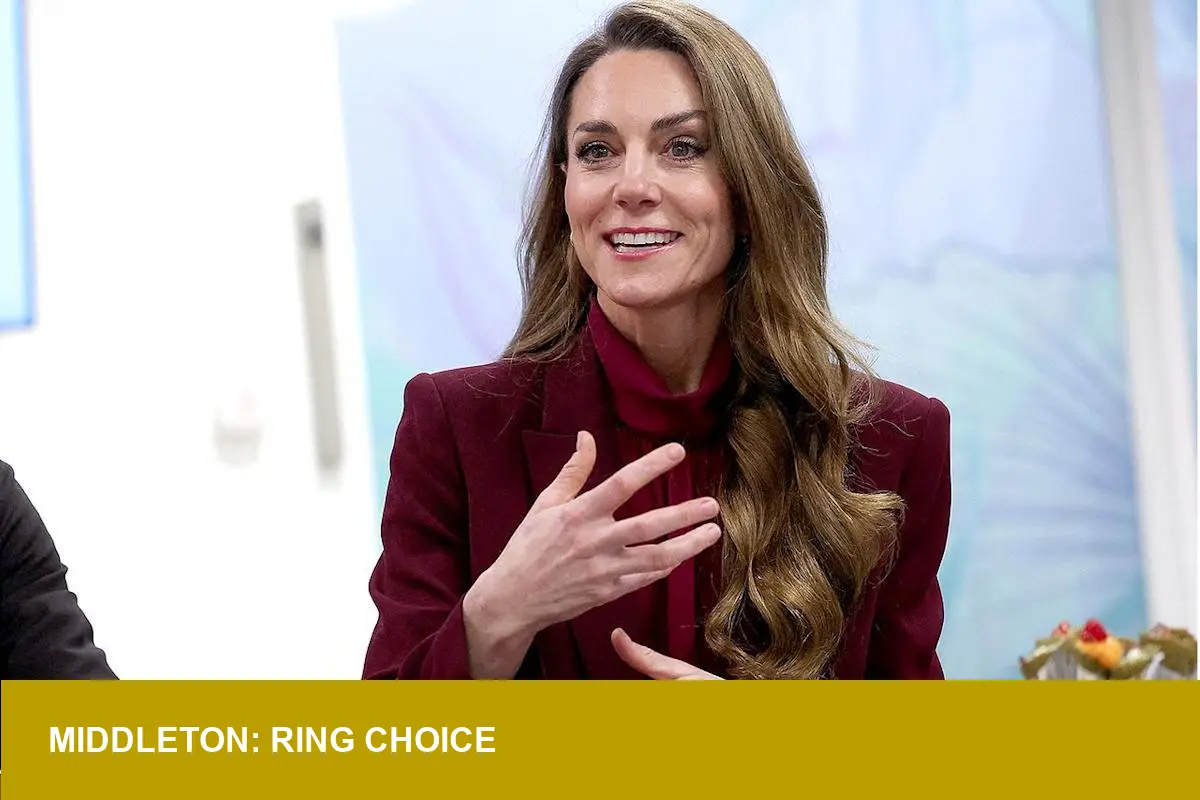
Princess Catherine, the Princess of Wales, left Princess Diana’s 18‑carat sapphire engagement ring at home for a surprise joint visit with Prince William to Charing Cross Hospital on Jan. 8, 2026 — choosing a single Welsh gold wedding band instead. It was a small, deliberate gesture with outsized implications for provenance premiums, retail messaging and product design in the jewelry market.
Fast facts
- Price: Not publicly disclosed; royal provenance elevates market interest
- Carat weight: Historically cited as an 18‑carat sapphire (attribution in public record)
- Origin / provenance: Formerly Princess Diana’s engagement ring; current wear by Princess Catherine
- Date: Jan. 8, 2026 (Charing Cross Hospital visit)
Context: 2025–26 jewelry signals
Since 2024 the Princess of Wales has favoured layered rings with a measurable substantial heft and vitreous luster — a stack that reads as both personal archive and style statement. Her decision to pare back to a single Welsh gold band for a hospital appearance aligns with two clear 2025 trends: functional minimalism driven by hygiene considerations and a stronger market premium for verifiable provenance over speculative lab‑grown narratives.
For consumers and collectors the tactile language changed: the warm patina of Welsh gold and the historic narrative of a sapphire that once belonged to Princess Diana carry a different value proposition than a high‑polish, trend‑led stack. Retailers reported throughout 2025 rising interest in pieces described by origin, maker and chain of custody; royal associations remain one of the clearest accelerants of that demand.
Impact: what U.S. retailers and investors should watch
Operationally, the choice reinforces a practical product brief. Hospital and care‑setting appearances make a case for minimalist rings with low profiles and easy‑to‑clean surfaces—attributes retailers can translate into merchandising and product development. Consider promotions for slim Welsh‑gold bands, micro‑pavé settings designed for hygiene, or collections with antimicrobial finishes that retain vitreous luster without compromising heft.
From an investment perspective, the day’s optics underline two durable drivers of value: provenance and narrative. Items with documented royal history command a premium and heightened secondary‑market liquidity. At the same time, the episode signals robust consumer appetite for authenticated natural gemstones and legacy metals — a counterpoint to mass interest in lab‑grown alternatives. For investors, that suggests continued outperformance for high‑quality natural colored stones with traceable provenance and for small, well‑documented inventories.
Finally, brand communications matter. A quiet, practical gesture by a high‑profile figure is an opportunity for retailers to refine messaging around care‑friendly design, provenance storytelling and insured resale options. In the near term, watch listing velocity for Welsh gold bands, mid‑to‑high carat natural sapphires with royal provenance, and demand for single‑band styling across bridal and non‑bridal categories.
In short: a single ring, chosen for practical reasons, has become a market signal. For U.S. jewelers and investors, the takeaway is tactical — lean into provenance, hygiene‑forward product specs and understated presentation.
Image Referance: https://www.aol.com/articles/why-kate-middleton-didnt-wear-142205319.html