
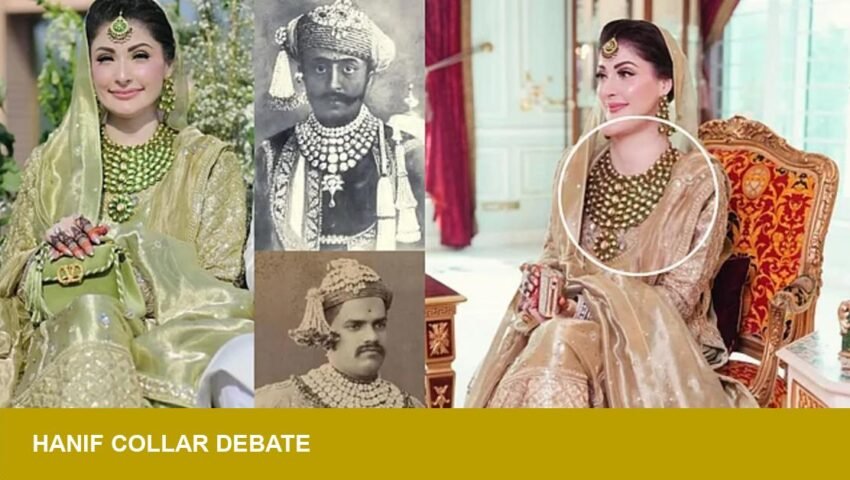
Maryam Nawaz Sharif wore a collar necklace from Hanif Jewellers’ Taj Mahal Collection at her son Junaid Safdar’s wedding, a choice that has ignited online debate after observers linked the piece to designs long associated with Baroda royals. The appearance prompted both praise for its heritage references and social‑media trolling—some users went so far as to compare her to India’s Nita Ambani—putting the spotlight on provenance, design lineage and the commercial upside for heritage‑driven collections.
- Wearer: Maryam Nawaz Sharif
- Occasion: Junaid Safdar’s wedding
- Piece: Collar necklace from Hanif Jewellers’ Taj Mahal Collection
- Design lineage: Similarity noted to Baroda royal jewellery
- Region & segment: South Asia — high‑society / bridal
- Reaction: Mixed — praise for heritage look and social‑media trolling
How this fits current jewellery trends
The episode sits squarely within the ongoing market appetite for heritage‑inspired jewellery. Across 2025–26, buyers and collectors have shown renewed interest in pieces that reference royal provenance and historic workshops; this is manifest in demand for articulated collars, layered neckpieces and adaptations of court jewellery motifs. For retailers and designers that specialise in bridal and high‑society commissions, such lineage is a differentiator: provenance and traceable design narratives increasingly drive premium positioning without relying on overt branding.
From a craft perspective, royal‑inspired collars typically feature sculptural proportions, articulated links for comfortable drape and settings that prioritise face‑up presence — for example, open‑backed settings and broad tables that read larger on the neck. Sellers who can clearly articulate materials, origin and workmanship enjoy stronger margin leverage in this segment.
Why US retailers and investors should care
For US buyers, wholesalers and investors, the incident is a reminder of two practical imperatives. First, there is commercial upside in curated heritage lines aimed at affluent bridal and occasion markets; stock-keeping units that foreground provenance and craftsmanship can command premium placement with boutiques and private clients. Second, political and social optics matter: cross‑border design references and high‑profile wearers can generate both positive PR and reputational scrutiny. Merchants sourcing South Asian heritage designs should therefore tighten provenance documentation and be prepared to frame stories with cultural sensitivity.
Operationally, boutiques may consider limited capsules of heritage‑inspired collars and necklaces — emphasising material disclosures (metal purity, gemstone origin) and offering private viewings to protect margin and brand positioning. Investors tracking category rotation will note that heritage demand competes with lab‑grown and minimalist trends; the segment’s resilience will depend on credible storytelling and verifiable craftsmanship rather than celebrity association alone.
In short, Maryam Nawaz’s choice has done more than fuel online chatter: it has put Hanif Jewellers’ Taj Mahal Collection on the map for buyers who prioritise lineage, and it underscores the market work required to convert cultural cachet into sustained retail value.
Image Referance: https://www.freepressjournal.in/lifestyle/trying-to-be-nita-ambani-indian-connection-to-pakistan-leader-maryam-nawaz-sharifs-jewellery-in-her-sons-wedding-sparks-discussions