
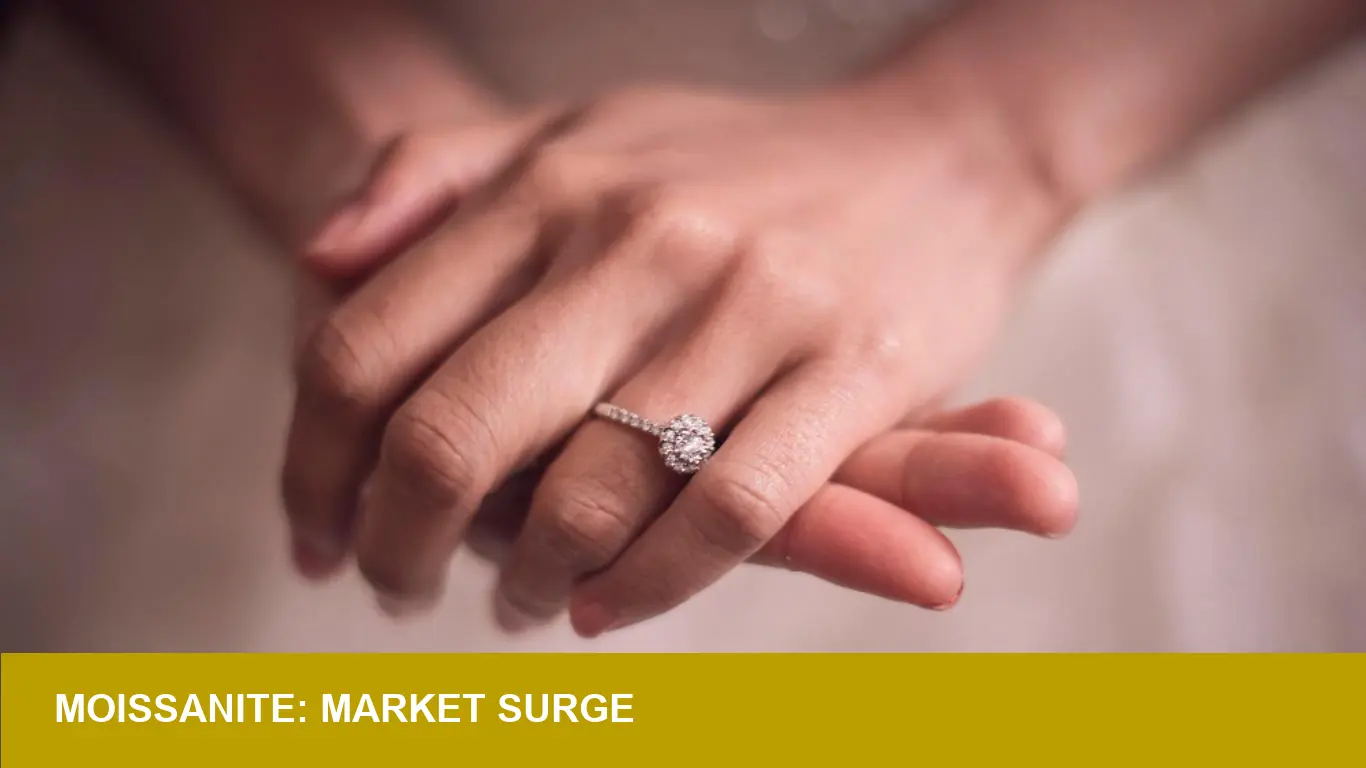
The Business of Love, Reframed: Brands such as Cullen Jewellery and a new generation of lab-grown producers are converting values into sales, shifting price expectations and opening a lower-cost entry point for luxury—while increasing average basket values for retailers.
- Representative price: $2,000–$8,000 (ethical engagement rings, US retail)
- Representative carat equivalent: 0.5–2.5 ct (moissanite visual equivalence)
- Primary origin: Lab-grown moissanite; recycled precious metals; certified ethical supply chains
- Date: Market snapshot — January 2026
The Context: 2025 Trends Converging
Through 2025 the luxury sector has recalibrated around provenance and practice. Sustainability is no longer an add-on; it is a determinant of perceived value. Lab-grown stones and conflict-free alternatives—moissanite being the most prominent—offer a vitreous luster and a degree of optical performance that satisfies traditional aesthetic benchmarks while carrying a markedly different supply footprint.
At the same time, sculptural aesthetics and artisanal finish have risen in importance. Consumers prize pieces with a tactile presence—a cool, machined bezel, the substantial heft of recycled gold, the fine granular texture of hand-sanded shanks—signals that craftsmanship remains central even as materials shift.
Why This Matters Financially
For retailers and investors, the ethical ring movement is a reallocation of value rather than a simple price compression. Lower raw-material cost for lab-grown stones can widen gross margins if brands retain storytelling control and avoid commoditisation. Market interest from Millennials and Gen Z translates into higher consideration sets and shorter purchase cycles; that increases turnover and lifetime customer value for merchants who can convert ethics into experience.
Practical Takeaways for US Retailers and Investors
- Merchandise mix: Introduce 20–30% lab-grown or recycled-metal pieces in engagement assortments to capture early adopters without alienating legacy buyers.
- Pricing strategy: Position moissanite offerings at a distinct tier—clear value vs. mined diamonds—rather than direct price-undercutting; emphasize craftsmanship and certification to protect product perception.
- Supply chain: Demand traceability and third-party certification; buyers pay premiums for verifiable origin, which sustains margins and resale confidence.
- Marketing: Highlight tactile details (vitreous luster, substantial heft, hand-finished surfaces) and lifecycle impact in product pages and in-store experiences to convert conscious buyers.
- Risk management: Prepare for faster design cycles and potential commoditisation of plain solitaires; protect brand by offering exclusive cuts, proprietary settings, or limited artisan collaborations.
Outlook
Ethical engagement rings are not a boutique trend; they are a structural shift in how luxury is defined and monetised. For US retailers and investors, the opportunity lies in combining provenance-driven sourcing with the tactile, high-quality finishes consumers still demand. When executed with restraint—careful pricing, verified supply chains and artisanal detailing—ethical rings increase market reach and fortify brand equity in an era where values and purchasing power align.
Image Referance: https://worldbusinessoutlook.com/the-business-of-love-how-ethical-engagement-rings-are-redefining-luxury-markets/