
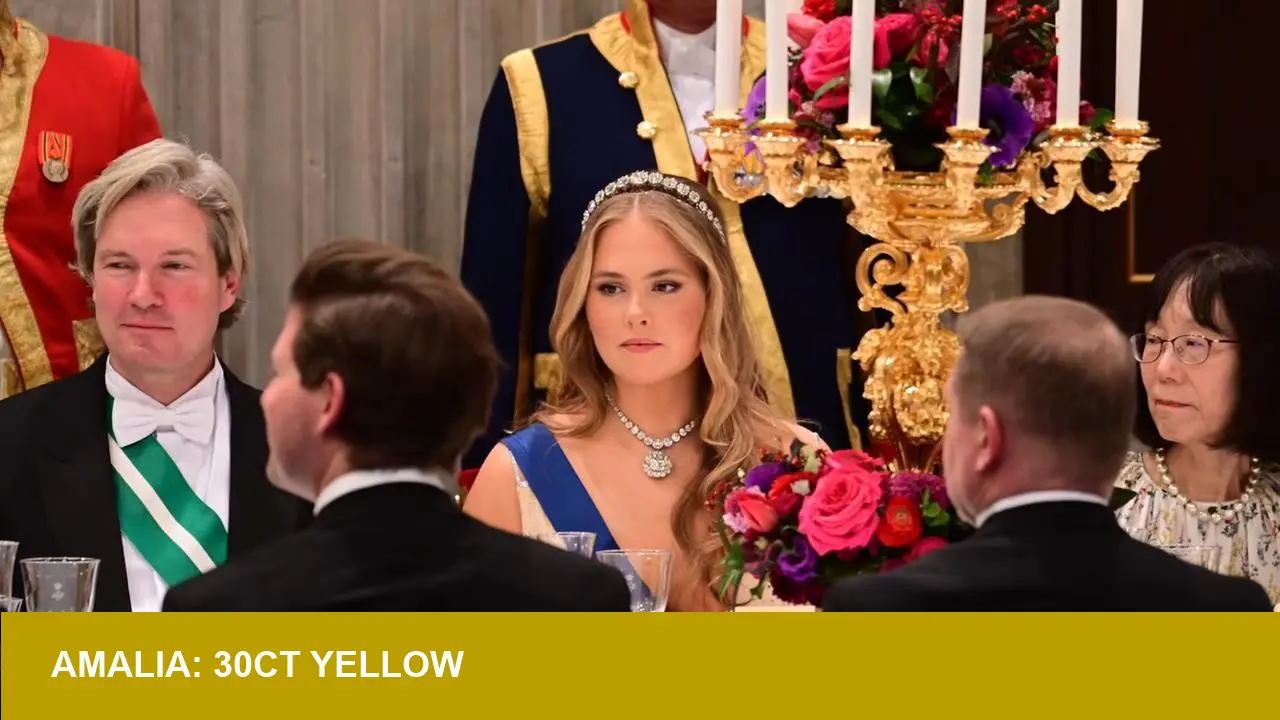
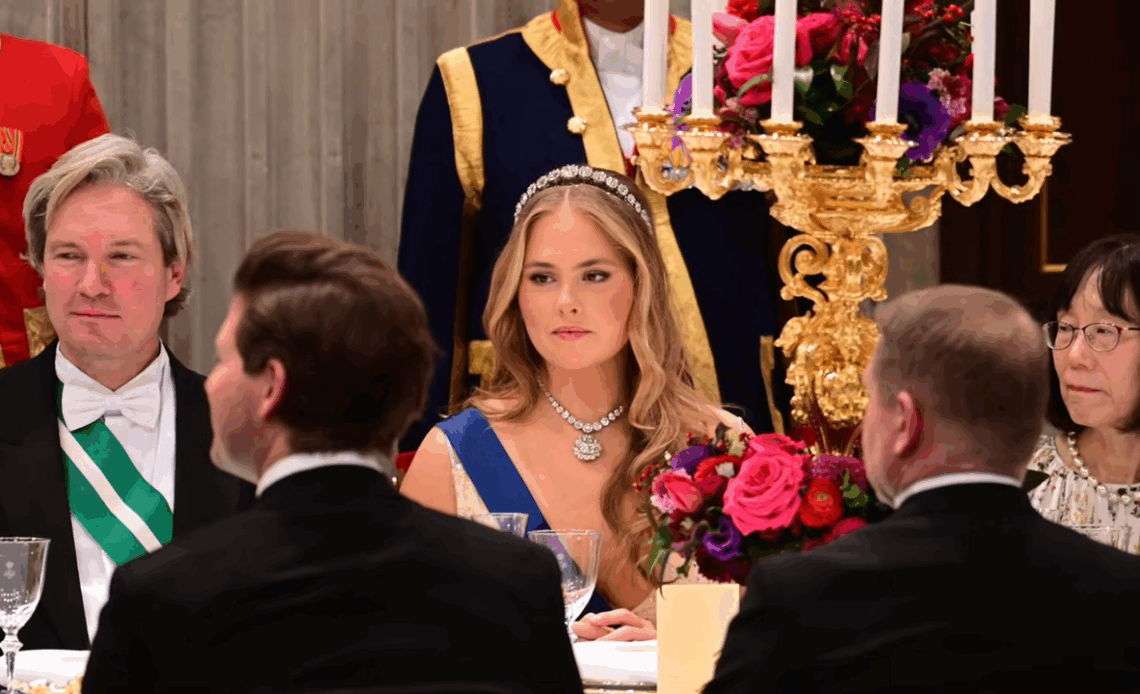
Lede: At the 11 December State Banquet for Finland’s president, Princess Catharina‑Amalia paired the Dutch Diamond Bandeau with Queen Emma’s 30‑carat yellow diamond stomacher — a historic jewel whose provenance and palpable presence recalibrate how collectors and retailers value royal gemstones in 2025.
- Item: Queen Emma’s yellow diamond stomacher
- Carat weight: 30 ct (public record)
- Origin / Provenance: Gifted to Queen Emma, 1879; part of the Dutch Royal Collection
- Date of appearance: 11 December 2025 — State Banquet for the President of Finland
- Estimated market value: $6–10M (range based on auction comparables; not publicly offered)
Context — How a royal stomacher sits amid 2025 trends
The stomacher’s warm canary hue and dense crystalline body present with a vitreous luster and a substantial heft that reads immediately different from modern, calibrated gems. In a market increasingly attentive to sustainability and provenance, uniquely historic stones such as this occupy a distinct tier: they are not substitutes for lab‑grown or modern natural diamonds, but singular assets where documented lineage and ceremony create scarcity that pricing models struggle to replicate.
Why this matters to US retailers and investors
For American buyers and retailers, the lesson is threefold. First, provenance now functions as a value multiplier; a stone with royal provenance commands a collector premium beyond per‑carat benchmarks. Second, display and narrative drive margins — a 30‑carat historic yellow diamond fitted as a stomacher has museum‑grade draw, improving foot traffic and journalistic reach when exhibited. Third, the current 2025 market shows resilience: while lab‑grown diamonds pressure price per carat at entry levels, historic natural pieces retain floor pricing and increasingly serve as investment‑grade alternatives to art and rare watches.
Operationally, retailers should tighten documentation practices, invest in conservation‑grade mounts (silken‑backed frames, inert display environments) and partner with institutions for provenance verification. From an inventory perspective, consider that a single exhibition‑grade historic stone can generate multiple revenue lines: private sale, exhibition loans, and elevated press coverage that uplifts adjacent inventory.
Tiara dossier — The jewellery choices that stake a style claim
Princess Catharina‑Amalia’s recent run of headpieces is instructive for curators and buyers: she has worn six distinct tiaras in four years, each selected to balance scale, motif and archival resonance.
Dutch Star Tiara
First worn publicly in 2022 for Princess Ingrid Alexandra’s 18th birthday banquet, the Star Tiara pairs a pearl‑button base with diamond star brooches from 1879. The piece reads bright, almost graphic — a youthful, architectural silhouette.
Ruby Peacock Tiara
Worn at diplomatic galas in 2023–24, the Ruby Peacock (c. 1897) uses plumed lines and saturated ruby eyes. Its sculptural rhythm is an example of late‑19th‑century theatricality that still photographs with theatrical authority.
Dutch Sapphire Necklace Tiara
Originally a necklace gifted in 1879 and later mounted as a tiara, this piece pairs deep, cool sapphires with diamond lozenges — a restrained palette that reads as classical weight on camera and in rooms.
Mellerio Ruby Tiara
A childhood favourite now worn officially, the Mellerio ruby parure (gift to Queen Emma, 1888) is an example of continuity: pieces used in private dress‑up become formal tokens of dynastic identity when reintroduced to statewear.
Queen Emma’s Diamond Tiara
With three rosettes and a steady diamond spine, this tiara is engineered for ceremony. Its calibrated geometry supports pendants and stomachers without visual competition — an important curatorial quality for layered royal dressing.
Takeaway
Princess Catharina‑Amalia’s pairing of the Dutch Diamond Bandeau and Queen Emma’s 30‑carat yellow diamond is less a fashion moment than a market signal: historic, well‑documented gems deliver a tactile authority — vitreous luster, substantial heft, ritualized wear — that sustains collector demand even as lab‑grown supply reshapes other market segments. For US retailers and investors, the strategic advance is clear: provenance, conservation and storytelling now equal, and sometimes exceed, per‑carat calculus.
Image Referance: https://royalcentral.co.uk/features/princess-catharina-amalia-tiaras-215734/