
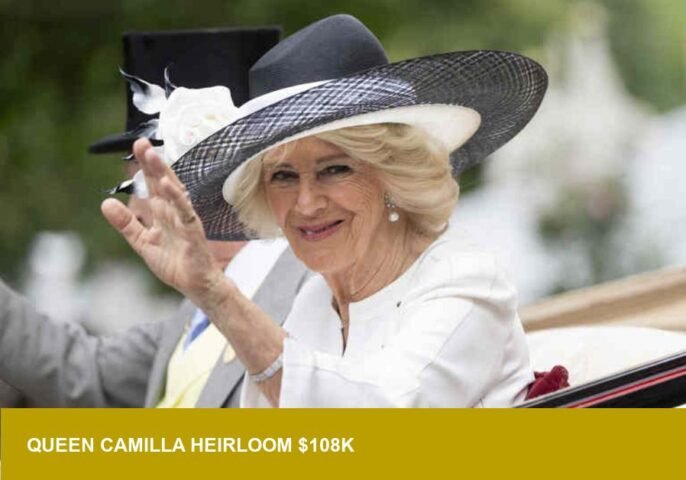
Queen Camilla has reintroduced a 132‑year‑old diamond heirloom, an estimated $108,000 piece that has not been publicly seen since 1936. The appearance of the late‑19th‑century jewel on a senior royal brings immediate attention to provenance and the market value of historic estate diamonds.
- Estimated value: $108,000
- Age: 132 years (late 19th century)
- Last public sighting: 1936
- Type: historic royal diamond heirloom
Context: provenance, vintage diamonds and quiet‑luxury demand
The reappearance fits squarely with a mid‑decade shift toward provenance‑driven purchasing. Collectors and affluent buyers are increasingly attentive to traceable ownership and the narrative that accompanies an historic gem. In practice, diamonds and settings from the late‑Victorian era are valued not only for carat and clarity but for period craftsmanship — hand‑cut facets, hand‑set mountings and metalwork that age into a satin‑finished patina. These tactile qualities — vitreous luster on older cuts, the substantial heft of period mountings, the visual depth produced by open‑back settings — support a premium distinct from modern, mass‑produced inventory.
That premium dovetails with quiet‑luxury aesthetics: discreet, provenance‑led pieces that perform as long‑term assets rather than fast‑fashion goods. For the trade, the royal resurfacing acts as a reminder that historic jewels carry both cultural capital and merchandising value.
Impact: what US retailers, wholesalers and investors should consider
For US retailers and wholesalers, the moment yields practical takeaways. First, vintage estate stock should be reappraised with provenance front‑and‑center: documentation, condition reports and high‑resolution imaging that captures the piece’s optical properties will materially affect retail positioning and margin. Second, merchandising should lean into quiet‑luxury narratives — measured, technical descriptions (cut era, metal condition, setting type) rather than hyperbole — to justify premium pricing to discerning buyers.
Investors and buyers tracking the secondary market should note that royal provenance can lift interest across geographies without necessarily creating broad market inflation. The most direct effect is on comparable inventory: consignments with verifiable lineage or period‑correct workmanship can command steadier bids. Finally, the resurfacing reinforces sustainability and circular‑economy messaging — recycling and reuse framed through custody records — which remains a selling point for affluent US consumers who prize both ethics and scarcity.
In short, the $108K royal diamond’s return is less about headline value and more about the amplifying effect provenance has on vintage inventory strategy: clarity of story and condition now matter as much as gem metrics in translating historic pieces into modern quiet‑luxury sales.
Image Referance: https://www.msn.com/en-us/lifestyle/lifestyle-buzz/queen-camilla-shines-in-a-108k-royal-heirloom-that-hasn-t-been-seen-in-nearly-a-century/ar-AA1Hhlf6?cvid=1732de4037a34572848f2e393c2925ae