
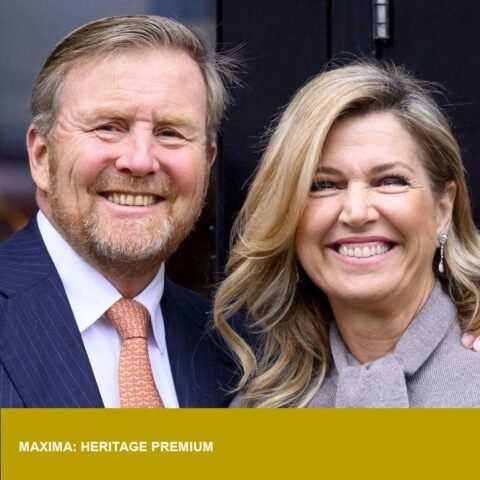
Queen Máxima of the Netherlands revisited the pair of wedding earrings she first wore at her marriage to King Willem‑Alexander to mark their 24th anniversary — a public return to heritage that, according to jewelry expert Oliver Hobart, underscores a market preference for legacy over novelty. “You don’t need novelty when legacy already exists,” Hobart told Marie Claire.
- Who: Queen Máxima, Netherlands royal jewellery worn for 24th wedding anniversary
- Item: wedding earrings — reinforced public attention on heirloom pieces
- Expert note: Oliver Hobart quoted in Marie Claire — emphasis on legacy vs novelty
- Market angle: signals renewed appetite for classic bridal and heritage jewellery
Context: heirloom styling within the quiet‑luxury moment
Across 2025–26 the jewellery market has shown a calibrated move toward restrained, provenance‑forward pieces. The sight of a reigning royal re‑wearing her wedding earrings is not merely ceremonial; it validates a quiet‑luxury aesthetic that prizes continuity, material integrity and identifiable provenance. For retailers and designers that means prioritising designs with clear lineage — polished settings that retain vitreous luster, secure open‑backed mounting for light return, and finishes such as satin‑finished gold or platinum that age gracefully.
Hobart’s remark — that legacy can trump novelty — lands against broader currents: younger buyers are blending selective modernity with family pieces, and bridal purchases increasingly factor repairability and traceable origin into purchase criteria. In practice, that shifts attention from trend‑driven micro‑pavé novelty toward pieces that offer tactile reassurance — substantial heft, knife‑edge profiles on bands and balanced earring weight that sits comfortably for daily wear.
Impact: what US retailers, wholesalers and investors should watch
For US sellers, the royal example is a merchandising cue rather than a sales forecast. Operationally, it recommends three adjustments: 1) merchandising classic earring profiles and secure closures alongside contemporary lines; 2) investing in provenance storytelling and after‑sale services such as cleaning, set repair and discreet restorations that preserve original finishes; and 3) training sales staff to discuss longevity and craftsmanship — not only trend curves — when advising bridal clients.
Wholesalers and manufacturers should note that quiet‑luxury demand puts a premium on consistent material quality and traceability rather than rapid SKU turnover. For investors, pieces marketed as heirloom‑grade can command more resilient secondary‑market attention because buyers prize provenance. None of this requires dramatic assortments: offering a measured range of classic earring shapes, studs and understated drops in durable metals and secure settings positions retailers to capture customers who prioritise legacy — the precise behaviour Hobart highlighted.
In sum, the public re‑appearance of Queen Máxima’s wedding earrings is a timely visual endorsement of preservation and provenance. For trade professionals, it is a reminder that careful curation, technical assurance and quiet storytelling remain effective commercial levers in an otherwise noisy luxury landscape.
Image Referance: https://www.msn.com/en-us/lifestyle/weddings/queen-m%C3%A1xima-revisits-her-quietly-powerful-wedding-earrings-to-celebrate-24th-anniversary-with-king-willem-alexander/ar-AA1VBx1A