
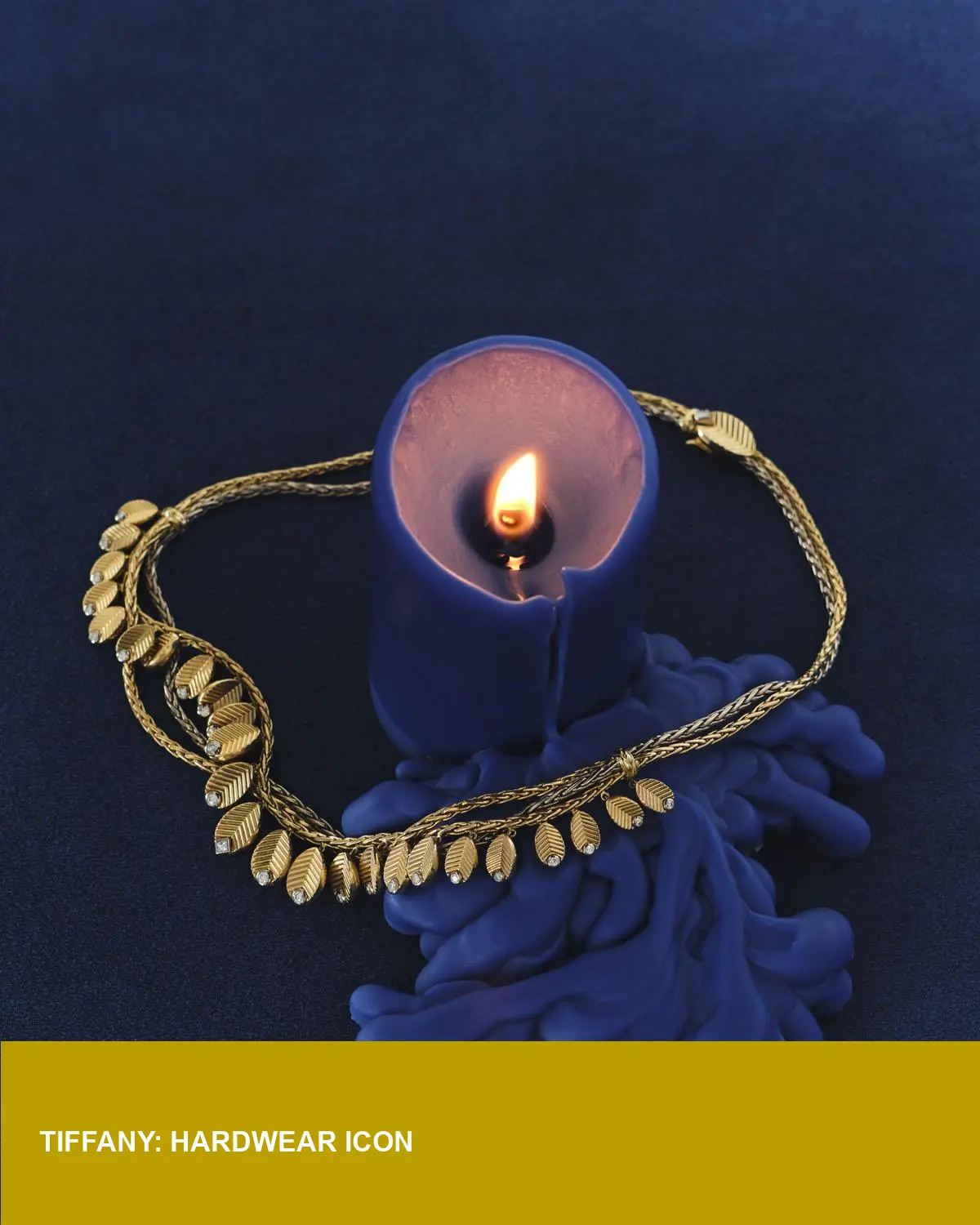
Sergiy Barchuk’s studio series reimagines flagship pieces from Tiffany & Co., Cartier and Piaget by tracing them back to the temperature that made them—an image-led case for why sculptural links and substantial gold will hold premium value in 2025.
- Price: Editorial presentation — not for retail sale
- Carat weight: Varies by piece
- Origin: Tiffany & Co. (U.S.), Cartier (France), Piaget (Switzerland), Graff, Harry Winston, Buccellati
- Date: December 24, 2025
The images place the viewer at the point where metal surrenders: molten gold at roughly 1,948°F, the vitreous luster of finished stones reframed against the memory of fire. Barchuk’s photographs do not sentimentalize—they render the pieces as objects of craft and caloric origin, from Tiffany & Co.’s HardWear graduated link to Piaget’s rose‑passion earrings and Graff’s double-row pear necklace. The work supplies a tactile shorthand—substantial heft, clean link geometry, and pavé that reads as surface tension—for retailers and collectors recalibrating value in 2025.
Context: How this fits 2025
Three market threads converge here. First, sculptural aesthetics: buyers are paying for pieces that read as wearable architecture—links and cuffs with visual mass and crisp negative space command stronger margins. Second, provenance and sustainability: provenance narratives, measured traceability and gold‑sourcing statements replace generic claims; a clear line from mine or refinery to bench supports higher resale and pre-owned premiums. Third, lab‑grown diamonds continue to segment the market, pushing natural stones into a collector tier where vitreous luster and rarity sustain price per carat.
Photography that returns an object to its elemental origin reinforces those threads. When a Tiffany HardWear link is shown through the lens of heat and weight, it reads less as a trend piece and more as a studied investment in craft—useful language for product pages, window installations and digital ads aimed at high‑intent buyers.
Impact for U.S. retailers and investors
For U.S. retailers the takeaway is practical: merchandise a tighter edit emphasizing link‑based necklaces, graduated chains and pieces with discernible heft. Visual merchandising should foreground touch and weight—copy and in‑store displays that reference substantial heft and tactile finishes outperform generic descriptions. Online, high‑resolution imagery that communicates vitreous luster and link geometry reduces friction on higher price points.
For investors and secondary‑market buyers, the series underscores a movement from ephemeral fashion toward collectible design. Limited production runs and verified provenance will likely outperform mass assortments. Expect demand to concentrate on:
- Yellow‑gold links with clean, substantial profiles
- High‑quality pavé set pieces with strong finishing work
- Watch and haute‑joaillerie staples from houses with documented sourcing
That shift has practical implications for pricing strategy: add provenance statements to product pages, treat sculptural statement pieces as investment SKUs with conservative inventory turns, and use editorial photography—like Barchuk’s—to support premium pricing rather than discounting.
Selected pieces shown
• Tiffany & Co. HardWear Graduated Link Necklace in Yellow Gold (visual emphasis on graduated mass and satin–polish links)
• Graff High Jewelry Fancy Yellow and White Diamond Pear Shape Double Row Line Necklace (contrast of color and vitreous diamond luster)
• Piaget Limelight Rose Passion Earrings (delicate form against implied heat)
Production credits: Production by Second Name Agency; Prop Styling by Selena Liu; Lighting Tech by Nigel Jones; Digi Tech by Mari Kon; Prop Assistance by Colin Favre.
Image Referance: https://www.culturedmag.com/article/2025/12/24/fashion-hottest-jewelry-tiffany-piaget-lugano/