
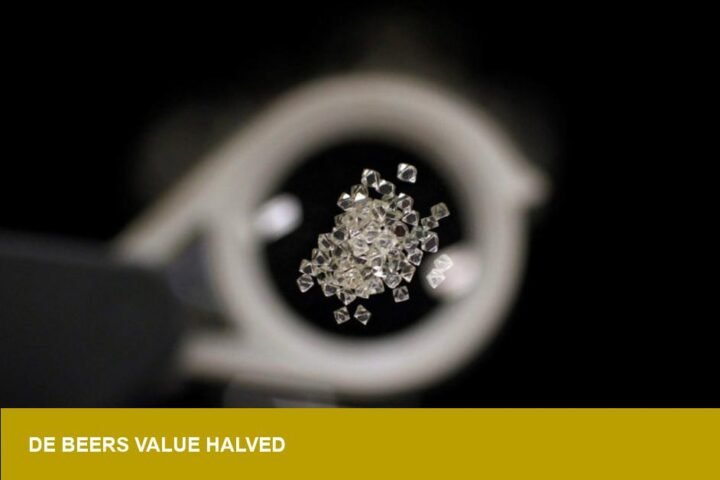
Anglo American has halved the value of its De Beers diamond business, citing soft economic growth in China and the rise of cheaper lab‑grown diamonds — a direct signal that natural‑diamond inventory and margin profiles are under renewed pressure.
- Valuation: De Beers unit value halved (company announcement)
- Primary drivers: weak growth in China; increased competition from lower‑cost lab‑grown diamonds
- Gemstone focus: natural diamonds versus lab‑grown alternatives
- Market implication: pressure on bridal and accessible‑luxury segments
Context: where this sits in 2025–26 jewellery trends
The write‑down sits at the intersection of two structural trends. Demand from China — a major engine for luxury and bridal spend — has softened, removing an important outlet for higher‑ticket natural diamonds. At the same time, lab‑grown diamonds have gained price competitiveness, eroding the traditional premium for mined stones.
For product and design teams, the effect is tangible. Pieces that rely on the natural‑diamond scarcity narrative — brilliant‑cut solitaires set on knife‑edge shanks, micro‑pavé halos that showcase a stone’s vitreous luster — now compete against lower‑priced lab‑grown bridal SKUs. Marketing that once emphasized origin and provenance increasingly needs to couple those claims with craftsmanship cues — satin‑finished gold, open‑backed settings that reveal depth of pavilion and colour — to preserve margin.
Impact: what US retailers, wholesalers and investors should consider
Inventory: US retailers should reassess inventory weightings between natural and lab‑grown diamonds. A halved valuation at De Beers implies potential margin compression and slower turnover for natural‑diamond lines; merchants may reduce depth on higher‑carat natural inventory or push assortments that emphasise cut quality and setting craftsmanship rather than carat alone.
Pricing & merchandising: Buyers and merchandisers will need clearer segmentation. Lab‑grown options occupy a lower‑price, value‑driven tier; natural diamonds should be merchandised with tangible differentiators — documented origin, older cuts with substantial heft, or finishing details such as knife‑edge bands and artisan mounting — that justify price premiums to a discerning buyer.
Investor signal: The adjustment at Anglo American is a market signal that natural‑diamond economics face both demand-side softness in key markets and supply‑side competition from lab creation. For investors, that raises questions about earnings resilience at companies exposed to mined diamonds and the pace retailers will switch assortments.
Marketing and messaging: Quiet‑luxury storytelling that focuses on workmanship and traceability will be more effective than broad scarcity claims. For retail teams, pairing provenance statements with tactile descriptors — silky nacre‑like sheen on mother‑of‑pearl accents, firm bezel settings, or open‑backed mounts that reveal clarity and colour — will help maintain perceived value without relying solely on market narratives.
In short, the halving of De Beers’ valuation crystallises a crossroads for the diamond sector: competing pressures from softer demand in China and the commercial rise of lab‑grown stones require pragmatic inventory, pricing and storytelling shifts across the US jewellery trade.
Image Referance: https://www.msn.com/en-us/money/companies/anglo-american-halves-value-of-de-beers-diamond-business/ar-AA1WIxHl?ocid=finance-verthp-feeds&apiversion=v2&domshim=1&noservercache=1&noservertelemetry=1&batchservertelemetry=1&renderwebcomponents=1&wcseo=1