
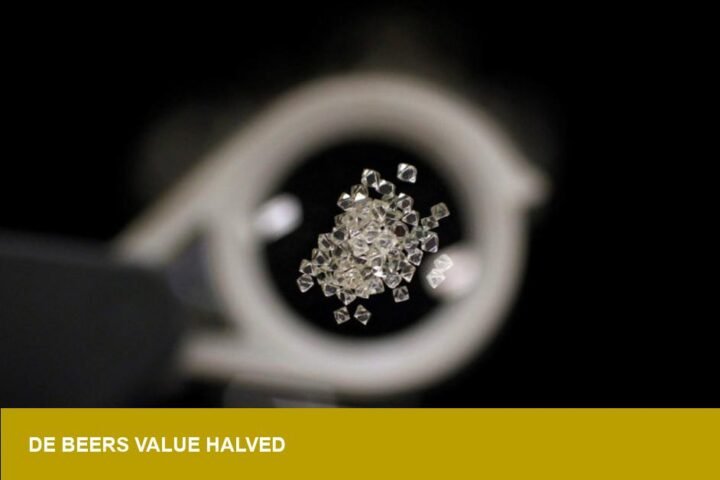
Anglo American has halved the valuation of its De Beers diamond business, citing softer economic growth in China and the faster adoption of cheaper lab-grown diamonds — a move that undercuts the unit’s premium and signals a reassessment of natural-diamond price expectations.
- Entity: De Beers, a unit of Anglo American
- Financial move: valuation reduced by half
- Primary drivers: soft China demand; rise of lower-cost lab-grown diamonds
- Market focus: global supply chain with pronounced demand weakness in China
Context: where this fits in 2025–26 trends
The write-down crystallises several ongoing shifts in the diamond sector. Demand from China — a significant driver of polished and high‑carat purchases — has softened, removing a near-term outlet for higher‑end, colourless goods. At the same time, lab‑grown diamonds continue to exert price pressure across multiple carat‑weight tiers, narrowing the scarcity premium that natural stones historically commanded.
For miners and midstream cutters, that combination reduces margin headroom: natural rough must now clear a lower price point to justify extraction and polished inventory costs. The market is also recalibrating on product positioning — from premium natural-diamond assortments to blended or lab‑led assortments that trade on lower gross margins but faster turnover.
Impact: why this matters in the US market
US retailers and wholesalers should treat the revaluation as a signal to reassess assortment and pricing strategies. High‑end natural-diamond inventory may carry greater carrying cost and require tighter merchandising — for example, emphasising cut quality and colour/clarity premiums where provenance can be credibly communicated. Mid‑range bridal SKUs face direct competition from lab‑grown alternatives; merchants may respond by expanding lab‑grown assortments, introducing trade‑up pathways, or sharpening margin architectures.
For investors, the halving of De Beers’ value highlights category risk: natural‑diamond cash flows are increasingly sensitive to demand shifts in China and to technological substitution from lab production. Brand and channel winners will be those that balance inventory velocity with credible storytelling on origin and craftsmanship, while acknowledging that price elasticity across certain carat and clarity bands has increased.
In short, the valuation change is not merely an accounting adjustment — it is a market signal. It frames how dealers should think about inventory mix, pricing discipline and marketing emphasis in a US retail environment that values understated quality but is price‑sensitive at scale.
Image Referance: https://www.msn.com/en-us/money/companies/anglo-american-writes-down-de-beers-diamond-unit-value-by-another-23-billion/ar-AA1WIxHl